to

Review: Nisemonogatari

Topics: , , , , ,

NisemonogatariMedium: TV Anime (11 episodes)
Genre: Harem, Romance
Studio: SHAFT
Distributor: Aniplex, Crunchyroll
Release Date: Jan. 7, 2012 (JP/US)
Age Rating: Unknown (appropriate for 17+)

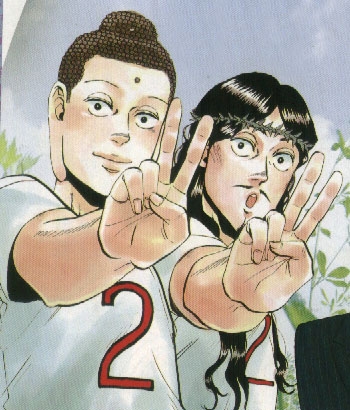
From title to content, Nisemonogatari, which roughly translates as "Fake Story," is in its entirety a deception of viewer expectations. Nise, the second anime adaptation of writer NisiOisin's popular light novel (LN) series, challenges what is expected of LN-style fiction while reveling in typical anime-caliber scenarios. Interestingly enough, the writer has discredited this particular work as professional writing with the mentality of a fan, suggesting it is a work that perhaps should not have been published. Nevertheless, the fact is that his editor got a hold of the novel and deemed it suitable for market. Unsurprisingly, everyone that has read it agrees that it is the weakest entry in the Monogatari series. Undaunted by public opinion, Akiyuki Shinbo took a shot at working the usual SHAFT miracle for Nise that made its predecessor, Bakemonogatari, one of the highest-selling television anime shows ever. Just as Bake put some viewers off with its artistic slideshow-style animation set to overly clever, occasionally sexually-charged, banter between teenagers, Nise is just as divisive — if only for a different set of reasons.

The greatest challenge to begin enjoying Nise is to abandon attachment to most of what was enjoyable in Bake. Bake begins interestingly enough as a sort of supernatural reverse harem (in the chronological sense), where the protagonist settles on a girl first and wanders the town collecting members for his harem afterwards. The 15-episode series tightly compresses two novels worth of character arcs, moving as quickly as text-dense adaptations allow. Despite how the story only seems to move through the sheer might of the sexual tension in some scenes, I will say that Bake has surprised me with the level of sincerity imparted to its characters and how they grow and bond with each other within the relatively short running time of the series.

Nisemonogatari

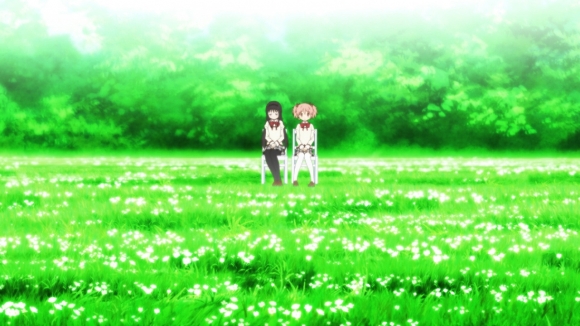
Nisemonogatari matches, if not improves upon, all of Bakemonogari's strengths in a technical sense. Taking a few broadcast seasons off to focus on their craft and roll in all that Madoka money has made all the difference for Studio SHAFT. They scale back on most of the shortcuts taken in Bake — empty black screens, literal walls of text ripped from the novel, still-frame montages — and actually animate what's happening in unusually splendid detail. The luxury of time and funding means minute physical character tics are placed throughout and that all characters are actually drawn on-model by the time of broadcast. Shinbo's visionary apporach to anime is in full effect for Nise, working sight gags for all they're worth and disregarding any notion of spatial continuity to wonderous effect. Nise triumphs over Bake in that characters rarely sit around to talk; they roll around, do handstands, get into earth-shattering fights, hop across works of post-modern public sculpture, and leave the realm of reality to speak in their inner voice. Nise captures that breath of life in its animation that was missing from most of Bake due to budgetary constraints.

Problems arise for Nise as it moves away from the promising set-up of the first novels. The original Nisemonogatari novel is split into two character arcs covering the protagonist's delinquint younger sisters' involvement with dangerous supernatural phenomena. NisiOisin relegates the principal heroine of Bake and her rival-in-love to supporting roles far away from the action of Nise, though trimming the cast does not give the project any tighter of a narrative focus. The first arc trudges along in the background before abruptly resolving in a most ungratifying manner. The second half isn't much more engaging, but at least there seems to be a deliberate attempt to engage the audience before the end.  The titular characters of each arc might only appear for a few minutes of screen time in some episodes, if at all, and the author doesn't utilize the newly introduced characters much either. Nise feels a lot like an extended intermission between Bakemonogatari and the next book.

As incongruous as Nise seems, it really is the logical (within Nise's personal construct of rules) place to end up after Bakemonogatari. The protagonist has already solved the problems of the members of his harem to a workable degree in the previous series. Bake ends satisfyingly enough, so forcing in a new plotline out of nowhere wouldn't work out. Instead, Nise's continued dialogues between characters further flesh out the kind of people they are and highlight their positions on the harem totem pole. What really works out for Nise, though is that it dissolves the protagonist's Nice Guy hero image from the first series. Even with complete power over the narration, he can't hide some decidedly un-Nice acts. The best writing in Nise comes from seeing the protagonist grapple with the disgusting side of himself as he tries to fight back his urges. I can only reference the actual Monogatari text beyond Nise in a very limited way, but I have the impression the seeds sown in Nise only produce fruit after this story is over. Whether anyone still cares about character dynamics might not be easy to ascertain over the noise caused by Nise's actual draw-in.

Nisemonogatari

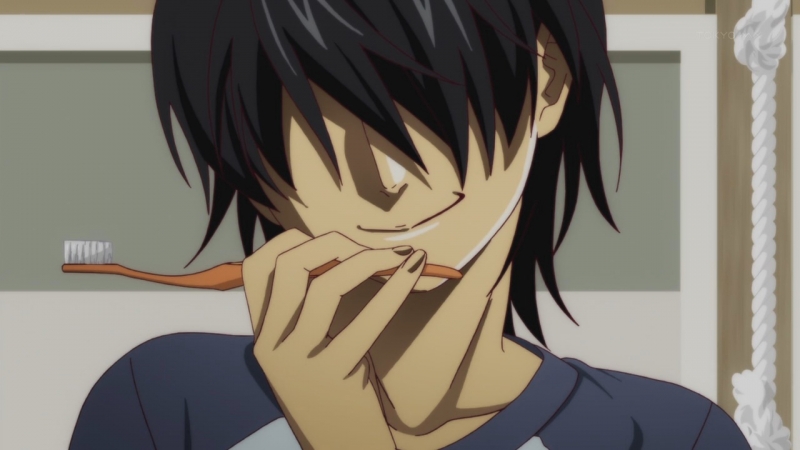
Now I've finally arrived at the most polarizing element of Nisemonogatari: it's damn sexy. After about four episodes, there isn't a viewer left who can say they watch Nise for the plot without lying through their teeth. Anime conservatives will crawl back under their safety blanket at the sight of dead elementary schoolgirl upskirt shots, extended conversations with fully nude loli vampires, chiseled male and female collarbones, slavishly drawn bare feet, little sister kimono unravelling, and a lavishly animated toothbrushing sequence that establishes itself as a pivotal moment in changing brother-sister relationship conventions. Bake could get pretty hot when it wanted to, but Nise completely overblows the sex appeal. Factor in SHAFT's keen eye for framing, VOfan's attractive character designs, and NisiOisin's bold situational writing, and you have a product that trumps most standard ero-anime.

The effect is noticably ampilified considering the restraint previously shown by Bake that allowed the audience to grow fond of its characters without a reliance on sexuality. Even higher-leveled anime viewers who are normally okay with inappropriately sexualized underage girls find Nise to overstep the boundaries of dignity the general Western anime community have set forth. As lovingly crafted a sexploitation series NisiOisin and SHAFT have given the world, it's still an exploitation bound to discomfort those who haven't completely embraced their true otaku power. Watching Nise is nowhere near as shellshocking of an experience as, say, watching In the Realm of the Senses. As a major commercial late night television anime, however, it easily crosses over into that zone where viewers will want to take a step back and reexamine their motivations for watching.

Nise is as inaccessible as viewers will make it out to be. On many levels, it's a lot more fun to watch than Bake and certainly more polished than a lot of other work SHAFT has done. On the other hand, Nise leaves us in the middle of a messy web of character relationships that begs resolution. While the sexuality rarely pushes the plot forward, the show would be drained of its energy if the sexuality were taken out. And somewhere under the surface, Nise almost has the right idea in its approach concerning the topic of underage sexuality. The execution, however, is a failure from inception, as the work is clearly aimed to sell wishful fantasies to that crowd of esteemed gentlemen who have no qualms about loving young, idealized 2-D girls.

Nisemonogatari

SHAFT's next adaptation, Kizumonogatari, with its promise of gory vampire violence, will likely take back all of the attention lost during Nise. By no means is Nise the gravest mistep in Japanese young adult literature, but from here on out I hope NisiOisin's other Monogatari novels give SHAFT a little more to work with.

Review: Hell Girl – Two Mirrors, Collection 2 (Sub)

Topics: , , , ,
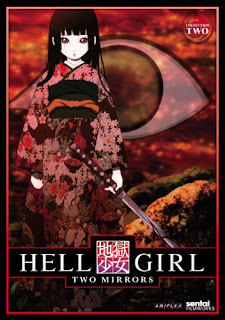
Hell Girl: Two Mirrors, Collection 2

Medium: TV Anime (26 episodes)
Genres: Drama, Horror, Psychological, Supernatural
Sequel to: Hell Girl
Director: Takahiro Omori
Studio: Aniplex/Studio DEEN
Release Date: Oct. 7, 2006 – Apr. 6, 2007 (Japan), May 25, 2010 (Sentai Filmworks – N.America)
Rated: Not Rated

Collection 2 of Hell Girl: Two Mirrors (HGTM C2) continues the second season’s attempt to make Ai Enma’s sidekicks — Wanyuudo, Hone Onna, and Ren Ichimoku — into well-rounded characters, but succeeds in doing so much more. These 13 episodes, in fact, completely make up for the seemingly unfocused meandering of Collection 1. Specifically, these episodes regain some of the series’ iconic condemnation sequences, give the Hell Correspondents’ some convincing emotional back-stories and bait with which to justify the betrayal of their duties, as well as develop and leverage a strong story structure that parallels first season while making its own point.

All of the Hell Correspondents, Ai Enma included, are getting tired of frivolous and unwarranted requests for vengeance, which they have had no choice but to carry out for the past 400 years now in hopes of achieving their own salvation. Instead of flippantly throwing out lines to the effect of “I can’t believe so-and-so is doing this,” the Hell Correspondents are directly involved in stories that touch each of them so deeply — due to likenesses to either themselves or their past lives — that each correspondent is moved to direct and active intervention. This introduces (mild) tension betwixt the group’s members. Everyone gets to point a finger, however, so fallibility pretty much evens out.

Instead of being some randomly instituted loli ratings booster, Kikuri turns out to be a poignant addition to the Hell Correspondents. More or less the embodiment of the will of their master, Kikuri's antics grow from passive-aggressive playfulness into full-blown antagonism. While there seems to be no reason to her actions in the first collection, her actions in HGTM C2 serve to spur on the vengeful to supply Ai with more work and hell with more souls. This makes Kikuri the foil to Ai’s wavering commitment to consigning souls to hell.

Speaking of which, damnation starts to get its Dante back in episode 15 but abandons it until regaining those progressive tracks of surrealistic comeuppances in episodes 19 and 21. When ironic tortures are not applied, the very ferry to hell is used to illustrate the nature of the damned. It is the return of these sequences as well as the return of stories that concern people who actually have serious problems that give more meat to these episodes than those of the first collection, but the morality and circumstantial twists lend to something greater.

Just as the strength of season one lies in the threaded plot that develops from reporter Hajime Shibata’s investigation into Hell Girl’s consignments, HGTM C2 uses Detective Meshiai’s investigation into the rash of disappearances attributed to “devil’s child” Takuma (episodes 14 and 22–26) to define its purpose. These episodes, so well done that they bring to mind The Twilight Zone’s “The Monsters are Due on Maple Street,” make HGTM C2 about Ai Enma bucking the proverbial system by standing up for one person undeservingly sentenced to hell, just as she had been sentenced to death. This parallels the first season, where Ai breaks the rules to release her pent-up fury and avenge herself through the direct descendants of the same traitorous bloodline responsible for her unwilling sacrifice and accursed death.

HGTM C2 succeeds in tying the previous collection’s seemingly flippant content into a story both poignant and well orchestrated. While its skill at enhancing supporting characters is questionable, the collection further rounds out Ai Enma and more importantly restores faith in the series’ signature bite while using it to accomplish something new. Instead of being pushed to the breaking point by hate as in the first season, the Hell Correspondents are broken by the conflict between mercy and their cursed duty. Taken by itself, HGTM C2 is a change of course for the series that seems to be tackled with all the subtlety of a sledgehammer. However, this collection shows its strength by knowing how to effectively leverage similar and contrasting content from pasts both distant and recent.

[Highly Recommended]


This review is based on a Sentai Filmworks DVD set purchased by the reviewer.

Review: Hell Girl – Two Mirrors, Collection 1 (Sub)

Topics: , , , ,
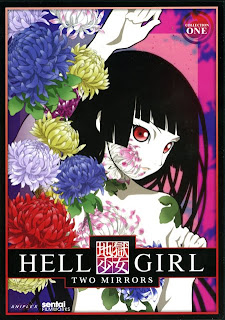
Sentai Filmworks' release of Hell Girl: Two Mirrors, Part 1

Medium: TV Anime (26 episodes)
Genres: Drama, Horror, Supernatural
Sequel to: Hell Girl
Director: Takahiro Omori
Studio: Aniplex/Studio DEEN
Release Date: Oct. 7, 2006 – Apr. 6, 2007 (Japan), May 25, 2010 (Sentai Filmworks – N.America)
Rated: Not Rated

It is widely acknowledged that the death knell for a sitcom produced in the USA is the adoption of a new child character into the cast’s fold. Whatever season he/she pops into — reason be damned — is destined to be one of the show’s last. Although the tasty moral crimes committed consistently throughout Hell Girl in season one (and happily expected of season two) only served to make my inner beast spread its depraved smile, I cannot describe the surprise of absolute and gripping horror which arrested the very palpitations of my heart when I saw a new hell correspondent child, Kikuri, debut in Hell Girl: Two Mirrors (HGTM). But Hell Girl is not an American sitcom, and, let’s face it, little children are creepy. So I continued to chapter skip through the 13-episode offering despite hearing bells in the distant background.

Ignoring the ambiguity of said child’s presence, HGTM rolls along with the same premise instituted in the first season: people want revenge, go to a rumored website, and summon the hell correspondents to get rid of the antagonist. Unfortunately, the latter happens all too hastily and almost entirely without the surrealist imagination of the first series. Then the protagonists get a nifty tattoo to show that they are damned to hell for their decisive actions over which they’ve anguished. My main issue with season one was that the formula used in episode after episode — people pushed to the brink of sanity, upon which ledge they damn their tormentors and selves to hell — only began to be played with in terms of sequence and morality towards the very end of the series. HGTM definitely continues to play with sequencing and morality, but most of the time the attempts are gratuitous or superfluous.

This time-trickery also does something far more detrimental to the series — it takes away the building of truly tormented characters that made the first season so much fun to watch and justified viewer sympathy. Of course the reason behind not getting to know many of the episodic characters in the first 13 stories of HGTM is to showcase their unjust or frivolous use of the hell correspondents. Such are the protagonists' motivations that, in the end, most feel totally unidentifiable or unsympathetic (sometimes more sympathy is felt for the hell correspondents for having to put up with such summoners, which is more the point). Maybe this is karmic retribution for their taking more active roles in season two (CSI: Hell on Earth) versus their behind-the-scenes role as divine sword of justice from season one, but either way the hell correspondents remain flat despite their foray into the spotlight, which only serves to make their attempted breakthrough naught but arduous viewing that detracts from the vignettes which make the series.

FUNimation picked up the original Hell Girl, and its failure to pick up the second season might be saying something. It definitely says there’s no dub support — a shame given the great dub of the first season. The Japanese voice cast is fantastic though, so there are no real audio drawbacks, and the background music is as divinely chosen as ever. Also, the original season one DVD releases came with a bunch of cool extras, including some live-action Hell Girl re-imaginings, but Sentai Filmworks’ Two Mirrors discs offer only the standard trailers and opening/closing credit options, an unfortunate choice given the new direction this season is obviously taking. Would director interviews or commentary really be too much to ask?

Overall, I’d have to say this is worth checking out from Netflix or streaming. If nothing else, it highlights the merits of the original series by comparison and just might have something good going for itself somewhere further down the line.

[Recommended]


This review is based on the Sentai Filmworks DVD release of the series, purchased by the reviewer.

Otakon 2010: Aniplex to dub and distribute Durarara!! in the US

Topics: , ,
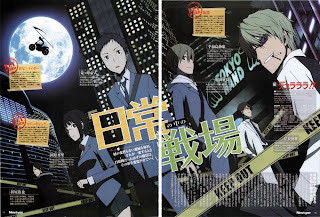
Durarara!!

At their industry panel at Otakon 2010, anime studio Aniplex announced that they will be distributing their new 24-episode TV anime Durarara!! based on Ryohgo Narita's light novel series on DVD in the United States. The first part of the "High-Tension, Suspense Action, Mysterious and Totally Crazy Anime!!" will hit American shores on January 2011, with two more DVD sets (two DVDs per box) of eight to nine episodes each following close behind.

Following this already exciting announcement, Aniplex also revealed some of the dub cast for the series, while confirming that the DVD release will come with both dub and sub tracks. Celty Sturluson will be played by Kari Wahlgren (Haruko in FLCL), Ryuugamine Mikado will be played by Darrel Guildbeau (Satoshi in When They Cry), and Heiwajima Shizuo will be payed by Crispin Freeman (Togusa in Ghost in the Shell, Zelgadis in Slayers, Kyon in Haruhi). After some questioning from fans in the audience, representatives revealed that the Durarara!! OAV will be included in the DVD release, voiceover studio Bang! Zoom (Code Geass, Gurren Lagann, Haruhi) will be dubbing the show, and there is no guarantee of a box set until Aniplex finishes putting out the Japanese DVDs.

Interested fans can currently watch all 24 episodes of the recently-completed Durarara!! with subtitles on streaming video site Crunchyroll, though Aniplex did not mention if they would be taking down the streaming videos once the DVDs come out in the United States. (Aniplex has also put up an official site for Durarara!!)

At the panel, Aniplex reps also announced a Blu-ray release of anime franchise Read Or Die, featuring both the critically-acclaimed OAV and the television series of the same name.


Click here for more of our Otakon 2010 coverage

Otakon 09: Aniplex panel report

Topics: , , , , , ,
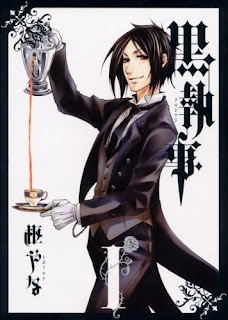
Kuroshitsuji (Black Butler)

Although I was called out of this panel early, I was privy (along with all other attendees) to presentations/previews of some present and upcoming Aniplex titles: FMA: Brotherhood; Gurren Lagaan the Movie: Childhood’s End; Guin Saga; Kuroshitsuji (Black Butler); Kannagi: Crazy Shrine Maidens; Garden of Sinners; and Cencoroll.

Anyone reading this article on this website should damn well know what FMA: Brotherhood is all about, and readers who don’t know what Gurren Lagann is should rent/stream the series before checking out the movie. (Editor's note: or listen to almost any episode of the Ani-Gamers Podcast.) So I’ll start with Guin Saga, which centers around a warrior who has lost his memory and is searching for his past alongside members of the lost kingdom. This project integrates the talents of director Atsushi Wakabayashi (who has worked on Naruto) and Nobuo Uematsu (famous for his Final Fantasy music).

The folks from Aniplex also announced a second season of Black Butler, which will continue the plot wherein the main character is, surprise, a butler (and also a demon). He serves his household breakfast, lunch, and damnation, but only after members enter into a pact with him.

Skipping Kannagi (read the rest of our posts about it!), the Garden of Sinners movie is chock-full of action involving a combination of swordplay and chi-based attacks with brilliantly executed camera techniques. This dialogue-less preview was more than a delight for the eyes with its use of color and more than enough of a hook to make me want to see more.

Action’s all well and good, but give me weird any day! Cencoroll featured talking car hoods, flying creatures that evolve out of everyday objects, and much more craziness than even I could possibly describe...because that’s when I had to leave (much to my disappointment).

Look for these titles later this year or next! Not a one deserves to be missed.

Otakon 09: Aniplex panel - Kannagi discussion

Topics: , , , ,
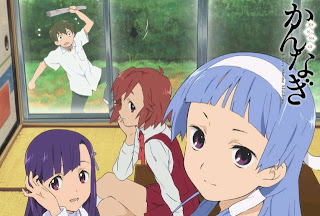
Kannagi: Crazy Shrine Maidens

As it turns out, the "Aniplex TBA" panel at Otakon 2009 was dedicated to Kannagi: Crazy Shrine Maidens, and featured Yutaka Yamamoto as well as members from the Aniplex team. The American production team from Bandai Entertainment spent most of the panel asking Yamamoto et al about specific developmental aspects of the series.

As with most introductions, the easiest thing on which to elaborate first was how the series came to be. This was mostly due to a professional relationship Yamamoto had formed while working with someone on the project “Swing Big.” After Yamamoto climbed in the ranks, he caught her attention, was taken more seriously, and, more importantly, was given the chance to help make Kannagi a reality.

Another query was one of change, specifically those needed/wanted between manga and anime. Here, Yamamoto relayed that the anime team was devoted to the idea of completely complementing the original. As the original manga author (Eri Takenashi) was asked to be directly involved, the anime team made sure never to subtract, but only add when necessary and according to the author’s permission.

The process of voice actor selection was also of interest. As it turns out, a voice talent agent supplied more than 30 people for the main character. Each was asked to try out for all the female roles, and Ms. Tomatsu, who would eventually win the lead, was thought to be equally well-adept at each one. So well did she portray each character (according to the sound director as well as the Takenashi), that her assignment to the lead came down to that fact that she physically resembled the 2D character.

A rather interesting aspect of any show that is rarely given any credence, much less justification or explanation, is the opening/closing credit sequences. While demanded by the studio (probably due to the success of Haruhi Suzumiya), Yamamoto ensured they would be metaphorical. The opening was expressive of the main character’s pop-idol attributes, while the closing exemplified her more divine aspects (minds out of the gutter, boys. We’re talking spirits and goddesses, not heavenly curves).

In a reverse Q&A session, seeing as the Americans already got to ask their questions, Yamamoto was asked to pose any queries he might have for the American production staff or fans. His question was concerned with how viewers in the United States would accept the divine aspect of the series. Seemingly expecting negative feedback, Yamamoto’s face beamed as his translator conveyed that members of the panel audience said that America is big enough to accept all ideologies, that it welcomes the stories of other cultures in their own context without feeling encroached upon/preached unto, and that spirituality in art can be taken metaphorically and without offense.

Review: Baccano! (Sub)

Topics: , ,
Baccano! Media: TV Anime
Genre(s): Action, Adventure, Comedy, Fantasy, Historical
Director: Takahiro Omori
Studios: Brains Base (Animation), Aniplex (Music)
Number of Episodes: 13
Licensed? Yes (FUNimation)

After watching all thirteen-episodes of Baccano, a question comes to mind: why has no one watched this show? The mafia of Prohibition-age America – immortal alchemists – bank robbers – guns – sadistic and graphic torture – broads and dames – and that's just the first episode! This testosterone-fueled ride spanning more than two (or two-hundred) years has more kinetic energy than a barrel of gasoline-soaked fireworks.

Baccano, Italian for "cacophonous noise," follows a cast of over ten well-crafted and diverse characters across two seemingly separate stories. By the end of the opening credits, you learn how perfectly the title fits. The opening theme "Gun's&Roses" is a rhythmic brass drive that rivals "Tank!" for smoothest opening theme. Fans of Guy Richie's film Snatch will enjoy the mono-chromatic close-ups of the characters.

Did we lose the plot amidst the noise? Well, on one hand is the mystery of New York mafia playboy Dallas Genoard, whose sudden disappearance expedites a feud between crime bosses. On the other, the cross-continental train ride aboard the treacherous Flying Pussyfoot bubbles into a powder keg of violence as four colliding, gun-wielding parties struggle for control of the train and its passengers. There's also an alchemist cult crossing the Atlantic during the 1700's, but that's just baccano…

What separates this series from every other anime experience of 2007 is its groundbreaking slaughter and rebirth of story-telling structure. Baccano jumps around time with a blur that would make Quentin Tarantino's head spin. But it does this between two stories! Disorienting? Yes. Rewarding? Beyond your expectations.

Tarantino would praise Baccano for its graphic violence, barrage of badass characters, and structure that holds the same logic as a Bingo board. I do not hesitate to say that the blood-level is gratuitous and even an R rating would be generous. Therein lies the problem in establishing a fan base: even desensitized viewers today can be unnerved by Baccano's absurd level of violence, bloodshed and torture.

Without the violence, however, the impeccable humor (both character and situation-driven) would not shine through as brightly. You may cringe at Ladd Russo's gleeful puppetry of his mangled comrade's skeleton, or you may be taken by gallows laughter. Either way, the scenes move with breakneck velocity, skipping from heavy-handed to light-hearted with a masterful grace. The darkness of the comedy plays off well with the tongue-in-cheek severity of the bloodshed.

The series struggles to find a main character and, in fact, dedicates its entire first episode to guessing who should be the central protagonist. But finding the central character in Baccano is like naming the badass in Bleach: it's not gonna happen, but it's fun as Hell to wonder. I cannot mention my favorite dozen characters without leaving out my second-favorite dozen, so I will sum up the bombardment of amazing personas with four words: Sweet Suzumiya, Rail Tracer.

Even with its cluttered narrative, Baccano delivers, brilliantly wrapping itself up in a finale that is chaotic, disorienting and unquestionably satisfying. Strap yourselves in, 'cause this bumpy ride makes an offer you can't refuse.

Animation: 3.5 Average:

(3.75 stars)
Plot: 4.0
Voice Acting: NR
Sound: 3.5
Overall: 4.0