-

Review: Soul Eater, Part 1 (Hyb)

Topics: , , ,
Soul Eater, on sale now from FUNimation Medium: TV Anime (51 episodes)
Genres: Action, Adventure, Comedy, Fantasy
Director: Takuya Igarashi
Studio: BONES
Original Run: Apr. 7, 2008 - Mar. 30, 2009 (TV Tokyo–Japan)
Release Date: Feb. 9, 2010 (FUNimation–N.America)
Rated: Not Rated

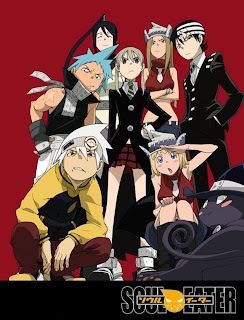
Forgive my repetition, but for summary’s sake: Soul Eater revolves around a bunch of kids, classified as anthropomorphic tools of destruction (weapons) or those that wield them (meisters), whose end goal by training at the Death Weapon Meister Academy (DWMA) is to keep the world safe from witches as well as those that feast on human souls for the sheer guilty pleasure of it. Centered on students, the main theme is, appropriately, one of learning. Edification does not have to mean mindsets or skill sets or interpersonal relationships, but Soul Eater manages rather impressively to interweave all three in a manner that never becomes formulaic or boring.

If there was one defining factor that initially caught my eye and made me keep tuning in to FUNimation’s streaming broadcast, it was a combination of the art and fight choreography. But within the first few episodes, I also found myself chuckling at the series’ sense of self-deprecation and drooling over the engrossing nature of the interaction between all of the characters. In short, for a Naruto-esque anime, there’s a lot of good writing lurking in the subtext and an abundance of surrealist art bolstering the background that lend to an amazing series. Not to say that the screenplay is Kafka nor the art Dali, but the series doesn’t attempt to hide its obvious craft. Instead, it adopts elements and uses them to suit its own various needs.

The art, while a bit CGI-heavy, offers viewers surrealistic backdrops and personifications (gotta love the sun and moon) as well as fight scenes that are as interestingly executed as they are engrossing. There is a minimum of hazed-out background transformations and executions during fight sequences, making the animation and depiction of fights solely reliant upon actual action (go figure). This adds to both the realism of certain situations and the sheer pleasure of watching things actually happen. Details, it’s all about the details ... until things get moving.

Over the run of the first 13 episodes, the first three of which are entirely action-driven, character-building prologue, the frequency of detailed action scenes slips, but this is taken up by the upswing in character maturation and mind games between friends and enemies alike. This is not a weak point though. The action remains in focus while more and more characters are introduced and simultaneously woven into the fray. In fact, one of the most interesting and sinister characters, whose actions result in one of the most entrancing battles within the fantasy genre I’ve yet to see, only really gets her debut in episode 12!

Ah, which audio track to tune into? (I could write an essay purely on that!) While I think the Japanese is absolutely and without question perfect, I’d also admit that the dub grew on me like a weed. Don’t get me wrong; the English dub is well-acted in almost every respect (if only seeming phoned-in and out-of-sync a bit too many times), but whoever cast a woman to voice Black Star is at fault for the series' sole inexcusable audio atrocity. While her enthusiasm shows through and through, Brittany Karbowski should NOT be voicing one of the most vivacious central characters in the show, an early teen male, simply because of her estrogen levels and vocal range. Everyone else, however, finds their role and convincingly plays their parts, but there’s just something grinding about Brittany’s girlishness, which, to her credit, is either tamed or brainwashed via repetition throughout each subsequent episode.


This review is based on a DVD box set provided by FUNimation Entertainment.


great.

Ani-Gamers Podcast #024 – He's Sort of a Stranger

Topics: ,
The cast of Sword of the Stranger, top to bottom: No-Name, Kotaro, and Tobimaru

Hosts: Evan "Vampt Vo" Minto, Mitchell "MitchyD" Dyer
Topic: Sword of the Stranger (anime, 2008)

Today we're talking about Sword of the Stranger, a samurai action anime created by studio BONES, directed by first-time director Masahiro Ando, and distributed in the United States by Bandai Entertainment. Mitchy and I loved this movie to death (a state experienced by more than half its cast), so this episode turned out quite a lot like our Golgo 13 podcast.

I'm not sure just yet what we'll be doing next episode, but we definitely want to talk some video games again sometime soon, and our 25th episode milestone IS right around the corner...

Show notes and links forthcoming.

DIRECT DOWNLOAD - RSS Feed - iTunes - Send us Feedback! - More episodes


(Runtime: 49 minutes)


[00:00] Intro: Golgo 13 is the sexiest man on Earth. Don't deny it.

[00:21] Opening Song: "Konya Wa Hurricane" by Priss & The Replicants (Bubblegum Crisis episode 1 OP)

[00:37] EDIT: I accidentally left in a piece from last episode. This bit is just Evan and Mitchy introducing themselves.

[01:28] We start What'cha Been Doing? with Mitchy talking about video game novels, like the Metal Gear Solid 2 novel.

[02:44] Assassin's Creed II is "the BEST GAME of 2009," according to Mitchy. And we both hate the first game.

[04:26] Mitchy beat Mass Effect for the fourth time, and Evan's playing it the first time. We both like it, but Evan's still feeling out the game, since he's only a few hours in. Like a true cynic, Evan starts his discussion of Mass Effect with what he doesn't like about it, even though his overall impression is positive.

[06:35] Mitchy is playing Dragon Age: Origins, a.k.a. "Knights in Shining Armor of the Old Republic." Cue ensuing discussion of morality systems, Far Cry 2, and a mystery game that Mitchy isn't allowed to name.

[08:47] Even though it's mo, Mitchy is considering watching Azumanga Daioh. Evan recommends it before pointing out that it's totally made for pedophiles.

[09:45] Evan watched Irresponsible Captain Tylor, which he calls, with hesitation, a "dramedy." It has a weird harem plot and some annoying twin girls characters, but rest assured, he enjoyed it. Also, he never mentioned it, but it takes place on a spaceship, not a boat.

[11:23] Samurai X is so awesome. Mostly just Trust & Betrayal though.

[11:23] This discussion was supposed to be short, but like all of our discussions, it just kept going. Long story short: Evan and Mitchy both love the XLBA game Splosion Man, but Mitchy can't beat the first boss because he's a baby.

[15:23] Helen McCarthy's The Art of Osamu Tezuka is a great read according to Evan, who just finished reading it. It's got profiles of almost every manga the man ever wrote, and there's a never-before-translated documentary in the back.

[17:25] Break: "Sakura Kiss" Chieko Kawabe (Ouran High School Host Club opener)

[18:32] Review: Oh My God it's Sword of the Stranger! Directed by Masahiro Ando, created by Studio BONES, and forged out of pure awesome.

[19:56] Cue the excited list of the best deaths in this movie. Wrecking ball whip, battle-axe tied to a rope, three-piece staff/scythe combo, and airborne katana. Mitchy's notes are notably more eloquent than Evan's.

[21:47] The plot is really basic. There are Japanese people, Chinese people, and a white dude. IMMORTALITY also.

[23:51] At this point we kind of just start spoiling the best deaths. Again.

[25:48] This movie has a Shiba Inu that kills more people than one of the main characters, and even catches a knife in its teeth.

[26:32] Mitchy really liked the plot, but Evan thinks it's just serviceable. It avoids some clichs and ends up being kind of generic, but a ton of fun.

[28:30] The animation, direction, cinematography, and the MUSIC were all awesome. Goddammit, that music was sooooo good. We go into a long discussion of how beautiful the animation and the background art are, despite the brutality of the violence.

[32:55] The movie isn't gratuitous, and the end of the movie has some great surprise deaths that the camera doesn't linger on. Oh, and the old Chinese guy goes out like a punk.

[36:15] The dub for Sword of the Stranger is actually quite good, and the Chinese people actually speak Chinese, which is pretty cool. Evan's complaint about the subtitles during the dub was actually not a problem on a second viewing. Must have just missed the option or something!

[38:52] Mitchy is in love with this movie, but Evan didn't like it as much because the story is simple and kind of generic. Even so, we both loved it, and agree that it's incredibly fun to watch. Highly recommended.

[42:57] That's the end of the show. Mitchy is currently writing for Official Xbox Magazine, so read some words from him in that fine publication. Also read the FMA: Brotherhood Diaries and our 2009 Staff Picks on Ani-Gamers.

[48:15] Ending Song: "Konya Wa Hurricane" by Priss & The Replicants (Bubblegum Crisis episode 1 OP)

[48:42] A rumination on the paradox of jetpacks and videophones.

Fullmetal Alchemist: The Brotherhood Diaries - Mission Statement

Topics: , , , ,
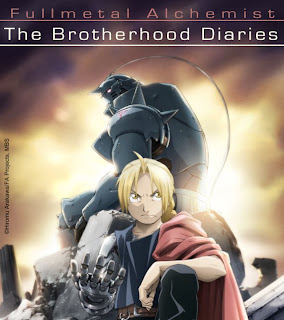
Fullmetal Alchemist: The Brotherhood Diaries

Welcome to our newest feature here at Ani-Gamers. "The Brotherhood Diaries" is a new column written by Ink, and focusing on the new Fullmetal Alchemist: Brotherhood series. We'll leave him to explain the details.

Fullmetal Alchemist (FMA) is a story about (as if you didn’t know) two brothers living in an alternate human history – where alchemy progressed as the major science instead of electronics. These boys commit the ultimate taboo of trying to transmute a human life (their mother’s) and end up paying for the consequences of that act. The resulting 51-episode tale (plus movie) is one of brotherly love, morality, war, science, religion, and all the strains in-between.

First adapted from Hiromu Arakawa’s original manga into anime form by BONES, FMA supposedly stopped following the original story about halfway through its overall run because it outpaced the output of its creator. Luckily, instead of a hiatus, the anime’s producers collaborated with Arakawa to work out an alternative story path. Now, some four years after the conclusion of that story, the original is getting its chance to be told without alteration.

This re-imagining, being released on Funimation.com nearly simultaneously with the Japanese TV airings, does nothing if not open up the critical avenues of comparison and contrast given the popularity and outright love people shared (and cosplayed and otaku-ed) for the original anime series. Having been so enthralled to the original anime series myself, I will watch weekly the goings-on of the Elric brothers in this new FMA to point out differences – obvious and obscure, stylistic and chronologic, dramatic and humourous – between it and its predecessor so that, even if you’ve never seen the original or never wanted to see another re-envisioning of the original, anyone reading this might gain some good reason to ride the lengthy emotional roller coaster yet again...hands up in the air, tearing in sorrow or screaming for joy.

Review: The Skull Man (Sub)

Topics: , ,
The Skull Man Medium: TV Anime
Genres: Drama, Horror, Mystery, Supernatural
Director: Takeshi Mori
Studio: BONES
Licensed? No

Editor's Note: This is an anime adapted from manga legend Shotaro Ishinomori's original "Skull Man."

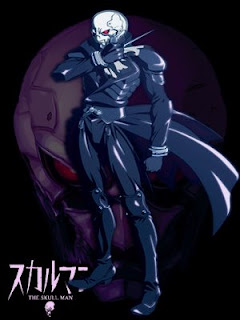
Nothing hits the spot like a solid mystery, a gripping horror story, or an action-packed descent into darkness. The Skull Man sets the bar for modern gothic suspense without relying on the convoluted, philosophical and psychological dribble barrage of such series as Boogiepop Phantom and Serial Experiments Lain. While both are great series in their place, The Skull Man combines a killer storyline with solid action and gripping, linear human pathos.

Our plot is as follows: Ootomo City has more skeletons in its closet than the house in Spielberg’s Poltergeist; one of those skeletons is ready to slaughter your ass.

The main story is told through the eyes of Hayato Mikogami, an ambitious, young and fearless newspaper reporter from Tokyo. He comes to Ootomo to investigate the serial murders of a mysterious “skeleton costumed” man who only appears after midnight. Once he arrives, his bad luck accidentally partners him up with Kiriko Mamiya, a teenage photographer with tomboyish charm to spare. Together, they uncover the links between the Skull Man, pharmaceutical companies, the resident cult, and the murderous mutants that prowl the streets during the night.

Sound like a lot to handle for a thirteen-episode series? It is, but only by keeping the mystery and the intrigue alive does The Skull Man handle itself so skillfully. As any well laid-out mystery goes, every scene, every moment, and every murder only opens the door to the next clue. When Ootomo City approaches midnight, citizens are locked in their houses and police cars patrol the streets, turning the city into a prison. For all its details, The Skull Man never loses the central mystery: the skull man’s true identity, and the reasons he terrorizes the city.

By episode two, Hayato meets Detective Shinjou, who tails him endlessly, convinced that Hayato is connected personally to the mysterious murders. Without his adopted uncle, a high-level bureaucrat watching his back, Hayato would be behind bars most of the series. With each new character they encounter, Hayato and Kiriko discover that the number of people they can trust is dwindling. Even at the halfway mark, when Kiriko’s true mission (not to mention martial arts skills) is revealed during a battle with her brother, is it clear that our characters are in desperately over their heads.

Hayato has a small network of people he continuously pumps for leads (though unsuccessfully). One lead is an old childhood friend who became the town priest, who guides Hayato in his quest to seek the higher power and truth behind the Skull Man. Another is an older P.I., whose wisdom and nearly Goku-level of perfect timing seems to have stepped from the pages of noire pulp comics.

Some of the lighter moments, especially those between Kiriko and Hayato (who share great moments in their struggle for dominance in their partnership) soften the mood just before the next murder or devilish plot twist occurs. Hayato’s constant confrontations with the Skull Man drive him to obsession to discover the face beneath the mask, even facing the dangerous specter down at gunpoint. By the halfway mark, it is clear that The Skull Man frames Hayato’s embrace of his inner darkness to battle the greater darkness of Ootomo City’s hubris and political corruption.

Sounds pretty epic, don’t you think? Just imagine all that and some werewolves and a small battalion of mechanized maniacal army clowns with flame-throwers and rocket-launchers. Now we talking badass.

Religious imagery, especially those dealing with light, darkness and resurrection, recur faithfully in Skull Man. For example, the secretive Byakureikai cult (literally meaning white bell association) is grooming a key character to be their new Eve in the world they aim to create. While Ootomo City prides itself in its ever-present military-police force, the city does hold a striking Babylon parallel complete with the tower. In the end, the Skull Man’s true purpose is to keep the executives of the pharmaceutical company’s power in check and dish out divine punishment to keep the citizens grounded. The Skull Man himself quotes Nietsche and Macbeth just to add to his creepy persona. Forget Tuxedo Mask from Sailor Moon or Buffy: the Vampire Slayer’s Angel, the title character of this anime is relentless, haunting, and holds more “badass” in his belt buckle than Blood +’s Haji has in his whole cello case. The black leather, spring-loaded sais, German Luger and glowing red eyes are enough to haunt even the most desensitized viewer’s dreams.

Besides being a mystery, The Skull Man is also easily categorized as super-natural with elements of horror. Studio BONES (who put out Fullmetal Alchemist and Darker Than Black and, by extension, have a direct link to my heart and wallet) assembled a patchwork team of directors and writers to compose this piece. With a lot of violence and intense moments, this series would find difficulty in a younger fan base. Its maturity and complexity limit its target audience and, thus, its interest from American dubbing companies.

While The Skull Man’s pacing mirrors The DaVinci Code and results in a stereotypical all-flash-and-zero-explanation ending that is inconclusive at best, it is still a very good mystery. Even the way its scenes are shot reveal something essential: characters over the phone, characters emerging from behind slightly ajar doors: Ootomo City can make any viewer feel like they are trapped in The Matrix. But I do offer fair warning that this is not a series with conclusive results. In fact, just to stay true to its own tragic nature, The Skull Man ends on a darkly lit here-we-go-again tone that shadows an even greater evil that will soon come to pass.

For all its red herrings, dead ends and McGuffins, The Skull Man still cranks out a great story with more layers than an onion and a great balance of horror, tragic desire and hair-raising action. How it handled itself so well is the real mystery.

Animation: 4.0 Overall:

(4.0 stars)
Plot: 4.0
Voice Acting: NR
Sound: 4.0

New Fullmetal Alchemist anime in the works

Topics: , ,
Fullmetal Alchemist manga confirming the new series

The wraparound jacket of Hiromu Arakawa's Fullmetal Alchemist manga is reportedly confirming the existence of a second TV anime adaptation of the hit series. Fullmetal Alchemist fans first heard about the possibility of a second anime a month ago when a document supposedly listing FMA animator Yasuhiro Irie as "Iron/Fullmetal 2 director" surfaced on the Internet. (It also contained confirmation of a Darker than Black sequel)

BONES, the studio behind FMA, quickly denied the existence of the document, but confirmed to the Anime News Network that they were interested in pursuing sequels to both series. Before people cry foul on this story as yet another rumor, this is being confirmed through the official Japanese release of Arakawa's manga, so it's surely a legitimate announcement. The question is: what does this mean for the rumored Darker than Black sequel?

There are no further details on the new series as of right now, but keep your browsers locked on Ani-Gamers for more updates on this breaking story.

[via Anime News Network]

User-Preview: Xam'd (Sub)

Topics: , , , , ,
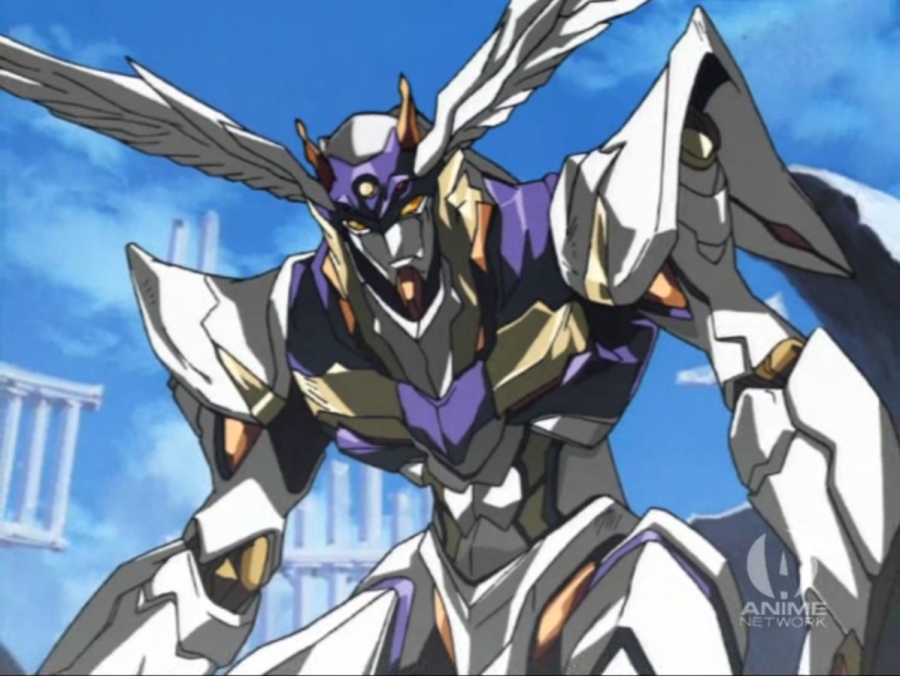
Xam'd by Bones (studio)

The following article was submitted by Rp Phantom. The opinions expressed below do not represent those of Ani-Gamers or its affiliates.

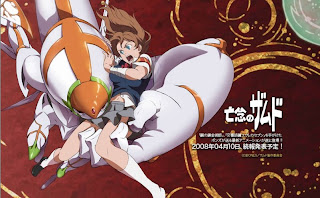
We all know the mecha genre. From Mobile Suits to Giant Robots to Giant Robots that are actually not even robots, an anime fan would think that, by now, the mecha genre has become formulaic and predictable. So, now that Eureka Seven has come and gone, Bones and Aniplex are back again, and they bring to the table yet another tale of an adolescent boy, giant airships, mechas, and living weapons. They bring Xam'd: Lost Memories.

So I bet you're asking, "So who's the new teenage boy who has to control these robots?" or "Who's the new mysterious introverted girl?" While Xam'd seems to fall under the mecha category at first, it is made clear from the start that the story does not revolve around mechas. Yes, there is a teenage boy, there is a mysterious girl, and there are airships. To set the record straight for Xam'd, here's an early plot overview.

The story begins on Sentan Island, a land of seemingly contradictory nature. It is described as isolated, but it is highly populated. It is apparently under military rule, but the citizens live in peace. Akiyuki is a teenager living on this island, living between his separated parents. He is a confident and amiable individual, and has a pair of close friends named Haru and Furuichi.

On his daily walk with them to the school bus, he spots a pale-looking girl named Nazuna who appears to be a new rider on the bus. The soldier guarding the bus has the students lined up to check their armbands, and he notices that this frightens Nazuna. He passively slips her his armband, to help her avoid complications with the soldier. He claims he forgot his, and is expectedly let on anyway because he is a familiar face.

This appears to me a dreadful mistake, as Nazuna detonates a bomb on the bus as he exits in front of the school, an apparent act of war. Several students are wounded and killed, and a strange light from the explosion hits and enters Akiyuki's right arm. Confused, he re-enters the blown apart bus and tries to help Nazuna, who is wounded and bleeding green blood. She apologizes for getting Akiyuki caught up in her actions, and offers to give him her lost memories: Xam'd. Nazuna touches Akiyuki, and a strange white liquid envelops his body, and transforms him into a monstrous creature. (Just like they said would happen in Catholic School).

Suddenly, airships from a belligerent military from the north drop super weapons known as "Humanforms" onto the island. These humanforms are like living attack vehicles, except the are behemoth in size. A passing postal ship remains nearby, examining the situation. On this ship is Nakiami, a mysterious young woman who takes interest in the humanforms, and even more so, the Akiyuki-turned-Xam'd.

Xam'd is compelled to fight these humanforms, possibly to protect Akiyuki's friends. After being destroyed, the humanforms start to crystallize and corrode apart before the victorious Xam'd. In no time, Nakiami swoops down to Xam'd, and traps him. He then starts to corrode in a similar matter as the humanform. Nakiami urges Xam'd to come with her if he wants to live. Xam'd obligingly collaspes and transforms back into Akiyuki, unharmed, leaving only a mutated Xam'd arm on his body.

Nakiami takes Akiyuki back to her postal ship, where she cares for him, and explains that he now requires training to control the Xam'd within him and to keep himself alive. From then on the stage is set as Akiyuki travels with the ragtag crew of the postal ship, while his friends are left to try to restore their devastated lives and homes, in a city that lies on the brink of warfare.

Xam'd brings recognizable qualities with something new to the table. Like their previous work, Eureka Seven, Bones's animation is flashy and fluid, and of course, action-packed. Even the theme song, "Shut up and Explode" by the Boom Boom Satellites is catchier than chlamydia. Overall, this new anime seems to have a lot of potential, putting a new twist on predictable sci-fi and mecha genres. Definitely worth watching.