to

Secret Santa Review: Last Exile (Hyb)

Topics: , , , , , , ,
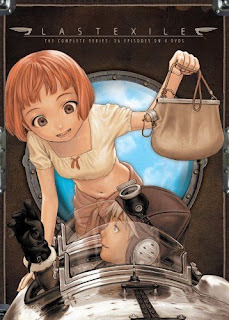
DVD box set for GONZO's Last Exile

Medium: TV Anime (26 episodes)
Genres: Adventure, Fantasy, Military, Science Fiction
Director: Koichi Chigira
Studio: GONZO
Release Date: Apr. 7 – Sep. 29, 2003 (TV Tokyo – JP), Nov. 18, 2003 (Geneon/FUNimation – NA)
Rated: Not Rated

Ed. Note: Welcome to the second of our four "Anime Secret Santa Reviews." Our reviewers were given review requests as gifts from their Secret Santas, and are now unveiling their opinions of the shows they chose. For more information, check out our 2010 Anime Secret Santa introductory post.


You know you're in for a polarizing show when one of the biggest pieces of praise people can give is "it's one of the few shows by this studio that's actually worth watching!" Unfortunately for anime studio GONZO (Gankutsuou, Welcome to the NHK, Linebarrels of Iron), that's basically the compliment granted to any relatively successful series that they create, and for better or for worse, Last Exile (2003) sits among this short list of "not terrible" GONZO series.

The show begins in a vaguely steampunk era in which giant airships have become the primary tool of war. Our heroes are two young pilots who make their living as couriers on the wings of their small fighter plane-esque craft called a "vanship." Claus Valca is a quiet, kindly pilot with a penchant for finishing everything he starts, while Lavie is his hot-headed, impetuous, and intelligent navigator. As the guy piloting the vanship, Claus is naturally the hero GONZO chooses to focus on, while Lavie serves simultaneously as his childhood friend, romantic interest, and moral compass.

These two couriers are living a simple life in the shadows of their legendary fathers (couriers who flew together until their untimely deaths) when they find themselves tasked with transporting a young girl named Alvis to the "Kill 'Em All" Silvana, a notorious mercenary airship thought to suck the souls out of anyone who comes aboard. After narrowly escaping attacks from the Guild, a shadowy organization that exerts subtle control over all the world's militaries and governments, the two vanship operators end up joining the Silvana's not-so-scary crew in a mysterious mission to strike the very heart of the Guild.

Some of the cool concept art for Last Exile

On paper, Last Exile seems like an exhilarating modern military tale, set in the skies of a unique world bound by strange rules — and it almost is, too. Unfortunately, GONZO's execution is painfully uneven, to the point that I often wondered if the writers knew where they were going when they created the original concept. The story is roughly split into three acts: 1) introduction of major cast and factions, 2) the Silvana wanders around doing things and battling some people, and 3) final confrontation with the Guild. As you might be able to guess, the second act features no central narrative or even an attempt at a formula (which would have made it much easier to follow). Instead the characters just meet a few unrelated challenges and overcome them, all the while developing ever so slightly as both individual characters and as a team.

Unfortunately, that individual development often leads to dead ends, as with two of the show's seemingly important romantic threads that simply die out before the introduction of the third act. The overall development of the cast, however, is one of the Last Exile's defining characteristics. The sense of cohesion between the Silvana's crew might not be apparent at first, but the motley crew of pilots, mechanics, and bridge personnel really start to feel like one big team by the end of the series. The most apt comparison that comes to my mind is original Gundam (1979), though Last Exile certainly doesn't pull it off quite that well.

Despite the compelling sense of overall camaraderie, some of the individual characters can get truly grating after 26 episodes. Let's start with Claus: his personality is so meek and boring that he is effectively the same as any of the cookie-cutter protagonists in harem anime. Underscoring this unfortunate truth is his harem of girls, including Lavie, Alvis, the cold-hearted pilot Tatiana, and even the strong-willed Vice Captain Sophia. To make matters worse, Tatiana turns into a mushy little lovestruck schoolgirl when Claus so much as lends her his jacket, and Sophia's romantic encounter comes from so far in left field that you'll likely be throwing things at your screen in frustration. To be honest, by episode 15 I was convinced that Last Exile was a harem show in disguise.

Meanwhile, there are a few characters who really shine despite their disappointing company. Alex Row, the stoic captain of the Silvana, rocks all kinds of socks with his grumpy demeanor and tortured past, but cracks begin to show in his emotional armor as we learn more about his history and see him lose control near the end of the show. Dio (no, not that one) and Lucciola, two runaways from the Guild who join up with the Silvana, and Mullin Shetland, a musketeer-turned-mechanic, provide an interesting counterpoint to the rest of the crew as outsiders coping with the stress of turning away from their previous loyalties. On the bad guy's side, the sinister Guild leader Maestro Delphine comes off as a poisonously sweet version of Gundam's Haman Karn.

Lavie Head, the surprisingly well characterized female lead of Last Exile

But as far as I'm concerned, the real star of Last Exile is Lavie Head, Claus's energetic navigator. Originally she seems like nothing more than an obligatory bossy love interest, but by episode 8 or so it is clear that her personality reaches depths far beyond those of her lame childhood friend. Even when she decides that she doesn't want to be Claus's navigator as long as he is flying in combat (a brave and unexpected decision that throws a fascinating wrench in the works), she remains one of the most well-developed members of the crew. Lavie feels with a magnitude that nobody else in the show does, careening between nurturing love for Alvis, passionate concern for Claus, and unexpected bravery in the face of danger. Through it all, she manages to be both completely admirable and believably flawed, a feat that I'm frankly surprised GONZO managed to pull off so well.

While Japanese voice actor Chiwa Saito's performance as Lavie certainly gets the job done, Kari Wahlgren truly makes the role her own. Especially compared to Johnny Yong Bosch's typically overwrought Claus, Wahlgren's Lavie is always believable, no matter where she is on the emotional spectrum. In terms of the rest of the English cast, despite some clunky deliveries they mostly stack up well, especially thanks to spot-on Japanese-to-English voice matching by Bang Zoom.

Nearly all of the technology in the show (intricately researched and designed by character designer Range Murata and Gankutsuou's Mahiro Maeda) is animated using GONZO's notorious CG style, which only rarely blends with the two-dimensional character animation used throughout. Movement is also irritatingly choppy during the fight scenes, undercutting the clear quality of the original concepts. The skilled 2-D animators who realized Murata and Maeda's beautiful character and costume designs likely could have transformed most of the storyboards for the battle scenes into thrilling dogfights, but as it stands the 3-D fights are merely passable (though GONZO gets points for including ZERO Gundam-style monologues or pilot-to-pilot arguments during fights).

One of the CGI battle scenes in Last Exile

While I don't usually comment on such things, Last Exile's sound design is actually one of its greatest strengths. The sound effects used to represent the creaking and turning of machinery and the movements of the wind are far more visceral (and frequent) than the effects used in most other anime. This, combined with Maeda and Murata's unique and complex designs for clothing and machinery, makes for a lot of fascinating world-building potential. Unfortunately, spotty explanations of the factions and technologies often make it difficult to understand who is fighting whom and for what reasons. By the time the series reaches its exciting finale, it might still take a Wikipedia visit or two to understand just what was going on in the skies of Claus and Lavie's world.

Last Exile, like many GONZO series before it, is a valuable lesson in wasted potential. It's clear that the concept designers put a lot of work into the series during pre-production, and the animators' love for their material shines through in rare moments that belie Last Exile's most glaring flaw, which is that it doesn't really say or do very much with its own material. In the end, the exquisite presentation, the attempts at world-building, and the moments of genuine humanity come together to produce a work that is nothing more than the sum of its parts. We are left with a vaporous story about people in airships who fight each other.

[Passable]


This review is based on the Hulu streams (both dub and sub) of the series, provided by FUNimation.

Secret Santa Review: Fate/Stay Night (Sub)

Topics: , , , , , , ,
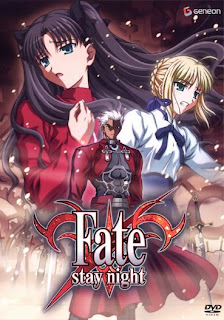
Fate/Stay Night from Studio DEEN

Medium: TV Anime (24 episodes)
Genres: Fantasy, Action, Romance, Supernatural, Thriller
Adapted from: Fate/Stay Night (2004 game)
Director: Yuji Yamaguchi
Studio: Aniplex/Studio DEEN
Release Date: Jan. 6 â Jun. 16, 2006 (JP), Dec. 19, 2006 (Geneon/FUNimation â NA)
Rated: Not Rated

Ed. Note: Welcome to the first of our four "Anime Secret Santa Reviews." Our reviewers were given review requests as gifts from their Secret Santas, and are now unveiling their opinions of the shows they chose. For more information, check out our 2010 Anime Secret Santa introductory post.


Fate/Stay Night tells the story of ShirÅ Emiya, sole surviving civilian of a local holocaust, ten years after said event. The man who rescues ShirÅ becomes his adoptive father and instills in him a sense of pacifist justice before passing away. Having taken this philosophy to heart, ShirÅ embodies self-sacrifice and lives as a doormat for his classmates' inconsiderate soles. He does not turn down any request and is always willing to sacrifice his own well being for the welfare of others. As a result, ShirÅ's philosophy is challenged one day after summoning the world's most capable warrior (Saber) via latent magical abilities in a knee-jerk response to a mortal threat. By doing so, ShirÅ inadvertently enters an exclusive tournament known as "The Holy Grail Wars," in which all participants â pairs comprised of masters (magi, or magic users) and servants (warriors) â must either kill or be killed until only one magus and his or her warrior remain.

While the overall presentation of said story is awash with harem elements, the main conflict of the story, pacifism in the midst of battle, is aptly personified via the assignment of Saber to ShirÅ. Furthermore, implications are deepened via the introduction of ShirÅ's inability, caused by his lack of study in magic, to make Saber properly materialize. Thus Emiya and Saber, respectively as magus and servant, portray two incomplete parts that leverage each other to form a whole in the hopes of competently fighting against multiple pairs of complementary wholes. This setup is rife for conflicts, and the execution does right by exploring the main theme of action vs. inaction. However, the weaving of romantic tension turns too many scenes into boring and (for the most part) inconsequential harem tropes.

That's not to say that romantic tension doesn't serve some purpose. Rather, the execution of its repeated influence only weakens the story. I'd maintain there are two instances of romantic tension aptly serving the story: that of Emiya's falling for Saber and Rin's unexplainable interest in Emiya. While the latter only serves as a reason why a fellow magus would not kill, and instead might even protect, a competitor, Emiya's falling for Saber further lends credence to why he constantly puts his life on the line for what he views as his responsibility. Really, there's an essay waiting to be written on Emiya and Saber, and that fact alone makes the anime a worthwhile watch, but other aspects deserved to be touched upon as well. Art in Fate/Stay Night is standard fare but of above average quality (budget). Really, its only fault would be the showcasing of CG alchemic circles, the animation of which seems a little too out of place. Fight scenes are well orchestrated and, for the most part, fully animated, and the overall ambience is set rather perfectly. Deep hues of night, the only time during which combat is permitted, are foreboding and bloodthirsty, while days offer a palate more complimentary to the harem walls and the associated tension break. Character designs are also quite Romantic, especially concerning the servants' attire/armor.

Writing is a tad overly dramatic, except, surprisingly, for the harem aspects. Instead, I found myself actually liking how statements by the majority of the female characters never (or rarely) said anything directly. In retrospect, I also greatly enjoyed the underlying and understated theme of regret that manifests not only within the warriors throughout the series but which also resonates as the drive behind the warriors â each a mythical figure of ancient origin.

If you have time to kill, there are far worse anime to help you pull the trigger. It's pretty, the pacing of the main plot is quick, and general subtext is nothing that requires much thought. There is even decent potential as fodder for analysis, which is surprising given the series' origin as an âerogeâ (erotic game). What I can only guess to be a successful anime translation (best to ask Elliot Page) manages to eliminate all hentai aspects, save the annoyingly omnipresent harem elements (beware the first half of the date episode!!!), and deliver an enjoyable watch akin to a more grown-up Zatch Bell (2003).

[Recommended]


This review is based on rental copies obtained via the reviewer's personal Netflix account.

Review: Gankutsuou – The Count of Monte Cristo (Dub)

Topics: , , , , , ,
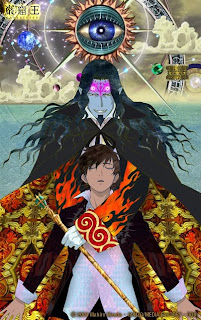
The Count (top) and Albert (bottom)

Medium: TV Anime (24 episodes)
Genres: Drama, Political, Science Fiction
Based on: Alexandre Dumas's novel
Director: Mahiro Maeda
Studio: GONZO
Release Date: Oct. 5, 2004 – Mar. 29, 2005 (Japan), Oct. 16, 2007 (Geneon/FUNimation – N.America)
Rated: Not Rated (appropriate for 16+)

Adaptations are one of my favorite types of stories to review due to their ability to show one story from multiple perspectives and through the eyes of multiple generations of writers. Thus, Gankutsuou, Gonzo's 2004 anime adaptation of Alexandre Dumas' seminal novel The Count of Monte Cristo, is simply irresistible to my sensibilities as both an anime fan and a fan of the original novel.

Unlike many others of its ilk, Gankutsuou goes above and beyond slavish imitation, changing a number of relatively important parts of the story from the get-go. Naturally this can confuse most readers of the book as they try to figure out how the plot could possibly work out with all of the changes. When I began watching, I, too, was a skeptic. Though I am certainly not a total believer now, the 24 episodes of Gankutsuou: The Count of Monte Cristo have shown me a fascinating approach to adaptation that maintains (and in some cases improves) the depiction of the central theme while not fretting over the nitty-gritty details of the original work.

On the topic of omitting grit, Gankutsuou skips Dumas's entire set of introductory chapters, which serve to construct the tragic back-story of the mysterious, fantastically wealthy Count of Monte Cristo. Instead, scriptwriters Natsuko Takahashi (Fullmetal Alchemist, Romeo X Juliet) and Tomohiro Yamashita (Afro Samurai, Red Garden) drop us into the Carnivale on Luna, a strikingly science-fictiony replacement for the original setting of Rome. As if the book purist in me wasn't already crying out at the omission of Edmond Dantes’s/Monte Cristo's unjust 15-year imprisonment, giant CGI blimps and reveling space colonists seem to state immediately that this is not Dumas's original (and, very importantly, that it is not trying to be).

The switch in the starting point, however, actually serves to set up the first of many important narrative shifts; the focus of the story is transferred from the Count of Monte Cristo to the anime's new protagonist, Viscount Albert de Morcerf (who plays an important role as a side character in the novel). While partying on Luna with his best buddy Franz d'Epinay, Albert finds himself in trouble with bandits, only to be saved by the Count. Before long he becomes close friends with the rich aristocrat, who ends up living in Paris, forging bonds with many of the most influential families in the city (including Albert's).

But as tragedy befalls Albert's friends, acquaintances, and enemies, it becomes clear that something sinister is afoot. Some see the Count as a prime suspect, but Albert cannot believe that the man who once saved his life would be out to cause harm to him or any of his friends.

The Count (top-left) and his slave-girl Haydee (bottom-right), displaying Soejima's unique textile style

The true strength of director Mahiro Maeda's (Blue Sub Six, "Second Rennaisance" portion of Animatrix) retelling lies not in simple translation. He might miss essential pieces of what Dumas was trying to say, but through these changes he creates an entirely new story, rooted in the basics of the original but not necessarily tied down to its themes or messages. Indeed, this contemporary version of The Count of Monte Cristo has its own moments of storytelling and aesthetic brilliance. Textile designer/digital director Yasufumi Soejima (Last Exile, Ristorante Paradiso) captures the opulence of Parisian aristocratic life using a fascinating and unique visual technique involving brightly colored textures that seem to remain stationary as the characters and objects they are attached to move around the frame. The effect is disorienting at first, but it lends the series a distinctive air of gaudiness that suits the setting. Meanwhile, the Count himself is the most striking image of the entire anime, with his almost vampiric blue face, pointed ears, and protruding canines. In the novel he is described as being so intriguing that he is the center of attention whenever he enters a room, so it is impressive that character designer Hidenori Matsubara (Bubblegum Crisis Tokyo 2040, Sakura Wars) was able to maintain this feature while not adhering strictly to Dumas's other descriptors.

Unfortunately, Gankutsuou's anime trappings don't always work to its advantage, especially when it comes to an overuse of exposition. The original Count of Monte Cristo revels in its mystique, never making an explicit connection between the Count and Edmond Dantes (nor with his own revenge plot) until the novel's final act. In Gonzo's version, the connection is made within the first episode, and though Albert is given an incredibly wide swath of incriminating information regarding the Count, it takes him around 20 episodes to finally discover the (then quite obvious) truth. Admittedly this kind of exposition is necessary due to the omission of Dantes's back-story, but it doesn't make the dramatic irony any less frustrating.

Geneon's dub doesn't exactly help matters either, with Johnny Yong Bosch's predictably overwrought performance adding a bit more intensity than necessary to Albert's character. The Count, however, finds a quietly sinister portrayal in Jamieson Price, one that I would even say fits Dumas's original version of the character. Backing up Bosch's occasionally effective performance is Ezra Weisz, mucking up nearly all of Franz's lines with mood-crushing wooden acting. Luckily, he's one of the few stinkers in the cast, but that doesn't diminish the damage Franz does to the dub version every time he's on screen.

Gankutsuou's most effective moments come when Dumas and Maeda's sensibilities play off of each other. A scene of a girl suffering from poison, lit only by lightning bolts, expresses Dumas's supreme melodrama with a profound visual language not available to the author. Even scenes with sweeping changes, such as the aftermath of the duel near the end of the series, carry emotional weight thanks to Maeda's choice to continually compound his own calamitous plot threads and Dumas's own acute sense of tragedy.

At its best, Gankutsuou can produce just such moments of silent collaboration between Maeda and Dumas, but in between the high points are scenes of bland anime exposition and maddening, poorly executed dramatic irony. Through it all, the series maintains a quick pace, fueled in part by Takahashi and Yamashita's propensity for cliffhanger endings in each episode, which pulled me along in much the same way that Sunrise's Code Geass did. This might not be hailed as the kind of timeless classic that its source material is, but Gankutsuou: The Count of Monte Cristo is certainly a compelling, firmly above average anime melodrama, not to be missed by any genre aficionados.

[Recommended]


This review is based on a Netflix streaming video version of the series provided by FUNimation and viewed through the reviewer's personal Netflix subscription.

Geneon Entertainment joins Universal Pictures International

Topics: , , ,
Geneon gives in to the might of Universal

According to a press release from Japanese anime company Geneon's parent company, Dentsu, the latter will be selling a majority ownership of the former to Universal Pictures International, effectively making Geneon (yes, including the American division) a part of Universal, one of the largest studios in the United States. At the end of November, Geneon Entertainment will join Universal Japan, where it will most likely continue to distribute Universal's films in Japan.

What does this mean for anime fans here in the U.S.A.? Well, I would think that Geneon's status in the American market probably won't have a chance to regain its former glory. Their anime distribution department in America has ceased operations, so a huge Geneon comeback is quite unlikely.

However, since the dead American wing of Geneon is owned by proxy by Universal Pictures here in America, this merge could have a positive effect going into the future. Think of the fact that FUNimation is owned by large, profitable company Navarre. If Geneon can begin to distribute anime in America again (even if only in small quantities), Universal can surely keep it going throughout good times and bad, as Navarre has done for FUNimation.

Here's hoping, Geneon!

[via a geek by any other name]

Review: Texhnolyze (Hyb)

Topics: , , , ,
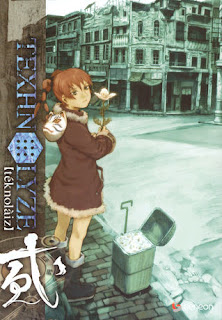
Texhnolyze Medium: TV Anime
Genres: Cyberpunk, Drama, Mystery, Science Fiction
Director: Hiroshi Hamasaki
Studio: Madhouse
Licensed?Yes (fmrly. Geneon, status unknown)

The era of cyberpunk anime has come and (some might argue) gone. From the mid-1990's to the early 2000's, the medium saw a huge glut of Blade Runner-inspired cartoon TV series and films exploring the depths of human nature and technology's part in our lives. Smack in the middle of this techno-human revolution are the works of Chiaki J. Konaka and Yoshitoshi ABe, the writer-illustrator team best known for Serial Experiments Lain. In an epic 26-episode collaboration with studio Madhouse, these two men created Texhnolyze, a dark thriller that comes off as being a little too punk and not enough cyber.

Ichise is a prize fighter who's down on his luck. Not only does he live in the filthy, dank, dangerous underground city of Lukuss, but he's also just had his right arm and leg cut off by some members of the ruling class, the "Organo." A beautiful doctor takes him in, and outfits him with cold, mechanical replacements limbs in a process called "Texhnolyzation." Though this process is reserved for the upper class, Ichise is incensed at Doc's decision, and immediately escapes her lab. Unfortunately for Ichise, however, a visitor to the city named Yoshii is beginning to stir things up among the mafia-like Organo, a religious sect called the Salvation Union, and the street gang the Racan.

Ichise soon finds himself among the ranks of the Organo, trying desperately to fight for his life and his future in a city thundering down the road to madness. All the while he attempts to track down a young girl named Ran living outside the city limits. She is a legendary seer who apparently has the power to determine the fate of the city. In this brutal scenario, the stories of Ichise and the people he meets carve a sad, gruesome tale of dreams, pride, and loss.

The writing in Texhnolyze is as complex as it sounds. Like a Serial Experiments Lain without its cyberculture bite, this show is a much more traditional dystopian tale. Even though humanity has developed technology to fix their own bodies, everything in Lukuss, from its buildings to its people, is broken down and dilapidated. This becomes the primary concern of Texhnolyze as soon as we see Ichise's tragic 3-episode battle to simply walk after his incident. Hell, he even spends an entire episode in a daze at the bottom of a staircase, willing himself to get to the top.

The script is painfully convoluted, sometimes with important information, and sometimes with useless psychobabble. Comprehending the hierarchy of the various factions in Lukuss is essential to an understanding of the show, so viewers will unfortunately be forced to hang on every word in order to make sense of the dialogue. Exacerbating this is an irritatingly unbalanced dub track, and no dubtitles to back it up. Still, if you can navigate through the problems and understand the story, Texhnolyze manages to be surprisingly engaging, especially in its final act.

ADR Director Jonathan Klein provides for a fairly entertaining dub, capturing the depression and lost hopes of the city of Lukuss. Justin Gross and Carrie Savage get their rather emotionless jobs done as Ichise and Ran respectively, but the ones to look out for are Onishi (leader of the Organo) and "Doc." Patrick Seitz puts out a very cool, powerful persona as Onishi, while Victoria Harwood is sexy (and British) as Doc. To my delight, the DVDs also come with some mildly funny parody dub lines the guys in the studio made for each DVD.

We have come to expect big things from Madhouse, and Texhnolyze does not disappoint on the visuals. The dark, moody atmosphere of Konaka's script is effectively brought out in the brownish-gray color tone of the show. When, near the end of the show, we finally see a world other than the derelict Lukuss, the contrast is beautifully portrayed. Sadly, Madhouse dilutes the clean, stylish artwork with odd touches like a static screen overlaid on fight scenes and unnecessary rotated frames. This works with a cerebral show like Lain, but I think it's safe to say that a static overlay is unnecessary in Texhnolyze's well-drawn action scenes.

Yoshitoshi ABe's character designs are great as always, though they still suffer from being unrecognizable from each other when animated. Regardless, a choice few of the characters are distinctly recognizable, especially Onishi and the Lain-inspired Ran.

Texhnolyze is surely not for everyone. It has brutal violence, political intrigue, and philosophical questions, but as usual, Konaka's script skirts these issues and takes a roundabout approach. Thus, it is the approach, and not the content, that will probably turn most people off of this series. If you liked Serial Experiments Lain a whole lot, but thought it needed more bloodshed, characters, and episodes, you might want to give this anime a shot. However, if you're not into depressing stories about sad people in a sad, dirty city, Texhnolyze probably isn't up your alley.

Animation:   3.0   Overall:

(2.5 stars)
Plot:   2.5
Voice Acting:   3.0
Sound:   2.5

Release Quality:2.5

Review: Paradise Kiss (Hyb)

Topics: , , ,
Paradise Kiss Media: TV Anime
Genre(s): Drama, Shojo, Romance
Director: Osamu Kobayashi
Studio(s): Madhouse
Number of Episodes: 12
Licensed? Yes (Geneon)

Disclaimer: This is a shojo. There are no ninjas or explosions; there is only fashion. E! did not get me interested in fashion: Paradise Kiss did.

Yukari Hayasaka is a bit of a stuck-up senior high school student: she studies hard to earn her B-average and is already bored with life. This comes to a crashing halt when she discovers a team of fashion school students who take her to their underground "workshop." Suddenly Alice has been tripped into a Wonderland of lace, butterflies, polyester, silk, clovers, and the bisexuals who design and wear them.

Paradise Kiss feels like an indy project from underground art school drop-outs. It can be described as a slice-of-life, coming-of-age story with a surplus of style and a forte of fashion. Its opening and closing themes, "Lonely in Gorgeous" and "Do You Want To" respectively, carry the show's youthful and vibrant energy, blasting you with colors, caricatures and craft. Many scenes morph between super-deformed and real characters in the same shots, giving great flexibility in the series' tone. The series also developed its own screen-wipe transitions of spinning flowers and mutated stuffed animals, which only adds to the pleasant aesthetic.

The characters are just as unique as their clothing habits. There's cross-dresser Isabella, the quiet idealist who dresses like the countess from a lost romance novel, Heart-stiched-on-her-sleeve Miwako, who is basically a walking piece of cotton (and eye) candy, and Arashi, the grumpy punk rocker, whose safety pin piercings are enough to make the cast of Hellraiser flinch. Finally there is George, the suave Prince Charming who leads his team the way Griffith led the Hawks from Berserk. The four form Paradise Kiss, their own line of clothing. The best part? George wants Yukari to model their final project.

Though reluctant at first, Yukari decides to test the waters of the world of fashion. After being given a new nickname of Caroline (or Carrie) by Miwako, she is reborn and redressed into a world she originally dismissed. In no time flat, she falls for the enigmatic playboy, George, and her dedication to the group's project becomes inescapably personal. In an attempt to abandon the mediocrity of her life at home and school, she moves into Arashi's apartment and seeks work as a fashion model. Through her new friends' stretch at nepotism, Yukari's good luck lands her at a modeling agency. But just before things get too out of hand, she moves in with George, and the two lovers become inseparable.

(This is the part where you all say "yikes!")

The most engaging aspect of Paradise Kiss is Yukari's challenging and complicated relationship with George, whose feelings are harder to interpret than the plot of Serial Experiments Lain. Does he really care about her decision to abandon her life for his ambitions? How will he use her after the project is done? Despite his debonair standoffish attitude and unreadable expressions, George holds himself with the impeccable charm and the faultless poise of a James Bond or Calvin Klein. He's so dangerous, you almost have to fall in love with him and hate yourself for it. Nevertheless, it is a story about young love, which is always passionate and fiery at first, but is quick to consume itself and become ash.

While the show concerns itself with fashion shoots, modeling agencies, and hair dressing, it never overwhelms Yukari's voice and perspective of this new and flamboyant world. Her narrative voice is self-conscious and borderline arrogant: in other words, the perfect high school senior. It is easy to see people disliking Yukari for her stubbornness and naivete, but her blossoming passion for love and George redeems her.

Paradise Kiss's treatment of sex, virginity and sexual identification plays a major role in its story-telling. It boils with rampant sexuality, though more subtly rather than crudely (think Romeo and Juliet rather than Colorful.) Many of the love-making scenes are treated with the classic Japanese fashion of showing objects in the room rather than actual nudity; this technique doubles the emotional weight of each scene.

While the dialogue can fall into many of the pitfalls of directly-translated manga-into-anime, the visual experience of Paradise Kiss is crisp and deep, each shot as carefully sculpted as an assignment on Project Runway. In the end, the conflict of romanticism and love vs. real world values leans with total bias toward the romantics and idealists (this is a shojo after all.) Though its commercial success in the states makes the final chapters hard to find, even on Ebay, it is a very pleasant show. Girls as well as boys who, like Isabella, think they're girls will enjoy the romantic treatment of first love.

Animation:   3.0   Overall:

(3.0 stars)
Plot:   3.0
Voice Acting:   2.5
Sound:   3.0

FUNimation Negotiating Purchase of Geneon's Library

Topics: , ,
FUNimation to (maybe) eat Geneon's licenses During an ICv2 conference call with Navarre, parent company of FUNimation, Navarre Corporation CEO Cary Deacon revealed that FUNimation was "in very early stages of negotiations to acquire some of the Geneon library of titles."

Also mentioned was the "downward pressure on pricing" of newly licensed series due to Geneon's departure from the industry. (This could conceivably result in lower DVD prices, though there is absolutely no guarantee of that)

Finally, Navarre detailed the earnings of FUNimation, one of the few American anime companies showing a considerable amount of success (primarily due to its Dragonball Z, Fullmetal Alchemist, and other important licenses). FUNimation is expected to bring in up to $3.3 million a year from Atari until 2010 through royalty payments on the Dragonball Z license.
[via ICv2]

ADV-Geneon Deal Cancelled

Topics: , , ,
ANN reports that the previously mentioned ADV Films-Geneon deal in which ADV would market and sell all of Geneon's current holdings, has been officially cancelled by the two American anime companies. Geneon reportedly laid off much of its marketing department in preparation for ADV taking over that department. Now many are left jobless while Geneon remains unsure of its future plans to market its anime. This quick turnaround could prove very dangerous for the financial future of Geneon, one of the biggest names in the American anime market.
[via Anime News Network]

ADV Takes Over Sales, Distribution of Geneon Products

Topics: , , ,
According to ICv2, ADV Films has officially taken over all marketing, sales, and distribution of Geneon products. This means that while Geneon will still license and produce its own anime, ADV will be in charge of advertising, manufacturing, and selling the anime. That means, for anyone who is confused, that the companies are still separate, and Geneon still produces anime on its own, but ADV will be the ones who handle selling the anime.

Since ADV now sells Geneon's merchandise, ADV's catalog just got a whole lot bigger. With two of the biggest names in licensed anime banding together, they will stand to make considerable extra profit as a "semi-merged" company. This is, of course, a little troubling, since it is competition between companies that increases quality in their products, and with ADV and Geneon essentially not competing, that lowers the amount of competition on the market by a lot.

Anyway, I'm just a pessimist. The new plan seems like it will work well with both companies, and hopefully we will see the quality of ADV and Geneon's work improve from their already high level.
[via ICv2]

Funimation Takes Blu-Ray, Bandai HD-DVD, Geneon Unsure

Topics: , , , , , , ,
Blu Ray Disc IGN posted an article in their DVD section outlining the plans for high-def DVD formats in anime companies. In the first part of the special, they speak to FUNimation, Bandai, and Geneon about what format they plan to support, HD-DVD or Blu-Ray.

FUNimation's Senior VP of Sales and Operations, Ward Thomas, explained that FUNi has currently chosen Blu-Ray as their format. This is partially influenced by the more interactive functions of the format, but is also rooted in their fans being "very much trailblazers on the technology side." The use of Blu-Ray in the PS3 also prompted the decision. Finally, Blockbuster, who FUNi has a retail deal with, has also decided to support Sony's disc, further reinforcing FUNimation's decision. Thomas also hinted that Comic-Con was coming up soon, and FUNimation might reveal information about their Blu-Ray releases at the con.

Bandai, on the other hand, released their first in a string of HD-DVD anime releases a few weeks ago, the 6-episode OAV "Freedom." They plan on following this up with an ever-growing lineup of HD releases, including classics like "Wings of Honneamise" and "Patlabor."

Finally, Geneon has not yet determined the direction they will move with their high-def anime releases. As Chad Kime, Manager, Marketing and Corporate Planning for Geneon tells IGN, "Plans for high-def are on hold. We are waiting for the consumer demand to be high enough to make anime high-def profitable."
[via IGN]
Save This Page   SlashdotSlashdot It!   |Share on Facebook|