to

Review: Domu – A Child's Dream

Otomo's Psychic Showdown

Topics: , , , ,
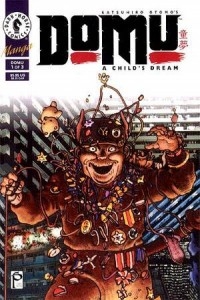
The cover of Domu: A Child's Dream

Domu: A Child's Dream is a single volume manga whose original run in Young Magazine finished only months before the beginning of its author (Katsuhiro Otomo)'s more famous contribution to the same magazine: Akira. It's a very interesting read that uses many of the themes and visual stylings that would be dramatically expanded upon in Akira. On its own, Domu is a highly enjoyable speculative romp focusing on dark atmosphere and action sequences of cinematic execution.

In what is assumed to be contemporary Tokyo, the Tsutsumi Housing Complex has experienced a series of unexplained deaths over the last three years. Responsible for the string of death is an old man, called “Old Cho” by his neighbors, with a child-like mind and strong extrasensory powers. His motives are that of a child — he sees something he wants, and takes it at the expense of the life of the owner. This may seem a spoiler, but despite the mystery tone of the narrative's first half, it is clear to the audience who is responsible very early on. The first half deals with the investigation of one of Old Cho's recent victims, switching between different members of the team encountering befuddling clues and strange events. Tensions deepen as a policeman and the head detective become the next victims. Simultaneously, another story unfolds as a young girl, Etsuko, who also has unexplained powers, becomes aware of the old man's actions. The situation escalates as “Old Cho” reacts defensively to the threat of another being with similar powers. Midway, the story shifts from the slower paced mystery to a frenetic sequence of events, leading to a violent telepathic showdown between Cho and Etsuko.

Old Cho

The investigation angle is played throughout, but ultimately adds little to the narrative. It is intended as a way to explore the mystery of the unexplained deaths, helping the audience piece together facts over time, but it would have been more effective if the audience weren't already aware of the culprit's identity. Furthermore, the activities that prompt the climactic confrontation and eventual resolution are entirely independent of the investigators. Etsuko recognizes Old Cho's powers without any prompting from the investigation, as she just happens to notice his silent manipulations while playing in the park one day. It would have been more sensible to focus on developing Etsuko and exploring the mind of Cho, downplaying the investigative element.

As for Etsuko, the audience never really gets to learn much about her, making her more plot device than person. Where the graphic novel truly succeeds, however, is in the latter half, the battle between Cho and Etsuko. The pacing rapidly accelerates, and becomes an unrelenting feast of manga action as the two wreak havoc in their attempt to destroy the other. This confrontation is one of the better action sequences in manga, without any of the messy linework or problematic pacing that often hurt the flow of such scenes. The final pages are absolutely brilliant with an eerily low-key finale that highlights the theme of the mysterious mind of children.

One of the scenes of large-scale destruction in Domu

This hyper, telekinetic thriller defines Domu, and leaves little room for anything else — Otomo's tale doesn't use the story as a platform to tackle issues with any significant depth. That said, he does utilize some interesting concepts throughout, but as setting and not commentary. For example, link between a child's mind and psychic powers is the central theme of the story, but Otomo didn't really explore this until his work in Akira. Still, setting is an important facet of a story, and used effectively in Domu to develop the atmosphere of his work. Inspired by Otomo's own experience moving to Tokyo, the apartment complex in Domu evokes the feelings of congested urban life. In an interview with Yomiura, Otomo commented on the people living in a recently developed public housing complex, saying that they "never seemed to adapt to this sort of crowd urban living, but they found themselves trapped in that world." That feeling comes across very well in Domu, and serves as an effective backdrop for the story.

Domu is very much in the tradition of science fiction short stories, such as those found in “zines” like Amazing Stories and Analogue Science Fiction. This style of SF generally de-emphasizes characterization in order to focus on ideas. In the case of Domu, this is the battle between two extrasensory “children.” My attraction to Domu most likely comes from to my fondness for this mode of classic science fiction. Otomo weaves a clever narrative comprised of Old Cho, the subtle noir-esque atmosphere surrounding the apartment complex, and the captivating energy of the explosively violent climax. One strength of the lack of relatable characters is that there isn't really much impact when they are killed; this may sound like a bad thing, but I appreciate that I can enjoy the story for what it is without being weighed down by emotionally manipulative drama. My only significant complaint is that I wish the investigative aspect were better weaved into the overall narrative.

Etsuko explodes an unfortunate victim with her psychic powers

As expected of Otomo, the artwork is incredible. The character designs stand out against manga's tendency toward over-the-top designs; Otomo's story is populated by everyday Tokyo residents who are appropriately plain, but readily distinguishable from each other. I find it amusing that, simply by resembling ordinary people Otomo's designs seem out of the ordinary in manga. Outside of character design, the visuals are extremely capable at presenting the feel of the story. During the slower-paced beginning, the level of detail is adequate and realistic in a way that doesn't really push the reader forward or force the reader to slow down and carefully examine the scenery. Many of the more dramatic scenes take place at night, when Otomo utilizes high black and white contrast to maintain a consistently foreboding atmosphere. Many panels in these night scenes feature well-formed lit apartments that create geometric visual interest and highlight the urban claustrophobia. As the pacing increases during the battle, the artwork elevates to a cinematic feel with further gorgeous night scenes and thought-out aesthetic composition that adds a certain stark beauty to the rampant urban destruction.

The entirety of the manga is highly readable, with a level of visual clarity that allows the reader to easily follow the story without ever getting dragged down. Panels instantly fixate the reader's eye on the key detail, and even the scenes of destruction are structured in a way that the reader doesn't get lost in speed lines and rubble. Otomo often uses sharp contrast and minimal shapes to create panels that are instantly comprehensible for an energetic reading of the plot, but are designed with enough artistic merit to reward a slower re-reading. According to Frederick L. Schodt in his classic text Manga! Manga! The World of Japanese Comics, manga is a medium meant to be digested quickly. While there are many titles that seem to disagree with this assertion, if this is accepted as an ideal for the medium, then Domu is a demonstration of Otomo's mastery of the “language” of manga — balancing clear readability with high-quality aesthetic design.

An excellent panel from Domu showing Otomo's sense of movement and perspective

Dark Horse's 2001 release is long out of print, but you can find an inexpensive copy online. Ebay currently has copies up for the startling prices of upwards of $45 and one Amazon listing shows even higher. However, I discovered that Domu is listed on Amazon twice, with the second featuring much better prices — as low as $1.65 for a copy described as “dirty” and another for $13.99 that claims to have been kept in a protective sleeve, “since day 1.” Domu is completely worth picking up for fans of Otomo and dark speculative fiction who enjoy works outside of hard sci-fi. Many anime fans demand high characterization to be a focal theme to enjoy a piece of writing, but Domu absolutely excels at what it is trying to be — a strong example of short story comic writing that is able to capture a compelling atmosphere and engaging action in a tremendously fun way.

Medium: Manga (1 volume) 
Author: Katsuhiro Otomo
Genre: Science Fiction, Action, Mystery
Publisher: Kodansha (JP), Dark Horse (US)
Serialized in: Young Magazine (JP)
Demographic: Seinen
Release Date: 1982 (JP), 1995 (US)
Age Rating: Not Rated (we'd say about 16+, though)

Review: Princess Knight

Topics: , , , , ,

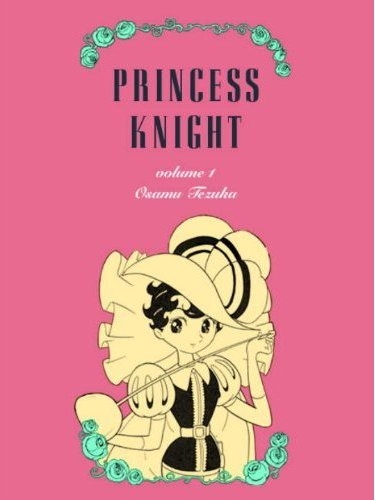
Princess Knight, volume 1Medium: Manga (3 volumes in Japan, 2 volumes in North America)
Author: Osamu Tezuka
Genre: Adventure, Fantasy, Romance
Publisher: Kodansha (JP), Vertical, Inc. (US/CA)
Serialized in: Shoujo Club (JP)
Demographic: Shoujo
Release Date: Jan 1963 – Oct 1966 (JP), Nov 1, 2011 – Dec 6, 2011 (US/CA) 
Age Rating: 6+

Vertical, Inc. has struck again with Princess Knight, a classic story by the "god of manga" Osamu Tezuka. The manga critics have all gone wild over it, praising the two-volume series for its examination of gender identity and its swashbuckling action. Frankly, though, I think Tezuka's other masterpieces may have created a bit of over-hype for Princess Knight, as it is, in my opinion, one of the weaker manga in Tezuka's English canon.

Frequently cited — somewhat inaccurately — as the series that sparked the entire shōjo (girls comic) style, Princess Knight is also particularly notable for being one of the many manga for girls but written by a man. At the time there were very few women in manga, so it was expected for men to write comics for girls. However, many of the female manga artists who came to prominence in the 1970s, known collectively as the Showa 24 Group, would later cite Princess Knight as one of the series that inspired them to make their own manga.

Sapphire, the protagonist of Princess Knight, is both hero and heroine, since the mischevious angel Tink accidentally gave her both a boy and a girl heart before she was born. Since she is the heir apparent to the kingdom of Silverland, Sapphire's gender is quite important; women can't inherit the throne! To prevent the nasty Duke Duralumin's idiot son from becoming prince, her family raises Sapphire as both boy and girl, and she spends part of the day fencing and fighting, and another part picking flowers and talking to woodland creatures. God sends Tink down to Earth to fix his mistake and get back Sapphire's boy heart.

Meanwhile, beneath the facade of her princely life, Sapphire longs to fully embrace her girl side, and even wears a blonde wig to a carnival, wherein she meets the dashing Prince Franz Charming. But things go awry when Charming and Sapphire engage in a tournament as princes, and the nasty Duke Duralumin poisons Charming's sword in an attempt to kill Sapphire. A few hijinks later and the king is dead, Charming is accused of murder, and Sapphire's identity is revealed. She loses not only the throne, but her freedom as well: she and her mother find themselves locked in jail by their own people. For the remainder of these two thick volumes, we follow Sapphire's journey to regain the throne, win the love of Prince Charming, and escape the wiles of not only Duke Duralumin, but also Madame Hell, an appropriately named devil woman who wants to steal Sapphire's girl heart and give it to her own daughter.

Some critics have celebrated Princess Knight for its subversion of traditional gender roles, but ironically this is precisely where the manga fails to connect. Perhaps by the most liberal definition of the term, Vertical could claim that this is Tezuka's "proto-feminist" masterpiece (as they do on the back cover), but it hardly applies to a story in which Sapphire's girl heart gives her the ability to pick flowers and her boy heart gives her the ability to swordfight. I fact, in many cases she loses one heart or the other, and Tezuka makes it very clear that without the boy heart, she loses all of her strength and will to fight. (Get ready for gripping lines like "Oh no, I feel weak all of a sudden. I feel like my boy heart's been sucked right out of me! Oh, I'm so scared!")

A page from Princess Knight in which Tink watches Sapphire swordfightingThe second volume features a bit more criticism of traditional gender roles, portrayed with classic Tezuka bluntness via a group of women who lock themselves in a castle and fight off the men in order to protect Sapphire. The most striking moment of this scene is when Sapphire — equipped only with a sword and her girl heart — fights off a villain she could only defeat previously when she had both hearts. Here it seems that Tezuka is making a more direct correlation between her fighting ability and Sapphire herself (rather than her gender), but it's such a long time coming and it comes from so far out of left field that it seems almost accidental.

The gender commentary isn't the only place where the presentation and pacing leave their marks, though. The entire manga runs at a breakneck pace, and major developments occur at such a striking speed that it can be difficult to keep up. Futhermore, when introducing characters, Tezuka wastes no time in explaining straight to your face exactly how they feel about everything, without the slightest hint of subtlety. For instance, within the first few pages of Sapphire meeting the pirate captain Blood, not only has he professed his instantaneous love for her, but she has introduced herself with the brilliant line "I promise I'm not a shady person."

Despite a whirlwind of events surrounding her, watching the eponymous Princess Knight can be downright boring. She's certainly not a passive Dinsey princess, but generally things happen to Sapphire, and she rarely does anything herself, making her little more than an object for the plot to bounce off of. Indeed, at one point near the climax she is bedridden, waiting for other characters to bring her the help she needs. Madame Hell's daughter Hecate, a hip, rebellious young devil girl who opposes her mother's plan to marry her off to Prince Charming, is a much more interesting heroine, and suffice it to say that a character named "Prince Charming" hardly ranks among Tezuka's most layered protagonists.

The comedy is the one aspect of Tezuka's style that remains consistently on-point in Princess Knight. There are lots of one- or two-panel visual gags that punctuate the action just long enough to induce a chuckle before he gets back into the main story, and they have the same sort of non-sequiter, anachronistic charm that we've come to expect from the author. None of this is all that surprising, since in the early 1960s Tezuka was still largely writing for children, and was still known for his gag antics.

This, of course, extends equally to the art, which falls much closer to Astro Boy (1952) than later works like Ode to Kirihito (1966), which makes sense considering that Princess Knight's original run was concurrent with Astro Boy (Tezuka reworked the series for a 1963 rerelease, the version used for the Vertical edition). While its overall tone is reminiscent of Astro Boy, it achieves an appropriately fairy-tale aesthetic through the use of super-clean lines, simple, bubbly shapes, and generally lighter tones. Readers may also notice that, in addition to the overwhelming Disney influence on the designs of the characters and backgrounds, Tezuka also takes cues from early shojo adventure comics like Katsuji Matsumoto's The Mysterious Clover (1934).

Princess Knight is, quite frankly, a baffling read. It seems to fly by even faster than Astro Boy, but unlike the richly established world and characters of that series, this feels more like a clumsy pastiche of Disney fantasy-adventure films. What's more, the gender commentary is bluntly feminist at best and downright sexist at worst, and the entire work feels largely purposeless. It pains me to say this, but I can't recommend Princess Knight unless, like me, you feel the need to plumb the depths of Osamu Tezuka's English-language catalog. Perhaps in its time Princess Knight may have captivated its young audience, but today it serves as a reminder that even a god makes mistakes every once in a while.

Review: Love Roma, Vol. 1 (Manga)

Topics: , , , , ,
Medium: Manga (5 volumes total, 1 volume reviewed) 
Author: Minoru Toyoda
Genre: Comedy, Romance 
Publisher: Del Rey Books (US/UK), Kodansha (JP)
Serialized in: Afternoon (JP)
Release Date: Aug 2005 - Feb 2007 (US/UK), 2003-2005 (JP)
Age Rating: Older Teen (16+)

Sometimes, you just want things to be nice and straightforward. Perhaps you are sick of stories where the main couple dances around each other for chapters on end, afraid to say a word to each other. Other times you may find yourself utterly frustrated by the fact that its been two whole volumes and the hapless lovebirds still haven't kissed yet. Even better, they cant even hold hands without one of the pair erupting into a bright beetroot color from the sheer, unrelenting embarrassment of the act. Give me a break.

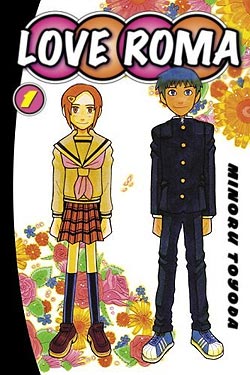
First things first, Love Roma is not the prettiest of manga. In sharp contract to the majority of romance manga, the series forgoes the usual painstaking detail and instead opts for a chunky, thickly lined look. The simplistic designs and lines make the characters look youthful as well as downright cartoonish, establishing the series firmly as a romantic comedy rather than a hyper-dramatic weeping fest. As an upside, all of the characters are readily identifiable due to large differences in individual character designs, something I usually have problems with in romantic or more ornately drawn series with extended casts. Expressions are clearly readable on characters faces and body language is obvious, making the emotional aspects of the story much more accessible and, frankly, more enjoyable to read. The art is full of other nice flourishes, such as the white outline that surrounds characters and so pops them out of the background, the effect differing depending on situation or mood, a nice extra touch to the art. The whole presentation has a levity to it that that makes it hugely enjoyable and immediately accessible to me.

I already touched on this, but one of the main reasons I enjoyed Love Roma was the main couple—both are honest, slightly dull normal people. Hoshino, the main male, is flat out blunt with his thoughts and feelings where as Negishi is straightforward while still having a tendency to get embarrassed over romantic things. Its a nice coupling that leads to a lot of amusing situations both between the pair and interacting with the extended cast of their friends. An extra bonus is that they start going out at the end of the first chapter. Holy hell! A series where the main couple don't dance around each other for 2+ volumes, its a bloody miracle. Of course, they are still high-school kids, so its not like they are discussing mortgages or other dull junk in chapter three. In fact, the slapstick comedy is actually quite sharp, making me laugh out loud quite a few times while reading.

The rest of the cast are enjoyable to read as well, and strike a nice balance between developing their own relationships and personalities at their own pace while the main romance storyline is told. An issue that arises with some series that that the secondary characters become more interesting than the supposed main characters, something that is neatly sidestepped in Love Roma while avoiding the pitfall of relegating them to background filler.

One worry I have is that the premise may not last—in the first volume alone the couple go on their first date, have their first kiss, and are introduced to one of the sets of parents. While there is a more than plentiful set of side characters who are introduced and are able to have their own adventures or spice the main plot up, I worry that the series may run out of ideas and fizzle out too soon. I intend to continue buying the series, and will let you know what I find. However, as a first volume on its own it is a refreshing read that I would heartily recommend, particularly if you want to have a laugh while going "Awww...."

Kodansha USA to Take Over Del Rey Manga Titles

Topics: , ,
Just kidding Kodansha, you're still cool.

Today, Kodansha USA, the American subsidiary of Japanese publisher Kodansha, announced that, as of December 1, 2010, it will be taking over licenses held by Del Rey Manga, the division of Random House that formerly published a large number of Kodansha titles. Random House Publisher Services will now be directly interfacing with Kodansha to bring its manga titles to the American market.

According to Kodansha USA's press release, "Del Rey's ongoing manga titles which were licensed by Kodansha will be gradually taken over by Kodansha USA Publishing on a per-title basis." As such, fans of ongoing series like Moyashimon and Tsubasa: RESERVoir CHRoNiCLE will probably be able to get their hands on new Kodansha versions of these series in short order. Unfortunately, the release says nothing about completed Del Rey licenses, which may result in some (though likely not all) of Del Rey's former series going out of print.

As big a change as this is, it's admittedly not very surprising, since Kodansha USA began releasing republications of Akira (Katsuhiro Otomo) and Ghost in the Shell (Masamune Shirow) — both former Dark Horse titles — last fall, while Del Rey Manga has been facing a number of problems since then. Notably, their number of licenses have dropped, they've significantly reduced their number of convention showings, and Marketing Manager/"Awesome Bow-tie Dude" Ali Kokmen was laid off this past July.

On the bright side, Associate Publisher Dallas Middaugh will remain with Random House as he coordinates the new partnership between the publisher and Kodansha, though it would seem that he will be the only person left over from Del Rey Manga.

[via Anime News Network]

Review: Chi's Sweet Home, vol. 1 (Manga)

Topics: , , , ,
Cover art for volume 1 of Chi's Sweet Home

Medium: Manga (7+ volumes in JP, 1+ in US/UK)
Author: Konami Kanata
Genre: Comedy, Pet, Slice-of-life
Publishers: Weekly MorningKodansha (JPN), Vertical, Inc. (NA/UK)
Release Dates: November 22, 2004-present (JP), June 29, 2010 (US/UK)
Age Rating: Appropriate for all ages

I know, I know: The last thing you'd expect me to be reviewing is a manga about a kitten, but here I am, talking about the brand-new Vertical, Inc. release of Chi's Sweet Home by Konami Kanata. What may surprise you even more is that I actually like it!

The entire plot of Chi's Sweet Home can probably be summed up by simply reading down its table of contents, which contains chapters like "A cat is lost," "A cat is found," "A cat forgets," and "A cat understands." In fact, the comically straightforward nature of the titles underscores simplicity as the fundamental attribute of this manga story of a stray cat named Chi and the Japanese family that takes her in.

It's actually rather surprising to see such simplicity in a manga serialized in a seinen (men's) magazine, Weekly Morning, but as with many cutesy seinen titles such as Yotsuba&!, the manga is actually much more attractive to American children than it is to American men. Pursuant to this, Vertical's translation keeps the dialogue brief and easily comprehensible, while the intentional lack of detail in the art breaks with seinen's American reputation as being (sometimes indecipherably) detail-heavy. What's more, the book has only full-color pages, painted in beautiful, subdued pastel colors, which are sure to entice young readers looking for something more flashy than the typical black-and-white manga aesthetic.

On that note, Chi's design is easily the most important piece of art in the entire book, and it certainly gets the job done — and then some. Her saucer plate eyes and giant triangular mouth express a childlike excitement over even the simplest of everyday delights, and it can be hard to not imagine her screaming at the top of her lungs and smiling every time she gets excited. (By the way, this is coming from someone who has never seen the anime and thus doesn't have a preconceived voice for Chi.) Believe me, I didn't think that I would enjoy it, but I really took to Chi and the rest of the family after a few chapters.

Still, I feel like the comedy — if you can even call it comedy per se — might wear a little thin if the later volumes don't introduce any major new developments. After all, I don't really think that a picture of a cute kitten getting excited can remain very interesting for very long.

The chapters range in length, though they are typically much shorter than the average manga chapter, and some even come in at around five or six pages. Given such brevity of storytelling, it would almost seem like the story is built for the 4-koma (four-panel) format, but Kanata manages to tell a short, charming story in every chapter while maintaining the flow of a full-page manga layout.

As I mentioned before, Chi's Sweet Home doesn't really feel like a men's title in an American context, but it's actually a genuinely fun little book for children or cat lovers of all ages. Of course, I wasn't satisfied with simply guessing at the right audience for the book, so I let my 12-year-old sister read it to get a feel for what she thought of it. Within an hour she had read the entire thing, and claimed that she would actually buy the second volume if she saw it in a store (even after I informed her of the slightly high $13.95 price point).

To be clear, Chi's Sweet Home is not for everyone, but when put in front of the right eyes, it's an absolute joy. Kanata has crafted a simple yet charming mix of visual comedy, cute animal shenanigans, and great art that can manage to evoke quite a few chuckles, even from this jaded manga reader.

[Recommended]


This review is based on a promotional copy of the graphic novel, kindly provided by the publisher, Vertical, Inc.

Digital manga to be released via WiiWare

Topics: , , , , , , ,
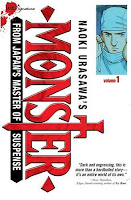
Monster, by Naoki UrasawaAs reported in the New York Times yesterday, four of Japan’s major manga publishing houses have come together to form Librica, which will distribute manga via the Nintendo Wii’s WiiWare channel. The four houses that make up Librica are Kadokawa (Cowboy Bebop, Neon Genesis Evangelion), Kodansha (Akira, Sailor Moon), Shueisha (Death Note, Dr. Slump), and Shogakukan (Monster, Mobile Police Patlabor).

Very few details are available about the service; however, Librica has stated that it’s open to adding more publishing houses after the service has launched. There is also talk internally of expanding the service to including distribution on the DS as well. As for information on the pricing structure or release date of the service, no details are yet available. And if you’re wondering whether the service will be coming state side, just keep in mind that all four of these publishing houses have seen their works released in North America.

[via Kotaku]