to

Review: Prince of Persia – The Forgotten Sands (360)

Topics: , , , , ,

Medium: Console Video Game
Genre: Action-Adventure, Platformer, Puzzle
Lead Designer: Graeme Jennings (Producer), Jean-Christophe Guyot (Creative Director)
Developer: Ubisoft
Publisher: Ubisoft
Platform: Xbox 360
Release Date: May 18, 2010 (US/CA)
ESRB Rating: T for Teen


Prince of Persia: The Forgotten Sands (PoP: TFS), chronologically set between PoP: The Sands of Time and PoP: The Warrior Within, follows the Prince en route from his fathers palace to meet with his brother, Malik, at the ruins of King Solomon's palace.  An encroaching army forces Malik to release the fabled army of King Solomon despite the Prince's repeated protests.  Alas, history is a mass of incorrectly translated idioms, and instead of releasing Solomon's army, Malik releases the army — an army as numerous as the grains of sand in the desert — that was created for the purpose of destroying the famous king.  The medallion used to break the magic seal that formerly contained the evil breaks in two, allowing the Prince and his brother to scurry about collecting powers from defeated enemies.  Malik grows corrupt with this power, and both princes grow distrustful of handing over their half to the other to seal away the Djinn-led army.

Half of the game is spent trying to reunite with Malik, and the other half is spent dealing with the surrounding evil. I don't know whether PoP: TFS felt easier due to my lengthy replay of its predecessors or if the new game is just inherently easier, but the lack of a hard difficulty (even after beating the game on a very easy-feeling Normal) may be a clue. Puzzles are sparse and, aside from the select few that subtly require the use of the Prince's Djinn-given powers, can be figured out in a couple of moments upon the first encounter. Similarly, the acrobatic paths required to navigate all the maps are so obvious that one could either compliment the camerawork for guiding the player or chide the level designers for offering up such an unambiguous environment. That said, the acrobatics (which I'll get to later) are what make this game ... especially when you take the fighting element into account.

The games comprising the Sands of Time trilogy have always walked a delicate balance between acrobatics and combat, leaning to one side or the other in any given iteration.  PoP: TFS is no different but rather attacks the issue in a different way. Here, the Prince faces off relatively frequently against hordes of up to around 20 enemies, most of whom don't require more than two sword blows to finish off, whereas the previous games had the player simultaneously facing, at most, five or so moderately challenging opponents. The difference is rather brilliant: make the battle element that of a button-masher to let the player feel accomplished in having dispatched so many minions while saving the real effort and time for the subsequent navigation. While the button mashing does get a bit tedious, there is a semi-decent variety of enemies, a few different combat moves, as well as ice, fire, and wind spells that can make each onslaught different enough to avoid becoming totally stale.

But acrobatics are the bread and butter of PoP: TFS. While the path the Prince must take may be all too easily discernible, that does not mean the path itself is easy. The Prince gains the power of the Djinn and with it can rewind time as well as freeze the flow of water to make it a navigable surface. A specific Djinn, Razia, also gives the Prince her familiarity with the now crumbled kingdom so that broken pieces may be made whole once more (but only one section at a time). Combine those aspects with already familiar movements, like wall running, pole swinging, ledge climbing, and bird hopping, and keeping track of what button does what can become your own worst enemy within maps intricately constructed to test dexterity (the Prince's as well as your fingers’).

Controls are spot-on, but some of the Prince’s moves feel unrealistic (compared to the earlier games).  These range from being able to run straight up a wall after jumping to it, running up walls after hanging statically from some exposed part of it (protruding stone or ledge), and bird hopping.  The action used to accomplish the latter is reminiscent of the 2008 PoP game: a power of flight aspect that just feels entirely out of sync with the rest of the physics in PoP: TFS.  Easily, programmers could have just added another bird onto which the Prince could jump or bring the ledges a little closer.  Believable or not, the gameplay is very fluid, even if it seemed to lag a bit, and the in-game camera, usually the bane of the series, is almost never an issue.

Steve Jablonsky's musical score is both appropriate to the theme of the game and complementary to each level's beautifully rendered aesthetics. My favorite touch regarding the latter is the random placement of sandstone statues, formerly living palace guards, that continually try to hold fast slightly open doors or otherwise stand and lie frozen in place. Their presence adds an eerie ambiance to a palace worn away with an omnipresent evil (sand) that wisps through those same crevasses. However lovingly crafted, cutscenes still smack of the earlier titles’ blocky renderings at times. Given the history of criticism behind the voice acting, it is also worth noting that Yuri Lowenthal reprises his role as the well-humored, sarcastic Prince from PoP: The Sands of Time and PoP: The Two Thrones.

I was so engrossed with the gameplay of PoP: TFS that it felt disappointingly short ... especially with the terse ending. The story is one big action movie cliché, but it's one that's fun to take part in and shares a good deal of elements with the original Sands of Time series. Sadly, PoP: TFS falls short on heart and introspective depth, making it akin to a deleted scene or bonus featurette rather than its own story. The insulting nature of this perceived brevity is compounded by the game’s only other mode of play: an Arena wherein the only wave of opponents consists of an eight-course serving of butter. I picked this title up on a whim one day at Best Buy for $20. If I had paid any more, I think I would have felt ripped off, but Prince of Persia: The Forgotten Sands is definitely worth your time to rent (or buy if the price is right).

Far Cry 2: Questioning in-game morality one year before "No Russian"

Topics: , ,
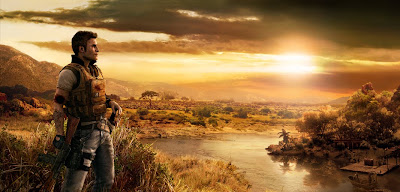
Far Cry 2 takes place in a variety of African locations.

There has been a lot of talk lately about Call of Duty: Modern Warfare 2's controversial "No Russian" scene, in which you control an undercover CIA agent who participates in a terrorist shooting in a Russian airport. The supporters of the design choice love it because it forces you into an uncomfortable, disturbing situation in which you have control over the horrible actions being committed, while its detractors cite the limited setup that the developers at Infinity Ward implemented in introducing the disconcerting scenario.

But what I find interesting is that this scene has received so much controversy even though Far Cry 2, Ubisoft Montreal's open-world first-person shooter released in October of 2008, posed similar questions to "No Russian" (in a more effective manner) in nearly every moment of its gaming experience.

My previous Impressions post about Far Cry 2 mostly discussed its open-world design, but as I moved along in the game, I quickly became aware of a fascinating play on the traditional in-game morality system at work in its plot. To be more specific, even though Far Cry 2 is all about moral choices, it does not actually have a morality system.

I played the game alongside big-name RPG titles like Fable II and Fallout 3, both of which force the player to choose between being "good" or "evil" in many situations. Yes, both are great games, but their binary views on morality are naïve at best. Far Cry 2, on the other hand, presents you with a choice about one-third of the way through the game, forcing you to save either your mercenary buddies or a group of civilians from one of the game's warring factions. You've been through hell with your buddies as you fought your way through mission after mission, but the civilians haven't hurt anyone, and all that they want to do is leave the country for the relative peace and security of the outside world.

Fable II's choices are both clear and immediate; it's final decision is presented as a mystical phenomenon that feels entirely detached from the narrative and characters, and the effect is directly explained by the game. Far Cry 2's analogue to that choice pulls from a similar feeling of connection to virtual characters (buddies in FC2, the dog in Fable), but you must act on your choice for it to come to pass. There is no sequence where you select a sentence in a dialogue box or pick a floating magical card – you have to drive to either the bar (where your friends are fighting) or the church (where the civilians are hiding).

I chose to save the civilians, and that meant driving right past the bar, hearing the gunshots that signaled my friends' deaths. At any point during my drive toward the church, I could have turned back and helped my friends instead. Thus, by giving me the option to turn back, Far Cry 2 has the potential to create a more powerful sense of remorse. My buddies died not because I selected a line of dialogue, but because I drove right past the bar where they were fighting and instead decided to help someone else.

Your target in Far Cry 2 is 'The Jackal,' the arms dealer who sold weapons to both sides in the game's brutal conflict.

Which was the "right" answer? I honestly believe that such a question should not apply to games that claim to utilize realistic, thought-provoking moral choices. Morality does not work like a computer! It is subject to the pressures of self, environment and opportunity, and it constantly morphs to fit the situation. Whether you choose to destroy a tank of morphine for use on soldiers or destroy a vat of malaria vaccine for use on civilians, what you do will be considered by many to be morally wrong. Even so, it is in the service of eventually killing The Jackal, an arms dealer responsible for the entire war that you are now embroiled in. Both choices propel you through the game, and both involve things generally considered to be "evil," but it is not Far Cry's job to judge the morality of the situation – it is the player's.

Modern Warfare 2 might blur the lines of right and wrong in forcing you to mow down civilians in service of the Greater Good, but Ubisoft Montreal realized a full year earlier that blurring those lines means more than just a controversial scene in an action game. Players must be pulled into the experience for the entire time, surrounded by depravity and ruin, living with the consequences of their own horrible actions. A morality system can never accurately depict the nebulous nature of human morality, and so I believe that games should drop the use of these systems altogether, instead creating scenarios in which players' emotional responses to their actions dictate the morality of those actions.


Please note that this is not a review. It is an analysis of a style of gameplay used in Far Cry 2, and fails to bring up many of the other strengths and shortcomings of the game.

Ubisoft releases Assassin's Creed Lineage Part 1

Topics: , ,

So... you think video game adaptations suck do you? Well try this on for size. This is "Assassin's Creed Lineage," a series of short films made by Hybride Technologies, the studio (now owned by Assassin's Creed publisher Ubisoft) behind 300 and Sin City.

[via Ubisoft's YouTube Channel]

Impressions: Far Cry 2

Topics: , , ,
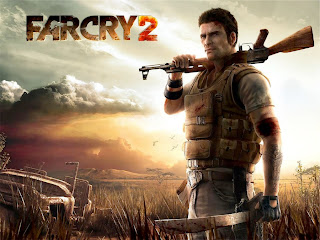
Far Cry 2

Welcome to our very first "Impressions" post. In this series of features, our staff will briefly tell you their opinion of an anime, manga, or game based on their current impression. They're less like reviews and more like little journal entries, so don't expect fully-formed opinions just yet.

Though Far Cry 2 (PC, Playstation 3, Xbox 360) has been overshadowed by much "bigger" releases this holiday season, a small handful of game journalists have spoken up on its behalf. After hearing Joystiq's Ludwig Kietzmann talk it up for over a month, I figured it was time to give this open-world shooter a try.

No, this is not a continuation of the original Far Cry, so before you ask, you don't need to have played the previous game. In this iteration, you are a mercenary sent to an African country to kill an arms dealer called "The Jackal" who has been pitting the two sides of a civil war against each other. When you enter the country, however, you catch malaria, get caught in a firefight, and miss your chance of catching The Jackal. Now you've got to fend for yourself in this war-torn country while working toward completing your mission.

As far as I've seen in the Xbox 360 version of the game, the open-world design is really working out well. Driving a car around a beautiful African savanna is cool enough, but when guerrillas drive by and start ramming your car, filling you full of bullets, things really heat up. In my first hour or so of play, I was randomly attacked by rebels at least three times, and one time they wrecked my car, causing me to stop and fix it (yes, you have to fix it yourself) before moving on. Another time I decided to hop on a small motorboat instead of fighting, and rode the boat off into the sunset.

It's that kind of visual and gameplay aesthetic that has really made my first hour with Far Cry 2 a great experience: moments of quiet serenity (even beauty), punctured by frantic violence that starts as quickly as it stops. It prompts a sort of gut instinct, and sometimes I find myself driving away before I've even thought about what I've done. Completing the immersion is a minimal HUD, problems like malaria and guns that jam up, and completely interactive environments. Hell, I shot a lantern at a campsite and set fire to an entire field of trees, then sat in my boat and watched the blaze framed against the night sky. That's a real game experience right there.

I'm amazed and delighted at how much thought and passion seems to have been put into the design of an ostensibly trigger-happy game like Far Cry 2. And to be honest, I can't wait to get back to Africa.

Ubisoft to include subtitles in future titles

Topics: , ,
Ubisoft and handicapped people = friends

A tip of the hat goes to developer Ubisoft for launching a new initiative this week to have subtitles placed in every one of their in-house developed titles from now on. Designed for the hearing-impaired, these subtitles are to be included in several of Ubisoft’s upcoming titles, including Far Cry 2, Prince of Persia, and Shaun White Snowboarding.

The company also announced that it will be partnering with Handicap International to create a new game titled Handigo. The game is designed to educate players about the hardships faced by the handicapped in today’s society and will include mini-games designed around the idea of placing you in their shoes.

[via Gamasutra]

Red Steel 2 to utilize Wii MotionPlus

Topics: , , ,
In an interview with Gamesindustry.biz, Ubisoft’s Alain Corre revealed that the next Red Steel title is already in development and will make use of Nintendo’s new Wii MotionPlus add-on.

"Red Steel 2 has been in development for many months now, and [Wii MotionPlus] will help us be even more precise in what we do with the product. The Red Steel brand is strong - I think we released it on year one, and that people understood that it was a first try on new technology, technology that wasn't completely finished."

The Wii MotionPlus is a device which has caused quite a stir since its announcement at E3. It remains to be seen whether Nintendo’s latest peripheral will become the new standard for Wii owners, or if this device will segment the marketplace and place an unneeded strain on third party developers. Ubisoft seems to have cast their vote, now we shall wait and see.


[via GoNintendo]

Ubisoft announces Beyond Good & Evil 2

Topics: , ,

After waiting five years for news about the possible sequel to the 2003 cult hit video game Beyond Good & Evil, patient fans have finally been delivered thanks to Ubisoft CEO Yves Guillemot's final presentation at the company's Ubidays 2008 event. He started up a video (embedded above), claiming that it was the newest project by developer Michel Ancel, but declining to provide a title (the trailer has no title either).

It wasn't long before the audience realized what they were seeing: confirmation of the long-awaited sequel. Beyond Good & Evil 2. There is no confirmed release date as of yet, and console choice is similarly vague at the moment. If you haven't played the classic original, though (which is somewhere on my "To-Play List"), get on that ASAP.

[via Joystiq]