Genre: Platformer
Director: Koichi Hayashida
Developer: Nintendo EAD Tokyo
Publisher: Nintendo
Console(s): Nintendo Wii
Release Dates: May 23, 2010 (NA), May 27, 2010 (JP), Jun. 11, 2010 (EU), Jul. 1, 2010 (AUS)
Rated: E for Everyone
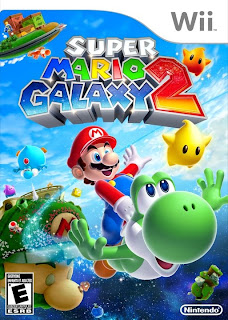
Super Mario Galaxy 2 was certainly an unexpected announcement from Nintendo, considering the series past releases. On N64 we had Super Mario 64 (SM64) and on the Gamecube we had Super Mario Sunshine. Super Mario Galaxy 2 breaks the trend both by releasing another main series 3-D Mario on the same platform, and by making it so closely related to its predecessor Super Mario Galaxy.
The most obvious aspect of Galaxy 2 is that it is built completely off of the original Galaxy's engine. Thus, instead of reinventing the wheel for their newest title, the development team was able to focus completely on making improvements and crafting the best game possible. Now, the level design is more focused, interesting, and varied than ever before — the best aspects of Galaxy have been amplified, the lesser portions revamped or tossed aside, and new gameplay mechanics have been introduced that show off the skills of the team. The player is thrown enough gameplay mechanics to keep the game constantly interesting without any one element sticking around too long.
The addition of Yoshi is much more than Mario fan service, as he plays an important role in the game; his abilities are interesting and the control tight. Yoshi's presence in New Super Mario Bros Wii felt tacked on as he had too few appearances; I actually remember talking to someone who had played the game, but forgot that Yoshi was even in it. Here, the dinosaur gets plenty of exposure, but not enough to make the game too Yoshi-centric. The only Mario power up that I could really do without is Spring-Mario; awkward controls and its small role in the game could have been better used giving other powers more time in the spotlight.
Thankfully, the difficulty has been kicked up since Mario's last 3-D outing, as the easiness of the original Galaxy was one of my main issues with it. The only times it was very hard were when you were searching around for purple coins, but the platforming itself was too simple. While much of Galaxy 2 isn't very different from Galaxy, there are plenty of challenging spots. Purple coins, timed challenges, and stages populated by these infernal mini-Mario enemies can be delightfully tricky, but the hard parts are not reserved for such bonus areas. The difficulty in Galaxy 2 is comparable to Sunshine, besides a few of Sunshine’s infernally hard platforming stages.
One interesting aspect of the game is the attempt at expanding the audience through gameplay help. When this was first announced, gaming blogs and forums were already making a huge fuss over it, but honestly in the game it is completely unobtrusive. If you are continually dying in one stage, Roselina asks if you require assistance. That is it. There is no hand-holding or dumbing down the gameplay at all. If you wanted some help then the option is there, but completely ignorable. While I never used the feature, I read that stars collected by having the game play for you are not in the usual gold, but instead a bronze star to differentiate between legitimate victories.
Galaxy 2 has stronger gameplay diversity that the preceding game- There are the stages built around collecting purple coins, often with time limits. There are timed challenges given to you by a chimp with shades. There are ball rolling levels, flying levels, and all kinds of different gameplay. Often timed and collecting stages in games feel like distractions from the main quest in a game, but Galaxy 2 manages to blur this line by keeping everything fun and nothing feeling extracurricular from the normal play. Even simple concepts such as timed speed-runs of previous missions or single HP boss fights come off as completely legitimate and entertaining additions to the game.
An atmosphere of delight has been achieved in Galaxy 2 that I have not felt since Super Mario World 2: Yoshi's Island for SNES. Everything about the game contributes to an overall aura of joy and whimsy. The music is beautiful with even more studio pieces and high quality synthesized compositions, and while the arrangements of classic Mario music are present and fantastic, they don't overshadow the impressive new scores. I'm also personally very happy with the upbeat big band influence on the soundtrack. The graphics are the same as the original Galaxy, but with certain visual flourishes that make this game stand out even further. It may not have that HD goodness of the other consoles, but the creativity and aesthetics stand out as something more appealing and inspired than a lot of what is out on the market.
The game has a certain energy and excitement to it, thanks to the masterfully crafted level design, well-focused linearity, and appropriate music and visuals. Certain moments are especially captivating — blasting through the star-lit sky toward the next planet, turning the watery world of “Cosmic Cove” into solid ice and looking down at the now-frozen world below, navigating the dangers of “Supermassive Galaxy”, watching the flowers grow underneath Mario's feet ... There were many moments in the game that I just had to pause for a moment, forget about the mission, and just appreciate the spectacle.
I know many will disagree, but I can't help but question the inclusion of “Throwback Galaxy” — a SM64 stage slightly remixed but enhanced with Galaxy graphics. It is gorgeous and an interesting look at how the game would look if made today, but I dislike that kind of obvious fan pandering. Having arrangements of classic Mario music is great, but duplicating entire levels is a little too nostalgia-fueled for my liking. It isn't a big deal though, as most people will love it, and it's too unobtrusive to be that offensive to cranky gamers such as myself. If I wanted to play SM64, though, I would be playing SM64.
The story of the game is hardly worth mentioning, but people seem to find it enjoyable to make fun of its simplistic tale (as if anyone plays Mario for the plot). The important thing is that it fits right at home with the atmosphere of the game, and doesn't have any significant standout cheesiness. It gives a reason for the gameplay without any annoying intrusions, and that is all I require from most platformers.
I was admittedly skeptical at first towards Super Mario Galaxy 2. Super Mario 64, Super Mario Sunshine, and Super Mario Galaxy were very different from each other and worked together to create a franchise that could vary wildly across the games. I was worried that the magic would deteriorate with Galaxy 2 being a rehash of the first. Fortunately, I was wrong; sure, it's the same assets and engine, but if that allows for more creative design and attention to detail then I welcome it. After all, was not my favorite Zelda game — The Legend of Zelda: Majora's Mask — even more guilty in that regard? The game not only ran on the same engine, but re-used character models by giving them new names! What the game delivered was an adventure with more exploration, more character interaction, and a more sophisticated overall production. If it allows for games such as Majora's Mask and Galaxy 2 then I hope the next platform's big series get a second game using the same engine.
Unfortunately, Galaxy 2 was unable to launch with the same impact and excitement that surrounded Galaxy. With its strong similarity to the first game, it isn't revolutionary, but it is certainly an evolutionary title in that it expands and fine-tunes what Galaxy started. Many gamers have either skipped out on Galaxy 2 or at least put the purchase on hold, unable to get enthusiastic over a second serving of “Mario in Space”. I hope that it will be remembered, though, as not the “other” Galaxy, but the “better” Galaxy.
[Highly Recommended]
This review is based on a retail copy purchased by the reviewer.
Last weekend, at the New York Comic Con, I had a chance to play through a few levels of a debug version of Lost in Shadow, a new platformer game for the Nintendo Wii, developed and published by Hudson Soft and directed by Osamu Tsuchihashi (designer for Dance Dance Revolution: Mario Mix, graphic designer for Mario Party 5-7).
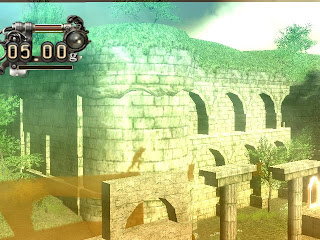
Lost in Shadow follows a mysterious boy who, as we see in the first of its dialogue-free cinematics, has had his shadow cut away from his body by a dark, sword-wielding figure atop a tower. Now, the shadow, which has been thrown down to the ground and left without its memories, must climb to the top of the tower (which looks conspicuously similar to EVERYTHING from Shadow of the Colossus [2005]) to reunite itself with its original form. The twist: as the shadow, you can only interact with other shadows, not real objects.
The central gameplay mechanic will be instantly familiar to anybody who has ever played a traditional two-dimensional platformer. You run left to right along mostly horizontal surfaces, dodging arrows and enemies (which are also pure shadows without physical analogues, just like your character) in order to reach a door at the end of each level. In fact, according to the Hudson rep I spoke with, Tsuchihashi's primary inspiration for the mechanics was the original Prince of Persia (yep, the NES one).
However, what adds an interesting new dimension to the tried-and-true platforming formula of Lost in Shadow is the simple fact that most of the platforms are actually shadows of foreground objects projected on the background. Thus, the game actually forces you to rethink the way your character relates to the platforms he is standing on. Initially the only complexity lies in keeping your mind focused on the shadows despite changes in the objects casting them and the surfaces upon which they are cast, but later the game introduces areas called "Shadow Corridors" which feature more complex ideas like Echochrome-esque 90-degree perspective shifts and even three-dimensional movement.
Just playing as a shadow without any effect on the real world rather limits your options, however, so Hudson includes another character, a small fairy-like creature called a sylph who floats by your side but can become your Wiimote pointer at any time to help you past obstacles. Her main function is to find objects that can be energized and then moved, creating new shadow shapes for you to climb over, but there are some particularly mind-bending sequences where she can be used to move a light source, thus stretching all of the shadows on screen and making it possible to heavily modify the entire shadow landscape.
Some of the individual pieces have been used before (especially the cliché "ruinous fantasy adventure" aesthetic), but the overall effect of Lost in Shadow is quite striking in its novelty, and makes for an experience full of wide-eyed surprise as you are forced to rethink many of the basic physical properties of the platformer genre. Watch out for this innovative title when it hits North American stores on January 4, 2011 and look out for a full Ani-Gamers review in the near future.
Click here for more of our New York Comic Con 2010 coverage
Medium: Video Game (NES)
Genre: Platformer
Designer: Satoru Okada (Director)
Developer: Nintendo
Publisher: Nintendo
Release Date(s): Dec. 19, 1986 (JP), July 1987 (N. America), Feb. 15, 1987 (EU)
Rated: Not Rated
At E3, Nintendo revealed its new handheld, the 3DS; one of the titles announced for it was Kid Icarus: Uprising. There have been rumors of Nintendo reviving the Kid Icarus franchise for years now, but the prevailing one centered around a game by Level-5 for the Wii. Instead we got a game from internal Nintendo developers Project Sora that is very reminiscent of Sin and Punishment. This is a huge departure from the series' platformer roots.
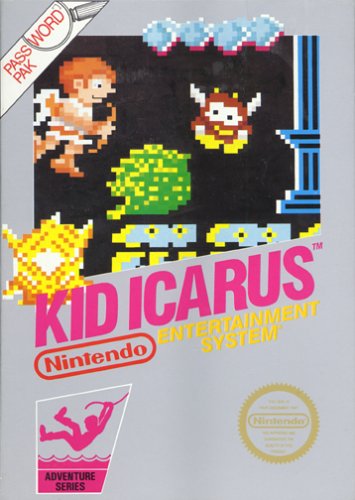
The interesting thing about the original Kid Icarus is that it takes elements from Nintendo’s other franchises. The shooting system works much like Metroid, the shop system and upgrades feel similar to Zelda, and platforming is a major focus, like in Mario. OK, that last one was kind of a stretch, but the others are accurate. Despite this, it doesn’t really stand out like Nintendo’s other classic games from the NES era. It never had much staying power and just doesn’t hold up as well today; it really is just plain bad. I would say that this is mostly due to the difficulty, especially that of the game’s first world.
The first world is so hard because the levels scroll vertically, and when a platform scrolls out of sight, it’s gone. This can lead to death, because a platform just pixels away from the bottom of the screen is now gone. With the flying enemies going all around you, navigation becomes even more difficult. Thankfully, unlike Mega Man, you can shoot upwards in Kid Icarus, but some of the enemies are still surprisingly challenging to fight.
If you manage to get through the first three levels you get to the first castle level, which is at least different. (The castle levels are just mazes made up of one-screen rooms.) It’s a welcome reprieve from the difficulty of vertical scrolling, and, while still hard, is much more manageable. Starting in the second world, the levels are side-scrolling. These levels are much easier since it’s a lot harder to accidentally fall down an endless pit. I actually enjoyed the game a lot more once level 2-1 started, but it still never was much fun.
There are some other things to appreciate in the game though, such as the wacky enemies. The eggplant wizards are especially memorable, even if getting turned into an eggplant is very frustrating. The music and art style are quite good as well, and really add to the charm of the game. In fact, I’d have to say the charm is what I like most about Kid Icarus and is why I’m glad the series is coming back, even if I’m not exactly a fan of the original game.
The actual platforming and shooting works well enough, and I do like that it has a shop and upgrade systems, but the overall game never really clicked with me. I can’t recommend going out and playing it today — time has not been kind to it. As a matter of fact, I don’t think I could recommend it even if you enjoyed it back in the day either. Kid Icarus is not a good game; it’s unnecessarily hard and just gets really frustrating. If you’re still interested, it’s available on the Virtual Console for 500 points.
[Bad]
This review is based on the Virtual Console release for the Wii, purchased by the reviewer.
It was a feeding frenzy. Lots of sweaty men crowded around a small TV screen, watching the blood splatter as a stylized video game character was thrown into a saw twice his height. The crowd cheered as bullets broke through the carapace of a giant alien bug. A startled gasp was heard as a zombie leapt out toward the camera. And in the hands of these gamers was not a black gamepad, but a remote control: sleek, white, and all-too-familiar.
There were no grandmas playing these particular Nintendo Wii consoles, which were on display at the 2009 New York Comic Con. In fact, your grandma would probably disown you if she ever caught you playing the brutal cartoon action game MadWorld. I'd venture a bet that she wouldn't be too keen on the zombie game House of the Dead: Overkill either, and the science fiction shooter The Conduit is quite a far cry from Wii Bowling.
Welcome to the new SEGA on Wii.
Japanese publisher SEGA's move toward "mature" Wii games has struck a major chord with Nintendo fans and gaming journalists alike. On its release, the Wii split Nintendo fandom in two, as many disillusioned gamers felt that the game maker had abandoned them, choosing to focus its efforts on titles appealing to a "casual" demographic. Nintendo has tried in the past few years to hold onto its image as a publisher that appeals to all types: casual and "core" gamers, Nintendo's euphemism for the more commonly used "hardcore."
Early in the console's life cycle, Ubisoft released Red Steel, a violent first-person action game on the Wii that was already riding a hype wave that it couldn't handle when it crashed into gamers' homes in late 2006. The game was pulled down to a Teen rating due to the removal of blood (and the necessity for "Red" in the name), and the gameplay attracted widespread ire from video game critics. Ubisoft's highly-publicized flop seemed to spell certain death for mature games on the Wii.
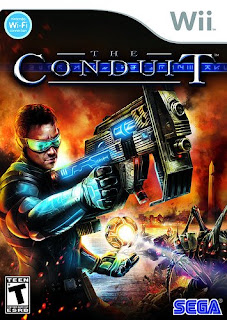
It is natural, then, that the gaming community jumped straight out of its seat when High Voltage Software announced almost a year ago today that they were developing a science fiction first-person shooter along the lines of Perfect Dark or Halo. The game, called The Conduit, had no publisher when it was announced. This bizarre decision was made in order to give the developers (who self-funded the venture) complete creative control, so that they could make a Wii game "that we ourselves wanted to play," according to High Voltage's Chief Creative Officer Eric Nofsinger, who I spoke with at the New York Comic Con this February.
Mr. Nofsinger animatedly explained his team's creation, to the extent that sometimes it was possible to forget that I was talking to a developer and not a fellow gamer. When asked about the stigma against mature games on the Wii, he spoke with an optimism that I have heard only sparingly since the launch of the console. "The Wii deserves it," he said quite bluntly. "[The Wii] is a powerful enough system in order to make compelling content, but more importantly, it's a really unique input peripheral, and provides you a type of gameplay that you can't do on the 360 or PS3."
Months ago, fans began to fret over The Conduit, worrying about when it would get a publisher, and who that publisher would be. Mr. Nofsinger described the unusual process of development-sans-publisher as "scary as hell. We believed really strongly in what we were trying to do," said the designer. "We put our money where our mouth was." In November of 2009, High Voltage reached a publishing agreement with SEGA, and The Conduit finally had a home amid the publisher's growing libary of "hardcore" Wii games.
These included MadWorld and House of the Dead: Overkill, which were both on display beside The Conduit at the New York Comic Con 2009. Overkill built on the existing House of the Dead arcade franchises in an attempt to bring light gun zombie action to the Wii. MadWorld, on the other hand, was to be an outrageous, cel-shaded action game about a man trapped in a twisted game show and forced to kill his opponents in order to survive, in a game that is equal parts The Running Man and Sin City.
Nofsinger seemed very happy with High Voltage's publishing partner, telling me that even after the publishing agreement had been made, SEGA "let us continue to do our thing." And naturally, he thought that SEGA had just the right environment for an aspiring hardcore game on the Wii. "I don't see a lot of third parties really pushing the system outside of SEGA," said Mr. Nofsinger. "SEGA's doing some really cool stuff, and I'm really proud to be a part of that."
But can a game like The Conduit succeed on a system in which most hardcores seem to have lost all hope? When even the gaming press has largely given up on the console (well, not everybody), it's hard to argue that "core" gamers are still flocking to the Wii (or even turning them on).
Mr. Nofsinger hopes that The Conduit will solve this problem by relying on the philosophy of a game made by gamers, with input from gamers. "We realized that even within our own office, there were a lot of opinions about what a good Wii first person shooter could be. So we reached out to a lot of the fan community, the Nintendo fans, and the media, and we got a lot of opinions," said Nofsinger. "What we landed on was [that] there was no one right answer, so we opted for a great deal of customization." That all-inclusive development style is a break from the practices of most third-party Wii developers, and it shows High Voltage's acute understanding of how important its game will be. The Conduit, MadWorld, and House of the Dead are all referendums on the demand for mature gaming on the Wii. Their rise or fall will ultimately determine if there is truly a viable market for games on the Wii that break outside of the casual.
House of the Dead and MadWorld have received some great press desite a lack of promising financial performance. SEGA said that the former has "absolutely met our expectations" and described the sales of the latter as "very encouraging," but the numbers tell a different story. Both games have performed significantly under par, with each taking only a middling or low position on the top 50 charts for its respective release month, then promptly dropping off the chart. It is not clear if SEGA's strategy will ultimately find success in the fickle world of game sales. Will The Conduit be the saving grace in SEGA's desperate pursuit of the "Exiled Hardcore"?
No one knows just yet. But one thing at least is clear: These aren't your grandma's Wii games anymore.
The Conduit hits stores in North America on June 23, 2009. MadWorld and House of the Dead: Overkill are currently available wherever video games are sold.
While it has been available in Europe for what seems like ages, Club Nintendo finally launched in North America today. The rewards program encourages you to register your Nintendo products in exchange for loot, which is a brilliant marketing campaign, but the launch has been a bit harsh.
If you can get beyond the bugs, crashes and errors, you'll be able to link your My Nintendo account to the Club, or create a new one with which to register and earn. Answering surveys for registered products nets you more coins with which drop on the less-than-outstanding rewards. For anywhere between 300 and 800 coins, you can grab yourself a sweet Wii Remote holder, DS game-case, or themed playing cards. If you're nostalgic, you could even trade your gold coins for a Game and Watch DS collection.
Further encouraging you to fill your DS and Wii library is the Gold and Platinum program. If you stick enough games in to your collection, you'll qualify for Gold and Platinum status, which earns you "special" prizes. How do you get in? Find out after the break.
"Gold or Platinum status is based on the number of Coins earned in a Club Nintendo year. Each Club Nintendo year begins on July 1 and ends on June 30. If you earn 300 Coins during a Club Nintendo year you will reach Gold status. Earn 600 Coins during a Club Nintendo year and reach Platinum status!"
It doesn't seem too difficult to earn a lot of coin if you're an avid Wii or DS gamer, as the breakdown of earning coins offers a decent amount per product:
- Wii games = 50 Coins
- Nintendo DS games = 30 Coins
- Wii Shop Channel games and Wii Channels = 10 Coins
You can also earn additional cash for indicating your intent for buying a game or registering the product within a month of its release.
So if you're interested in grabbing some grab-bags, check it out at Club Nintendo. The Ani-Gamers staff will surely be suckered in to this marketing gimmick in order to earn rad free goodies as well, and we'll be back with reports on product quality for those who are curious.
I’ve got to say, it’s an epic week for downloadable titles, a week worthy to follow in the wake of the truly epic Cho Aniki release a few weeks prior. While Mega Man 9 certainly steals the show on PSN and WiiWare – don’t worry XBLA yours is coming next week – there are still a plethora of interesting titles to behold from all the consoles. So lets just jump right in, we’ve got a lot to cover.
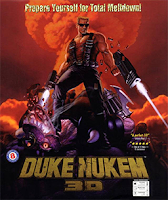
With all the great alien slaughtering of the original, 8 player co-op, and the ability to record in-game video, Duke Nukem 3D should help wet our appetites for both Duke Nukem Forever and the unfortunate Duke Nukem movie.
Vectorman (VC, 800 Points): Released back in 1995 by BlueSky Software for the Sega Genesis, Vectorman was sort of Sega’s answer to Nintendo’s Donkey Kong Country as they were both games that looked phenomenal at the time.
However, history has shown that it was Donkey Kong Country’s masterful level design that bumped this sleek, green robot from the spotlight. Vectorman would later make his return in Vectorman 2 a year later, but would then go dark soon after. For you long-time Genesis fans out there, this one’s for you.
Burnout
The release will also include, for free, all of the additional content that has been added to the game so far, including the motorcycles update that hit last week. Burnout Paradise is a title that has received a lot of mixed reactions for its non-linear take on racing, but no matter where you fall, for 30 bucks, you just can't pass this on up.
Mega Man 9 (WiiWare/PSN, 1,000 Points/$9.99): Time to step into the Way-Back Machine and revisit the late 1980s, when Mega Man 2 was on top – before it slid from grace into its cookie-cutter formula. Recapturing the 8-bit visuals, 8-bit music, and 8-bit grab you by the cohunes difficulty it what Capcom has been aspiring to with their latest true Mega Man release since Mega Man 8 on the PS1.
To those who step up to the challenge of Mega Man 9, you can expect a hardy portion of bottomless pits, spike traps, and Game Over screens to be sent your way. And with some planned DLC on the way, the pain just keeps on coming!
[via Game|Life, Joystiq, 1UP]
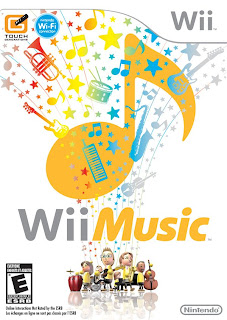
Nintendo's highly anticipated and oft-criticized new rhythm game (or maybe just music game) Wii Music, originally placed somewhere within the nebulous Q4 region of 2008, has been officially dated for October 20, 2008 according to a Nintendo press release. Unlike Guitar Hero and Rock Band, the game contains no competitive aspect.
Like Wii Sports and Wii Fit, Wii Music is all about the fun of the experience, so it allows players to ease along by simply controlling the tempo and style of their music rather than the notes. Naturally, this style of play has met with a harsh reaction from the gamer demographic. Also naturally, this game will sell like gangbusters. Sorry kiddos!
This special edition of Up for Download is dedicated to one special game this week. This is because all of this week's other releases are simply not nearly BEEFY or MANLY enough to be placed on the same page as our special release. No, the demo of the off-road ATV racer Pure (PSN, free) doesn’t quite cut it; nor do the trio of XBLA titles: Shortest Shogi, Rocket Bowl, and Samurai Shodown II. So now, if you’ll excuse me, I am going to go fill these grand pianos with molten lead and see how many I can chuck through a third story window in under thirty seconds! HURRRAH!
Cho Aniki (VC, 900 Points): Released for the PC Engine by developer Masaya back in 1992, Cho Aniki is something purely Japanese. The game itself is a mediocre side-scrolling shooter which has spawned multiple sequels and spin-offs for other consoles, ranging from the Super Famicom to the PS2. What earns this title its place in gaming history is its completely surreal and obviously homoerotic art style. Everything about this game is centered on huge men in tiny clothing performing attacks that place them in…um…compromising positions.
The Cho Aniki (or Super Big Brothers) series has since established a bit of a cult following. In much the same sense that you might watch an awful B-movie for its campyness (MST3K anyone?), Cho Aniki provides that same, wonderfully bad, experience in video game form. It's not really a good game, but I'm sure you'll have fun; nor do I recommend you download this game, but I do think that everyone should play it.
[via 1UP]
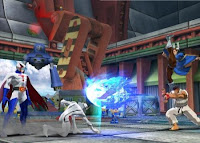
Capcom has recently announced that if their latest 2D fighter were to be coming state-side any time soon that it would not be in arcade form. Tatsunoko vs. Capcom: Cross Generation of Heroes, which is set to release in Japanese arcades later this year, is Capcom’s latest installment to their acclaimed Vs. series alongside Marvel vs. Capcom and Capcom vs. SNK. The game is set to include such Capcom staples as Ryu and Mega Man as well as the likes of Tekkaman and Casshan of anime studio Tatsunoko Productions.
Despite their previous statement, Capcom did actually bring this title to American in arcade form during the 2008 EVO World Finals which were held in
While a Wii port is still technically possible, Capcom’s own Yoshinori Ono, lead producer behind the upcoming Street Fighter IV, has recently expounded upon the importance of a stable online component for fighting games, stating that: “Online will definitely be the future of the fighting game." Given Nintendo's reluctance to standardize a fully featured online component the idea of this title hitting the waggle-box seems all the more slim. Agree, disagree, have some crazy rumor about the title coming to PCs or something? Thensound off in the comments section below!
[via Go Nintendo]Welcome back from Labor Day, kiddos! You guys didn’t work too hard on your big day off, did you? I know I didn’t, which is why Up for Download is coming at you a day late this week and, not only that, this is probably the shortest one to date. All is quiet from the Xbox 360’s camp now that they’ve wrapped up their string of summer hits (the only thing I could gleam out of them was news of a patch in the works for Castle Crashers). PSN mostly just has The Last Guy, but we already talked about him; while this week’s biggest release comes to us from Nintendo of all places.
Super Mario RPG (VC, 800 Points): Another of the great RPGs for the Super Nintendo finds a home on virtual console this week. Back in 1996, Super Mario RPG was a completely out of left field collaboration between Square Enix (then Squaresoft) and Nintendo. Bringing together both worlds, the game had both the simple charm and solid controls of a Mario as well as the imagination and polish of a Final Fantasy. If you haven’t before, definitely check this one out today!
Warhawk Operation: Fallen Star (PSN, $7.99): Fallen Star is the third expansion pack for the online third person shooter Warhawk. The expansion can be purchased separately or, for those of us late to the party, as a pack with the other two expansions for roughly $16. The pack will include a new jetpack and some rebalancing of the older maps to accommodate the jetpack’s awesomeness. Oh, and don’t forget to snag the update that was released last week as well as it includes, among other things, some tutorials to aid those who really are late to the Warhawk party.
UPDATE: Naturally, right after I write up this post news breaks of Pirates vs. Ninjas Dodgeball, Shredded Nebula, and...wait for it...Gin Rummy all coming to XBLA this week! The post also comes right as I'm walking out the door to go to class; looks like you kids are going to have to do some homework on this one. Thanks Kotaku!
[via 1UP, Joystiq]
Genre(s): Puzzle Designer: Steven Spielberg
Developer: EA Los Angeles
Publisher: Electronic Arts
Console(s): Wii
Rated: E for Everyone
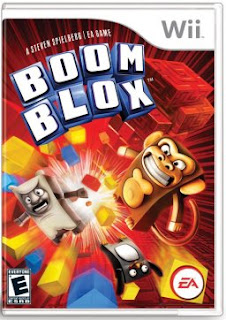
Boom Blox is everything that a third party title for the Wii should be.Instead of a poorly thrown together collection of minigames, or another port with motion control grafted on, this title shows a rare level of polish and craftsmanship that you normally donât see outside of Nintendoâs first party titles.Itâs a game that completely embraces the family-friendly idea the Wii is centered around and is something that gamers of all skill levels can enjoy.
The concept of building up blocks only to knock them down again is one Iâm sure weâve all explored as a child.The beauty here is that, while also being less messy, Electronic Arts and Steven Spielberg have managed to take this most basic idea and expand upon it in a variety of both interesting and challenging ways. Who would have thought there were so many ways to knock down a tower of blocks?
You'll start out by simply throwing a ball and seeing how many points you can score, but the game does so much to mix up this formula.In some cases youâll have special types of blocks, including ones that vanish when you hit them and others that explode.Other times youâll be carefully sliding out blocks while trying not to damage the overall structure, a la Jenga.Once you get a handle on the basics youâll find yourself setting up and setting off chain reactions of exploding blocks, or sniping blocks out of midair once the tower beings to fall.
All of these game types, and several others, are introduced gradually though the gameâs story and challenge modes.The bronze, silver, and gold medals that you can earn for each challenge allow for a large margin of error and help to ensure that youâll never find yourself stuck on one level for too long.And when you complete a challenge, the game usually has a reward for you in the form of an item or character to use in the gameâs level editor mode.
All together, Boom Blox simply encapsulates the Wiiâs gaming philosophy to a tee.It is able to appeal to as wide a demographic as the console reaches, it utilizes the motion controls in such a way that actually enhance the gaming experience, and the rewards and varying degrees of success provide a constant incentive to keep playing.Who would have thought that all of this would come from the odd game-making couple of EA and Spielberg?
The gameâs one big drawback steams from its lack of a true online component.The level editor, being as accessible as it is, will surely produce some interesting levels from the community - but youâll never know that unless youâve got a team of Boom Blox specialist on your friends list.Not having an overarching data base where you can go to rate and download other peopleâs levels is just wasted potential that would have easily extended this gameâs life even further.Online issues aside, Boom Blox is a delightful and engaging game that definitely warrants your attention.
![]() |
||||
| Gameplay: | 4.0 | Average: (3.7 stars) |
||
| Graphics/Sound: | 3.0 | |||
| Design/Story: | 3.5 | |||
| Lasting Appeal: | 4.0 | |||
| Overall: | 4.0 | |||
This week in Up for Download marks the end of the Summer of Arcade releases, which is going out with a bang – or should I say a crash – with The Behemoth’s long awaited Castle Crashers hitting XBLA. Nintendo’s Virtual Console continues to drag itself along with Samurai Shodown 2 and Ys books I and II, while the truly unique The Last Guy sees a release on the American PSN. All-in-all I’d say it’s been a pretty good summer for downloadable titles, and here’s hoping for more of the same!
Castle Crashers (XBLA, 1,200 Points): At long last we laymen shall finally have the chance to enjoy the simple pleasures of crashing a castle. Much like The Behemoth’s first title, Alien Hominid, Castle Crashers is another beat’em up sidescroller with some RPG elements mixed in for good measure. Packed to the brim with four player co-op, lots of unlockable characters, and damsels in distress aplenty, this game is by far my most anticipated game out of this Summer of Arcade.
Helix (WiiWare, 1,000 Points): So let’s say you’re planning on buying one of these newfangled Wii Fit balance boards so that you can whip yourself into shape, but you can’t find one anywhere. Looking to fulfill your workout fix, you turn to Ghostfire Games’ Helix, a rhythm-action fitness title that has you holding a Wii-mote in each hand while you flail your arms out to trance music. In retrospect, you decide that jumping jacks are a better deal.
The Last Guy (PSN, $9.99): If you haven’t already checked out the demo for this title then what I’m about to say might not make a lot of sense to you. From SCE Japan comes a bizarre mash-up of a game that combines equal parts pac-man and zombies. The idea is that you are a caped crusader traversing the streets of some very high resolution satellite photos of major cities collecting a line of people who you escort to safety. Needless to say, there are lots of zombies and other monsters who are trying to stop you.
Kratos for Hot Shots Golf (PSN, $1.99): If you’ve been enjoying Hot Shots Golf: Out of Bounds, but find that it just isn’t…well…angry enough for you then why not toss in God of War’s Kratos to kick up that rage factor; puts John Daly’s putter throwing to shame.
[via Joystiq, WIRED]Up for Download is changing things up a little bit this week. Those of you who are keeping score at home might notice the absence of such triple-A releases as Neo Turf Masters (VC) and Midnight Pool (WiiWare). Well, that’s because Up for Download is, as the industry likes to put it, streamlining its operations a bit and will now be spotlighting releases that we should take some interest in, without all the fluff. Enjoy the taste of this week’s line up, now with half the calories of the original!
Galaga Legions (XBLA, 800 Points): After successfully reenergizing the Pac-Man franchise with Pac-Man: Championship Edition, developer Namco-Bandai is looking to work that same magic with the arcade classic Galaga. New game modes, flashy colors, and a pulsing techno beat is what you can expect from the fourth title in Microsoft’s Summer of Arcade release this Thursday.
Mega Man (VC, 500 Points): The title that helped put Capcom’s Keiji Inafune on the map in the gaming world is back to put a little twang of nostalgia in our hearts as we gear up from the upcoming release of Mega Man 9. That is, it would if we hadn’t already smashed Cut Man to pieces on the NES, Genesis, PS2, Xbox, Gamecube, PC, and just about on any other console you can think of.
Street Fighter Alpha (PSN, $5.99): Set before the events of Street Fighter II, Alpha was never quite able to recapture the rabid fanbase the forerunner enjoyed - despite its technical superiority. The title was originally released in arcades back in ’95, and later received a port to the Playstation in ’96, bringing with it an expanded Super Combo system, as well as the ability to block in mid-air.
Ratchet and Clank Future: Quest for Booty (PSN, $14.99): This bite-sized sequel to Insomniac’s own Tools of Destruction promises to deliver the same platforming and puzzle solving elements that made the original such a hit. Clocking in at about three to four hours in length, Quest for Booty isn’t without a few new tricks up its sleeve to help draw in a new crowd of gamers that perhaps haven’t tried a Ratchet title before. (Shame on them!)
The Force Unleashed [Demo] (XBL & PSN, Free): While the actually release date for Force Unleashed is a ways off, we can still get a taste of the action this Thursday, August 21st. The demo will be set in the TIE Fighter Construction Facility, seen in some recent GDC footage, which is under siege by Rahm Kota, an exiled Jedi General, and will introduce players to the force grip ability.
[via Joystiq, Opposable Thumbs]
Yesterday, Electronic Arts announced plans to partner up with Grasshopper Manufacture (Killer7, No More Heroes) to release an unnamed horror game for the PC, PS3, 360, and Wii. In addition, the title will be produced by Resident Evil creator Shinji Mikami, directed by Goichi "Suda51" Suda, and will involve Q Entertainment (Lumines, Meteos) in some capacity. Details are still scarce at the moment but, as IGN points out, this title could be “Kurayami,” a horror game that Grasshopper Manufacture announced for the PS3 two years ago.
In the press release, representatives from EA and Grasshopper Manufacture expressed their excitement at the chance to work with the other. In particular Frank Gibeau, President of the EA Games Label, states that: "It is an honor for EA to sign Grasshopper Manufacture and help bring their new franchise to gamers worldwide…Grasshopper Manufacture is a world-class studio and, within the EA partner program, they stand alongside some of the world's most revered independent studios." So now, as noted by Joystiq, we’re talking about a franchise...
[via Wii Fanboy]
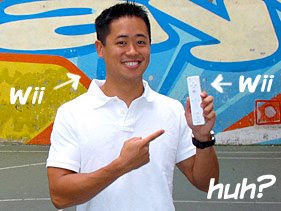
When Nintendo unveiled their "revolutionary" new console name two years ago, they had no idea that somebody else already had the rights to it. Wii Yatani, a Japanese-American gamer living in New York City, has had the name for 26 years. Yes, he has known the pain of "wee-wee" jokes that Nintendo has suffered through for a mere 2 years.
The MTV Multiplayer blog has an extensive post up about Wii's experience (no, not the "Wii experience"), detailing his life of Wii jokes, and how the Wii has changed his life. (People can finally spell his name) Now, we're going to finish up this post before we all get confused about Wii and Wii and other people named Wii and their feelings about Wii and... We give up.
[via Joystiq and MTV Multiplayer]
This week, boys and girls, I think there’s something out there that we can all get excited about. The NES classic Bionic Commando lives again on the PS3 and 360 - although one version might just be a cut above the other. Those looking to get a taste of Fable II can also check out Pub Games and twiddle away their money before the game even starts. Then, on the Wii, we see the release of two TurboGrafx16 titles that nobody has ever played along with the first episode of Strong Bad's new adventure game. Enjoy!
Bionic Commando: Rearmed (XBLA, 800 Points): All right kids, put away your Lost Planets and your Spider-Man 2’s, because the undisputed grappling hook master is back. Originally released for the NES back in 1988, this remake promises to expand upon everything we know and love about Bionic Commando while also throwing in a graphics overhaul and some multiplayer to boot (though, we did lose the exploding Hitler head).
Fable II Pub Games (XBLA, 800 Points): As I reported earlier this week, Pub Games is a collection of parlor games set in the universe of Fable II. In this medieval casino players will be able to gamble away their money and, if they're lucky, will end up having a nice chunk of change to use when they start up their character in Fable II.
Star Parodier (VC, 900 Points): This shoot’em up from Hudson Soft is meant to be a parody of their Star Soldier series and was released back in 1992 for the TurboGrafx16 CD-ROM. Featuring a humble cast of Bomberman, Paroceaser, and PC-Engine (get it?), this title isn’t meant to be nearly as challenging a title as the one it’s mocking. Star Parodier has also enjoyed some critical acclaim since its VC debut, however this is one that I would have to try before I made a purchase.
Break In (VC, 700 Points): It’s a billiards game; if you enjoy this genre then you should already have a title that you enjoy very much and shouldn’t download this game, if you don’t enjoy this genre then you should go play something else and not download this game.

Strong Bad Episode 1: Homestar Ruiner (WiiWare, 1,000 Points): here is a title that has two strong points going for it: it’s developed by Telltale Games (Sam & Max), and is based on the popular Homestar Runner flash series. And as you might have guessed from the title it’s just the first episode in what looks to be a long line of point-and-click adventure games for the Wii and PC.
Bionic Commando: Rearmed (PSN, $9.99): just like XBLA, PSN is also getting this remake of the old NES classic – but with a few extra twists. First, the Playstation’s d-pad is the superior d-pad – having four separate directions instead of one big button means more precision. Second, there’s remote-play for Bionic Commando action on the go, if you have that kind of money. Third, there will be achievements trophies added on in a latter patch, so don’t worry.
[via Opposable Thumbs, Joystiq]
The Summer of Arcade is now in full swing, and this week marks the release of Braid - a title which will probably be the hardest sell of all since it doesn’t have an “Evolved” or “Rearmed” or “HD Remix” after its name. Then we have the Virtual Console, which is a little less awful this week. Hopefully the WiiWare shooting gallery Wild West Guns will restore some faith in the service after last week's Pong Toss. Finally there's PSN, which has some slim pickings, but the Ratchet & Clank pseudo-sequel Quest for Booty and The Last Guy are both set for an August release!
Braid (XBLA, 1200 Points): From the mind of independent developer Jonathan Blow comes Braid, a title which promises to melt some brains with its bizarre, time-manipulating puzzles. The game will also be melting a few wallets with its hefty price tag ($12), but don’t let that discourage you from checking out the totally free demo for the new puzzle/platformer.
Sonic the Hedgehog (VC, 500 Points): I grew up with Sonic and out of all of his Genesis releases I’d say this one is the weakest. Compared to Sonic 2 and 3, the original is so much slower paced and focuses too much on the puzzle solving aspect for my taste. Though, eating all that Cookie Crisp and watching Power Rangers might have had something to do with that.
Splatterhouse 2 (VC, 800 Points): Now, unlike Sonic, I didn't spend any of my childhood slaying monsters in Namco’s side-scrolling beat'em up Splatterhouse. Released back in 1992, the series is now getting a next-gen remake and is also the first title on the Virtual Console to receive the M-rating. Alpha moms beware…
Wild West Guns (WiiWare, 1,000 Points): I watched George Stevens’ western classic Shane this weekend, and at no point during the movie did I see any of the following: flying sombreros, hot air balloons carrying TNT, or tiny men in purple suits rushing the screen. Obviously Mr. Stevens had no idea what the real Wild West was really like, unlike Gameloft’s shooting gallery Wild West Guns.
PixelJunk Eden (PSN, $9.99): Last week’s biggest demo is this week’s biggest game release on PSN. As the third installment to the PixelJunk series,
[via Joystiq, PS3 Fanboy]
(Ed: Sorry, I didn't have a chance to post this on it's normal Monday date. Enjoy.)
Just this week Microsoft announced their "Summer of Arcade" release schedule. This is a list of five potential XBLA blockbusters that'll carry us into the Fall gaming season (including Castle Crashers, FINALLY). Not to be outdone, Sony and the PS3 are dropping a classic rhythm action title on us, as well as the beautifully rendered third installment to the PixelJunk series. Then there’s Nintendo...which, yeah...doesn't really bring much to the table this week.
Geometry Wars: Retro Evolved 2 (XBLA, 800 Points): The first of Microsoft’s "Summer of Arcade" releases, Bizarre Creation's Geometry Wars: Retro Evolved 2 is the sequel to one of the biggest titles on XBLA. Packed with new games modes, four player local co-op (no online, sorry kids), and the same bright, flashy colors we’ve all come to enjoy, Retro Evolved 2 is a must-have for any 360 owner.

Chase H.Q. (VC, 600 Points): Released back in 1988, this arcade racer from developer Taito has a very strong cops-and-robbers vibe to it. Behind the wheel of a black Porsche 928, your mission is to intercept wanted criminals in high-speed chases. The game was well-received and spawned two sequels with multiple iterations on the Sega Genesis, Super Nintendo, and TurboGrafx-16.
Art of Fighting 2 (VC, 900 Points): It's another of the early SNK fighters released for the Neo Geo back in 1994. Now, I’ve played Art of Fighting 2, as well as several other 2D brawlers for the Neo Geo, and my advice to you would be to save your money. There are a dozen fighters on that console that haven’t seen a release yet that'll better warrant your 900 Nintendo dollars (and they also don't look like they've been molded out of clay).
Pong Toss: Frat Party Games (WiiWare, 800 Points): It is my sincere wish that history does not record JV Games’ Beer Pong Pong Toss: Frat Party Games as the first in a long line of college idiocy related titles. The classic sport of bouncing a ping-pong ball across a table into a plastic cup has been recreated here for up to four players in the game’s two available modes: Championship and Speed Pong. I say just keep holding out for Mega Man 9. It'll be here one of these days.
Parappa the Rapper (PSN, $22.99): One of the early rhythm games for the original Playstation is now available via PSN. From developer NaNaOn-Sha, the game has you timing button presses to bizarre hip-hop tracks, some of which feature a material artist with an onion for a head. The title has been a bit of a cult classic since its original release back in 1996, and it’s good to see it living on through PSN (and PSP).
1942: Joint Strike (PSN, $9.99): We all remember Capcom’s shoot’em up remake from last week with its release on XBLA. This title never earned that slot on my line up though since, after playing the demo, I started having terrible flashbacks to my time with the Dreamcast top-down shooter Ikaruga. Sure, they’re both legendary titles, but I find that the bullet hell shooters just drive my patience (and my controller) to a breaking point.
PixelJunk Eden demo (PSN, free): Hoo boy, I’ve been hearing a lot of positive buzz surrounding Q-Games’ latest title. From what I’ve seen, you play as a tiny dot with the ability to stick to and swing from the various plants which grow and change as you navigate the level. It’s a bizarre title, that’s for sure, but an interesting one that I definitely want to check out soon. Look forward to the game’s full release later this week.
[via Gamasutra, Kotaku, and PS3 Fanboy]
In an interview with Gamesindustry.biz, Ubisoft’s Alain Corre revealed that the next Red Steel title is already in development and will make use of Nintendo’s new Wii MotionPlus add-on."Red Steel 2 has been in development for many months now, and [Wii MotionPlus] will help us be even more precise in what we do with the product. The Red Steel brand is strong - I think we released it on year one, and that people understood that it was a first try on new technology, technology that wasn't completely finished."
The Wii MotionPlus is a device which has caused quite a stir since its announcement at E3. It remains to be seen whether Nintendo’s latest peripheral will become the new standard for Wii owners, or if this device will segment the marketplace and place an unneeded strain on third party developers. Ubisoft seems to have cast their vote, now we shall wait and see.
[via GoNintendo]
As reported in the New York Times yesterday, four of Japan’s major manga publishing houses have come together to form Librica, which will distribute manga via the Nintendo Wii’s WiiWare channel. The four houses that make up Librica are Kadokawa (Cowboy Bebop, Neon Genesis Evangelion), Kodansha (Akira, Sailor Moon), Shueisha (Death Note, Dr. Slump), and Shogakukan (Monster, Mobile Police Patlabor).Very few details are available about the service; however, Librica has stated that it’s open to adding more publishing houses after the service has launched. There is also talk internally of expanding the service to including distribution on the DS as well. As for information on the pricing structure or release date of the service, no details are yet available. And if you’re wondering whether the service will be coming state side, just keep in mind that all four of these publishing houses have seen their works released in
(Ed: Welcome to "Up for Download," a new weekly column written by our own Maxwell "Pigeonflu" McGee. In each entry of this column, Pigeonflu will go over the newest titles being released on the Playstation Network, WiiWare, and Xbox Live Arcade, while giving his opinions on each one. So, without further ado, here is Up for Download: 7.21.08 Edition.)
A couple of good old fashioned shoot’em ups is what we’ve got up for download this week on 360 and Wii. A classic title is revisited while two others make the debut for the first time. PSN also rolls out their third installment of the Siren series which follows in Alone in the Dark’s episodic footsteps. It’s an interesting selection this week and one that’ll hopefully become the norm for downloadable titles instead of the exception.
1942: Joint Strike (XBLA, 800 Points): Another of the potentially great remakes is headed for the 360 curiosity of Capcom studios. This vertical shooter has received much praise from the enthusiast press since its announcement and might even earn a slot on my arcade line-up.Go! Go! Break Steady (XBLA, 800 Points): The break out title from Little Boy Games, an independent game studio based out of
Jade Empire (Xbox Original, 1200 Points): Another of the excellent action RPGs from Bioware which arrived after KOTOR but before Mass Effect on the original Xbox. The title enjoyed much critical acclaim upon its release and, unlike the other two titles, is available for download today (Monday the 21st).
Super Fantasy Zone (VC, 900 Points): A 1993 release from developer Sunsoft, this title looks a cross between a horizontal shooter and Kirby’s Dreamland and is apparently the last title in a long line of Fantasy Zone games. Just take one look at it and you’ll see what I mean!Gley Lancer (VC, 900 Points): A vertical shooter originally released back in 1992.
Pirates: The Key of Dreams (WiiWare, 1000 Points): Our third shoot’em up for download this week, Pirates is developed by Oxygen Games and supports up to four players. The game is apparently meant to be the prequel to the DS title Pirates: Duels on High Seas which is set for an August release.
Siren: Blood Curse (PSN, $40 total/$15 per episode): From SCE's Japanese studio, this latest installment in the Siren stealth/horror series will be available this Thursday. The game will follow an American TV crew trapped in a remote Japanese village and will be available as a complete package or as individual episodes.
An announcement that would have made a lot of people feel better about Nintendo’s press conference was revealed yesterday evening during Nintendo’s Developer Roundtable event. Nintendo mastermind Shigeru Miyamoto confirmed that a new Pikmin title is on its way during a Q&A session at the end of the roundtable event.
Pikmin aside, the event mostly talked about the “big” three titles revealed during Nintendo’s press conference: Animal Crossing: City Folk, Wii Sport Resort, and Wii Music. The ability to transfer your character from Animal Crossing: Wild Word to City Folk was confirmed by AC producer Katsuya Eguchi.
During the Wii Sports Resort Q&A Nintendo’s brass artfully dogged some questions concerning the Wii MotionPlus and whether it was an admission by Nintendo that the original Wii-mote’s sensitivity was sub-par. Finally, while talking about Wii Music, Miyamoto mentioned that, of the 50 songs available in the game, most of them will be public-domain tracks but some will be “popular” licensed music. Hopefully that means we’ll get something a little catchier than “Yankee Doodle Dandy.”
[via 1UP]
Broken in this week’s Weekly Famitsu magazine, Capcom’s zombie-bashing extravaganza, Dead Rising, is making its way to a Wii console near you. It's strange that this announcement was absent from both Nintendo and Capcom’s press conferences, and even stranger still that this title still hasn’t seen a PC release (Devil May Cry 4 and Lost Planet say “hello”).
From what can be gleamed in the Famitsu article, the title will be a port of the 360 game, with an emphasis on maintaining the massive zombie hordes of the original given the Wii’s, well, limitations. Naturally, there is also talk of some Wii motion control functionally as well. Hey, a little motion control didn’t hurt Resident Evil 4 now did it!
[via Kotaku]
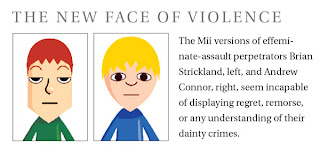
Nintendo is once again coming under attack by the Internet community, though this time not for duct-tape related reasons. Satirical news source The Onion reported today that the Wii has faced major criticisms from PAW (Parents Against Wii), who have claimed that the console has caused an increase in "effeminate violence" in their children.
Some gems from the article include...
"The Nintendo company is knowingly exposing our children to disturbing acts of foppishness right in our living rooms," said Roberts of PAW. "Even more frightening, the motion-sensing technology teaches them that the only way to resolve conflicts is to flail their arms in acts of fruity aggression."and...
"The Wii's fluffy flowers and bright peach-colored sunlight glorify chasing precious talking rabbits with plungers," Greer said. "What kind of message is that sending to our children? That it's 'cool' to act like some kind of electrical elf or banana fairy?"
Read the full article right here.
[via The Onion]
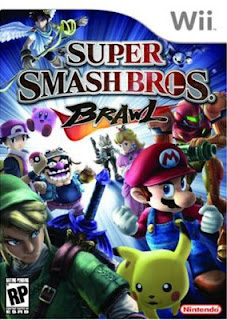
Yeah yeah I know. There was no Dojo Day article last week, a blasphemic fact that has probably sent all three of the people who read this column into unstoppable withdrawal seizures. This week is the last Dojo Day article before Brawl weekend, when Super Smash Bros. Brawl will finally release to the North American market. Can't wait? That's what I'm here for, ranting about Nintendo's smash hit (see what I did there?) fighting game franchise. This week I'll be talking about R.O.B. and everything I missed for the past two weeks. Welcome to Dojo Day.
Discussion Topics
Don't Mess with This R.O.B.ot:
So, I've heard a lot of complaints from friends of mine about this whole R.O.B. business.
"He's another character from Starfox?"
"He's too powerful!"
"I don't even know who he is. Why is he in the game?"
So, I feel that it is necessary to--how do I put it--enlighten some of you Brawl fans in regards to the story of a certain Robotic Operating Buddy.
R.O.B., short for Robotic Operating Buddy, began its life not as a video game character per se, but as a peripheral added to the NES. The little one-foot tall gray plastic robot served as an add-on playable with two games for the NES, Gyromite and Stack Up. His duties consisted of throwing up small plastic discs and catching them, and while playing the (admittedly terrible) games, you would have to balance the action both on-screen and right on the floor in front of you.
More importantly for you video game fans, R.O.B. served as the primary reason why the NES, by extension Nintendo, and by extension video games as we know them even exist. After the death of the 1980's video game boom, nobody thought that games could sell any more. Nintendo, who couldn't sell their Nintendo Entertainment System to anyone in America, decided to use R.O.B and the NES Light Gun as ways to sell the console to places like Toys R Us. After all, it's a "toy," not a "video game," right?
Soon, Nintendo was selling millions of NES's, and had dropped the Robotic Operating Buddy altogether. Video games were back in business. Years later, R.O.B. made his first reappearance, as the pilot of the Great Fox in Starfox 64. He would become playable for the first time as a secret character in Mario Kart DS, before joining the cast of Brawl.
So next time you're complaining about the inclusion of characters in Brawl, remember what R.O.B. did for video games.
After all, doesn't he deserve his chance to beat a certain pretentious fat plumber around a little?
[Thanks to Gamespy for providing historical information for this section]
Dojo Topics
Luigi's Mansion: While we already knew that this stage existed, what we didn't know was that it can be broken down when players knock down the foundations of the house. However, this ghost house quickly rebuilds itself, restarting the cycle.
Falco: Fan-favorite Falco flies in for some fast fighting. (phew!) While Falco's main special moves (including his Landmaster Tank FInal Smash) remain the same as in Melee, he has new Smash attacks. For example, he can perform a "spinning 100-slash attack" wihle running at an enemy.
Meteor Smash: I'm not sure if this was in Melee (can anyone confirm or deny that for me?), but here's the rundown: While in the air, you can hit your opponent downward and create a "Meteor Smash" that will immediately smash them down instead of to the side.
Captain Falcon: He's back, and now he's got a new way to perform a Falcon Punch. If you're winding up your punch, you can now reverse the direction at the last minute, adding a little damage and eliminating the longtime problem of the Captain's vulnerability during the windup. In addition, Captain Falcon's FInal Smash calls in his "Blue Falcon" racecar, knocking around opponents who get in the way.
Master Hand: Yes, Master Hand and Crazy Hand are both in the game, and they're pretty much the same as always.
Samus: Special Moves: This is all just Samus basics, except for her new missile. By holding the special move button after performing a missile attack, you will launch a green super missile instead of a purple homing one.
Clear %: For every time you play through Subspace Emissary, you will be given a percentage representing how much stuff you have collected. To increase this percentage to a 100%, enter every door in the game (Kirby-style), clear every stage, collect the mysterious "orange cubes" (they contain items), and collect all the character trophies.
Lucario: So, he is in fact quite a bit different from Mewtwo. Most interestingly, Lucario's attacks become more powerful the more he gets damaged. His special attacks include an "Aura Sphere" nearly identical to Mewtwo's "Shadow Ball," a quick, adaptable-range side-special called "Force Palm," and a counter move called "Double Team" for the down-special.
Spear Pillar: Wow, there actually were stages that were not revelaed in that initial list? Anyway, Spear Pillar is from Pokemon, and features a staggering amount of dynamic effects. The stage has a sort of Battlefield-like ruins structure on the top, but also contains caverns beneath. Depending on the color scheme of the stage (Diamond or Pearl, chosen at random at startup), either Dailga or Palkia (both Pokemon) will appear. Dialga will tilt or flip the camera, causing the stage to change view while characters stay on the ground. He can also make the whole fight occur in slow-motion. Palkia will crumble parts of the stage or send beams of energy at the players.
That's it for this week everybody. Next week I'll either be out at midnight waiting for my copy of Brawl or sleeping at home so I can have some rest for when I pick it up the next morning. I'm not sure what will happen with Dojo Day next weekend, but be assured that I'll have something for you guys. See you all next week, and good luck getting your hands on Brawl!
[via Smash Bros. Dojo]