-

Preview: Black Butler (Dub)

Topics: , , , ,
Black Butler, a.k.a. Kuroshitsuji

Ahh, Black Butler, also known as "Kuroshitsuji" in Japan. Infamous for its perpetually squealing teenage girl fanbase, it can be difficult for male fans to actually give it a try. However, after my stint with the surprisingly funny Axis Powers Hetalia (also known for its prepubescent female fans), I thought I might as well give Black Butler from A-1 Pictures (Kannagi, Welcome to the Space Show) a fair shake.

In the two dubbed episodes that I received on FUNimation's preview disc, however, I found myself giving Black Butler much more than a fair shake. You see, this series is in fact a shōnen (boys) manga, even though it clearly aims for a female demographic with its pretty-boy main characters and vaguely homo-erotic situations. This combination of demographics, now quite common in the manga world, means that Black Butler can provide an experience that's fun for more than just the core girls audience. Go figure!

Sebastian is a demon butler, bound to his master, Ciel Phantomhive, by a devilish contract — he must obey all of his master's orders, but Ciel has also agreed to allow Sebastian to consume his soul after the contract has ended. Following along with this delightfully Faustian setup, the series is defined by a dark, gothic style, complete with classic ornamentation in both architecture and fashion.

Plus, FUNimation's dub uses some surprisingly accurate British accents to help geographically and historically place the story in Victorian England. The voices don't always work — namely Brian Mathis, who weaves in and out of an Italian accent for the villain of episode 2 — but even some of the weaker performances like Monica Rial's Cockney accent manage to produce moments of comedy.

These two (predictably) self-contained episodes center around Sebastian's dazzling butler abilities, as he shows up all of the manor's servants with his masterful preparation of dinner and ... fighting prowess. In fact, the inclusion of fight scenes highlights the most important thing about these first few episodes of Black Butler — they combine straight-up visual gags with black comedy, creepy gothic macabre, light drama, and A-1 Pictures' best imitation of BONES-style (Fullmetal Alchemist) action scenes. The result is a fun, creepy, and exciting pastiche that never leaves you without a dull moment, despite its tendency to careen between styles.

Granted, this is just based on a limited preview, so the show could easily let me down after more than two episodes. Regardless, the beginning of Black Butler is undeniably entertaining; it may feature a pretty-boy butler being pretty, but his Golgo 13-esque ability to effortlessly complete any task, no matter how gruesome, makes for fun times, and the variety of comedic styles is sure to please nearly anyone.

Look for Black Butler on DVD from FUNimation Entertainment on January 11, 2011, and check it out with English subs right now on FUNimation's video portal, Hulu, and Anime News Network.


This preview is based on a complimentary screener DVD provided by FUNimation Entertainment.

NYCC 2010: Lost in Shadow (Wii) Hands-on

Topics: , , , , ,
Lost in Shadow (Wii)

Last weekend, at the New York Comic Con, I had a chance to play through a few levels of a debug version of Lost in Shadow, a new platformer game for the Nintendo Wii, developed and published by Hudson Soft and directed by Osamu Tsuchihashi (designer for Dance Dance Revolution: Mario Mix, graphic designer for Mario Party 5-7).

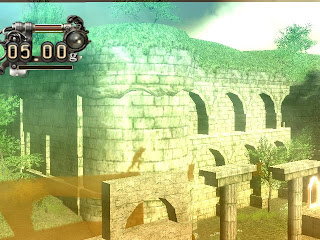
Lost in Shadow follows a mysterious boy who, as we see in the first of its dialogue-free cinematics, has had his shadow cut away from his body by a dark, sword-wielding figure atop a tower. Now, the shadow, which has been thrown down to the ground and left without its memories, must climb to the top of the tower (which looks conspicuously similar to EVERYTHING from Shadow of the Colossus [2005]) to reunite itself with its original form. The twist: as the shadow, you can only interact with other shadows, not real objects.

The central gameplay mechanic will be instantly familiar to anybody who has ever played a traditional two-dimensional platformer. You run left to right along mostly horizontal surfaces, dodging arrows and enemies (which are also pure shadows without physical analogues, just like your character) in order to reach a door at the end of each level. In fact, according to the Hudson rep I spoke with, Tsuchihashi's primary inspiration for the mechanics was the original Prince of Persia (yep, the NES one).

However, what adds an interesting new dimension to the tried-and-true platforming formula of Lost in Shadow is the simple fact that most of the platforms are actually shadows of foreground objects projected on the background. Thus, the game actually forces you to rethink the way your character relates to the platforms he is standing on. Initially the only complexity lies in keeping your mind focused on the shadows despite changes in the objects casting them and the surfaces upon which they are cast, but later the game introduces areas called "Shadow Corridors" which feature more complex ideas like Echochrome-esque 90-degree perspective shifts and even three-dimensional movement.

Just playing as a shadow without any effect on the real world rather limits your options, however, so Hudson includes another character, a small fairy-like creature called a sylph who floats by your side but can become your Wiimote pointer at any time to help you past obstacles. Her main function is to find objects that can be energized and then moved, creating new shadow shapes for you to climb over, but there are some particularly mind-bending sequences where she can be used to move a light source, thus stretching all of the shadows on screen and making it possible to heavily modify the entire shadow landscape.

Some of the individual pieces have been used before (especially the cliché "ruinous fantasy adventure" aesthetic), but the overall effect of Lost in Shadow is quite striking in its novelty, and makes for an experience full of wide-eyed surprise as you are forced to rethink many of the basic physical properties of the platformer genre. Watch out for this innovative title when it hits North American stores on January 4, 2011 and look out for a full Ani-Gamers review in the near future.


Click here for more of our New York Comic Con 2010 coverage

Preview: Velvet Assassin (360)

Topics: , , , ,
Velvet Assassin

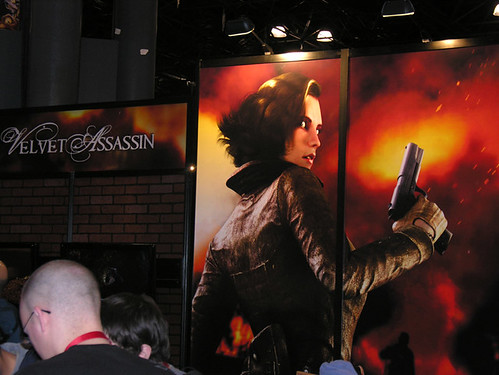
I had a chance to play Velvet Assassin at this year's New York Comic Con thanks to the nice folks at the SouthPeak Games booth. Check out my impressions below.

When gamers think "World War II game," they immediately imagine first-person shooters set during the major battles of the Second Great War. Who would have thought that a game developer would create a game that takes place not on the front lines, but behind them, deep in the shadows of the Nazi regime?

Enter Velvet Assassin. Developed by Replay Studios and published by SouthPeak Games, it is the story of Violette Summer, a fictional version of the real life World War II Allied secret agent/sabateur Violette Szabo. She is lying in a hospital bed at the beginning of the game for reasons unknown, and the plot consists of Violette reminiscing about the events of her missions, with the player acting them out in real time. Some readers might be confused, as this game was originally titled Sabotage, but had its name changed due to the other WWII stealth game due out: Saboteur. Rest assured, this is a separate game from Saboteur, and is in no way different from Replay's previously unveiled Sabotage. (Confused yet?)

While Velvet Assassin might be classified as a stealth action title, it is all about stealth over action. According to SouthPeak rep Aubrey Norris, the two things to remember while playing the game are "kill everybody, and don't get seen." She wasn't kidding either – Most of the game is spent crouching in the shadows, waiting for a soldier to walk past so that you can kill him. Much like Metal Gear Solid, every area is a puzzle, with soldiers walking along set patrols and obstacles set up to hamper your ability to get past. It makes for some really interesting gameplay as Violette shuts off lights, hides behind cover, and attempts to creep silently over floors coated with broken glass.

When Violette finally stands behind an enemy, you can kill him with a single button press, which will generate one of thirty-six distinct assassination animations. The one that gets used is determined by what weapon Violette is carrying, where she is standing relative to the enemy, and a variety of other factors. The screen turns red as Violette is about to kill her victims, adding an even greater level of tension to the already nail-bitingly tense assassination scenes. Violette's missions range from assassinating Nazi leaders to blowing up bunkers to killing Allied spies before they can give away information, but a lot of what I played was simple room-by-room assassinations. (Think Metal Gear Solid) I could see Velvet Assassin facing the same problem as Assassin's Creed, wherein there are so many assassinations that they become tedious chores, despite how well-designed they are.

For the packrat gamers, there are "collectibles" scattered throughout all of the levels, but instead of being meaningless trinkets, each and every one is an object based directly off of artifacts from Nazi-era Germany. These include things like medals and even letters from German soldiers to their families. Nearly everything in this game, from the weapons to the hairstyles, was heavily researched by the developers at Replay Studios.

One of the more unusual additions to the game is something called morphine. Violette has the ability to use it while telling her story, causing the game world to turn into a psychedelic, flowery dream, slowing everything down so that the now-nightgown-clad Violette can sneak past enemies. This powerful ability can be recharged with morphine syringes found around the levels, and it sometimes must be used to pass obstacles. The morphine is the only part that diminishes the game's realism, since the weird dream sequences are actually a fully-required gameplay element, rather than an optional crutch for players in need of help.

All in all, though, Velvet Assassin is shaping up to be an interesting game. Its take on World War II is quite unique, as it is simultaneously tackling the idea of a female main character and the concept of the battle "behind the front lines." The game looks beautiful, and the stealth gameplay has its share of nerve-wracking moments. Fans of Assassin's Creed and Metal Gear Solid who are looking for a title a little bit more grounded in reality: Don't let Velvet Assassin sneak under your radar.

User-Preview: Xam'd (Sub)

Topics: , , , , ,
Xam'd by Bones (studio)

The following article was submitted by Rp Phantom. The opinions expressed below do not represent those of Ani-Gamers or its affiliates.

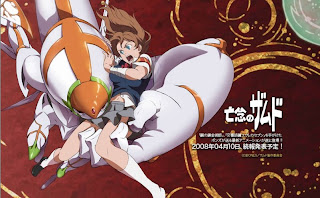
We all know the mecha genre. From Mobile Suits to Giant Robots to Giant Robots that are actually not even robots, an anime fan would think that, by now, the mecha genre has become formulaic and predictable. So, now that Eureka Seven has come and gone, Bones and Aniplex are back again, and they bring to the table yet another tale of an adolescent boy, giant airships, mechas, and living weapons. They bring Xam'd: Lost Memories.

So I bet you're asking, "So who's the new teenage boy who has to control these robots?" or "Who's the new mysterious introverted girl?" While Xam'd seems to fall under the mecha category at first, it is made clear from the start that the story does not revolve around mechas. Yes, there is a teenage boy, there is a mysterious girl, and there are airships. To set the record straight for Xam'd, here's an early plot overview.

The story begins on Sentan Island, a land of seemingly contradictory nature. It is described as isolated, but it is highly populated. It is apparently under military rule, but the citizens live in peace. Akiyuki is a teenager living on this island, living between his separated parents. He is a confident and amiable individual, and has a pair of close friends named Haru and Furuichi.

On his daily walk with them to the school bus, he spots a pale-looking girl named Nazuna who appears to be a new rider on the bus. The soldier guarding the bus has the students lined up to check their armbands, and he notices that this frightens Nazuna. He passively slips her his armband, to help her avoid complications with the soldier. He claims he forgot his, and is expectedly let on anyway because he is a familiar face.

This appears to me a dreadful mistake, as Nazuna detonates a bomb on the bus as he exits in front of the school, an apparent act of war. Several students are wounded and killed, and a strange light from the explosion hits and enters Akiyuki's right arm. Confused, he re-enters the blown apart bus and tries to help Nazuna, who is wounded and bleeding green blood. She apologizes for getting Akiyuki caught up in her actions, and offers to give him her lost memories: Xam'd. Nazuna touches Akiyuki, and a strange white liquid envelops his body, and transforms him into a monstrous creature. (Just like they said would happen in Catholic School).

Suddenly, airships from a belligerent military from the north drop super weapons known as "Humanforms" onto the island. These humanforms are like living attack vehicles, except the are behemoth in size. A passing postal ship remains nearby, examining the situation. On this ship is Nakiami, a mysterious young woman who takes interest in the humanforms, and even more so, the Akiyuki-turned-Xam'd.

Xam'd is compelled to fight these humanforms, possibly to protect Akiyuki's friends. After being destroyed, the humanforms start to crystallize and corrode apart before the victorious Xam'd. In no time, Nakiami swoops down to Xam'd, and traps him. He then starts to corrode in a similar matter as the humanform. Nakiami urges Xam'd to come with her if he wants to live. Xam'd obligingly collaspes and transforms back into Akiyuki, unharmed, leaving only a mutated Xam'd arm on his body.

Nakiami takes Akiyuki back to her postal ship, where she cares for him, and explains that he now requires training to control the Xam'd within him and to keep himself alive. From then on the stage is set as Akiyuki travels with the ragtag crew of the postal ship, while his friends are left to try to restore their devastated lives and homes, in a city that lies on the brink of warfare.

Xam'd brings recognizable qualities with something new to the table. Like their previous work, Eureka Seven, Bones's animation is flashy and fluid, and of course, action-packed. Even the theme song, "Shut up and Explode" by the Boom Boom Satellites is catchier than chlamydia. Overall, this new anime seems to have a lot of potential, putting a new twist on predictable sci-fi and mecha genres. Definitely worth watching.

Preview: Shadowrun (X360)

Topics: , , , , , ,
Shadowrun Genre(s): Adventure, FPS, Online, Puzzle
Developer: FASA Interactive
Publisher: Microsoft Game Studios
Console(s): PC, Xbox 360
Rated: M for Mature

I've, of course, heard a lot about Shadowrun since its recent release on the Xbox 360 and Games for Windows. It is the first game to play on Microsoft's Live service cross-platform, allowing Xbox 360 and PC players to finally face off and decide: Dual-analog or Keyboard-mouse? More important to the average player, the game uses a number of interesting new ideas, namely mixing FPS features and magic. Before we begin, let me remind those of you who don't know that Shadowrun is multiplayer-only. There is no single-player campaign, so other than some cpu matches, you are playing online pretty much all the time.

Shadowrun is noticeable for its very interesting twist on the FPS genre. Like other games before it, the game utilizes team-based arena shooter mechanics, complete with a safe time in the beginning for players to buy weapons. However, during this safe period, players can also buy magic spells and technology upgrades. These can give a variety of helpful abilities, such as auto-aim, healing, or magic attacks. Then, you simple equip your weapons and magic, and begin the fight.

The controls are the general FPS button set, and they work just fine, once you get the hang of the use of magic. Even so, there are times where your character will get inexplicably stuck on edges of buildings and other structures, an error that can be crippling in the middle of a fierce online game. When you die, you do not respawn until the end of the round. However, allies can revive your dead body, as long as an enemy has not come by to shoot you until you cannot come back. This interesting revival dynamic is able to create a sense of teamwork among your comrades, even during a hectic battle.

The game looks nice, from what I've seen, with the magic effects showing off the most noticeable graphical feats. Trees of Light will grow right in front of your eyes, and spray beads of healing light, characters will burst into smoke and disappear, and crystals will spring up underneath you to damage you and hinder movement.

Shadowrun is an interesting take on the online first-person shooter, with its magic aspects. It also manages to create a sense of teamwork that many online shooters fail to achieve. Even with its strengths, the lack of a single-player mode is disappointing for a game with so much potential.

Pre-Rating:

Preview: Super Paper Mario (Wii)

Topics: , , , , ,
Super Paper Mario Genre(s): Action, Adventure, Platformer
Director: Ryota Kawade
Developer: Nintendo
Publisher: Nintendo
Console(s): Wii
Rated: E for Everyone

Oh boy. Another 2D Mario platformer. But of course, Nintendo throws us all for a loop by giving us everything we love about just about every Mario game. This is a 2D sidescroller, a 3D platformer, a puzzler, an RPG, and its got multiple playable characters from the Mushroom Kingdom. I recently stopped in at the Nintendo World Store for the first time, (and what a nice place it is) and I got a chance to play Super Paper Mario on its launch day. The game is generally very enjoyable, and is a real diversion from the path many developers have taken with the Wii.

Lets get down to the core feature of this game. First off, to play, you hold the Wii remote on its side like an NES controller, using the D-pad, 1, and 2 buttons. Mario can run and jump just like in any Mario game, but here comes the biggest difference. At any point in the gameplay, you can press the A button (right next to the D-pad) to flip the world into 3D. In this mode, the blocks that seemed like they were aligned will be separated, and you might even find a new pathway or way around an obstacle. (You can walk behind large walls, and even occasionally walk on the background to pass over gaps and such) Don't even try to decipher the way this works, since a lot of times something will work in one dimension and not the other. Seemingly far apart blocks will somehow be right next to each other, and defying logic, Mario will walk over blocks that are clearly not in a straight line. As this game proves, everything's different when you look from a different perspective. The controls are tight and simple as expected from a mario game. Some other interesting additions include the ability to point the remote at the screen (at which time it pauses) so your butterfly companion can explain objects and enemies to you, Navi-style. Also, everything but the actual controls plays like an RPG, with collectable and use-at-will items, hit points, and even leveling up. (When you or an enemy gets hit, they lose a certain amount of health, depending on the typical RPG plethora of factors)

Graphics are a striking feature of Super Paper Mario. While the Wii is not very graphically powerful, it is able to deliver some very nicely art directed visuals. Using its typical cartoony style, Super Paper Mario shows us very vibrant and interesting landscapes. Of course, the characters and enemies are cute and very--how should I say it--bubbly (or sometimes even blocky) There are also some very nice effects added in that give the graphics an artistic flair. For example, the screen ripples all around your selection area when asking the butterfly for help. Also, when you enter a pipe, Mario's body is split into blocks, and each one is sucked down seperately. The game uses simple visuals to create fun and colorful gameplay.

I really enjoyed playing this game for the total of 10 or so minutes I spent on it. It looks very nice, especially on an HDTV with Component cables I might add, and plays gracefully, as we've come to expect from Nintendo's development team. Super Paper Mario is looking to be the best Wii game since Zelda, and should tide over Nintendo fans until the spring-summer game drought is over.


Pre-Rating: