to

Honoring Satoshi Kon: The Journey

Topics: , ,
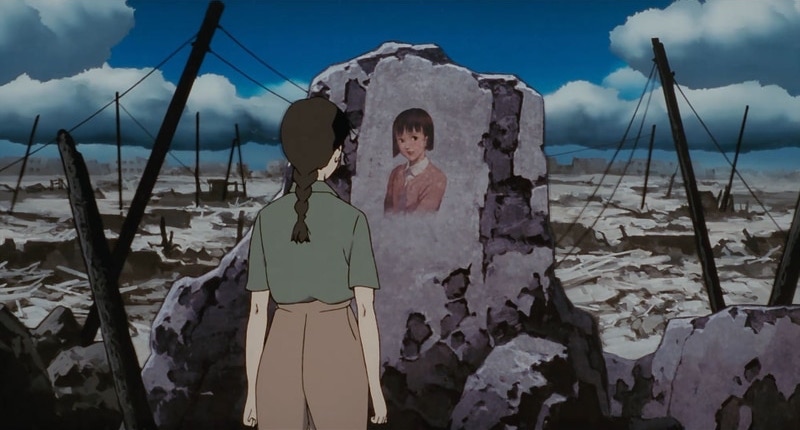
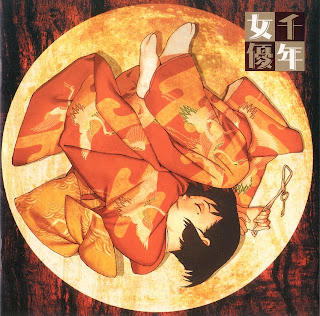
Satoshi Kon's masterpiece, Millennium Actress

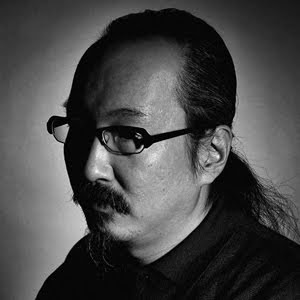
Ani-Gamers is publishing a handful of messages from our bloggers expressing our personal reactions to the great loss that is the death of anime director Satoshi Kon. For the final installment, Evan remembers his experiences with his favorite Kon film.

Though many anime fans know Satoshi Kon for his more recent, more publicized works such as Paranoia Agent (2004) and Paprika (2006), the celebrated anime director has been my favorite since the credits rolled on one film: Millennium Actress (2001). The story of two documentary filmmakers' quest to recount the life of an aging Japanese film actress struck me from the very first time I saw it, and its poignant ending now holds even more meaning to me in the wake of Kon's untimely death.

When I first experienced Millennium Actress, I cried (a rare occurrence for me). Its structure leads up to an incredibly tense series of scenes so infused with emotion that even my reviewer's mind couldn't help but get caught up in the feeling of it all. I was so blown away with it that I purchased the first copy I could find and showed it to my family, friends, and high school anime club. In fact, during the four years of my tenure as president, the club showed the film every year, and I personally watch it at least once or twice a year. It is, without a shadow of a doubt, my favorite movie of all time.

Thinking back, though, the life and death of the main character, actress Chiyoko Fujiwara, is almost an accidental analogue to Kon's. Kon's career was also defined by spectacular, critically-acclaimed pieces that often told stories with similar, overarching themes. Both were deft at eliciting strong emotional reactions from their fans.

But the most heartbreaking connection comes in death. Both the fictional character and the real man died with only a small number of people around them, with their oncoming demise hidden away from the rest of the world. Nevertheless, they leave us with the understanding that it is often the journey, rather than the destination, that provides us with true happiness.

While Satoshi Kon may have left us, he also leaves us a number of monuments to remember his life by. Through them we must remember the man, through them we must honor the journey. With such thoughts in mind, there is surely no better memorial to Satoshi Kon than Millennium Actress.

Honoring Satoshi Kon: A Shared Experience

Topics: , ,
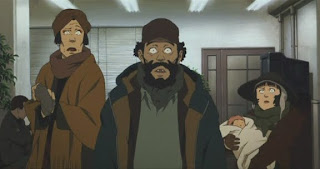
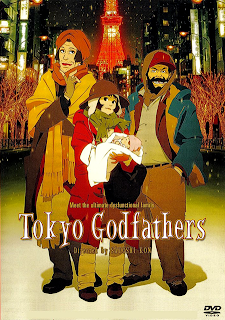
The main cast of Satoshi Kon's Tokyo Godfathers

Ani-Gamers is publishing a handful of messages from our bloggers expressing our personal reactions to the great loss that is the death of anime director Satoshi Kon. This time manga/game reviewer Elliot Page graces us with a Kon-related story from his university days.

I wanted to write about a way that Satoshi Kon affected my life for the better, and at the same time share my first experience watching his work. Thankfully these events are one and the same.

In my first term of university, I was confused and without direction. I had moved halfway across the country to undertake a course that was beginning to look terrifying and was almost completely alone except for a few rocky friendships I had made.

I attended the university anime club, with all its bizarre personalities and rather questionable programming decisions, and was on the verge of giving up on it (and anime as a whole, really) when one week I strolled in for “a very special presentation”.

That presentation was Satoshi Kon’s Tokyo Godfathers. I didn’t know then it was directed by him, and I didn't even know the full title because the guy with the huge head who sat in the front row obscured the title.

The movie was wonderful. Utterly wonderful. I’ll save you the gushing attempt at a review and simply say the characters enraptured me completely and it had complete control of my heart-strings after five minutes.

Not everyone loved it. Some people, including the club chairman, left outright or started to gossip amongst themselves and were tersely asked to leave. One rather irritating specimen gave a theatrical yawn before strutting out, adding “Well, have fun kiddies!”

I don’t remember any of these people. I didn’t have much interaction with them in the anime club or outside of it.

The people I do remember were those who remained until the end of the film. Once the credits ended and the harsh, cheap lighting came back on I sat with a core contingent of survivors, most of whom I got to know over my time in the anime club and while I was at university in general.

Sat is the wrong word however — I was hunched over, sobbing like crazy. I cry easily at films, and Tokyo Godfathers did the emotional equivalent of running over my heart. To my left was a man who looked much like a bear due to his amazing beard — he was having a hard time holding back his own tears and give me a spare tissue. This dude became one of my best friends at university and we still stay in contact as best we can. To my right was someone gently patting my shoulder and managing to remain somewhat stoic, although she admitted later that she cried once she was out of sight of the congregation. We later entered into a rather rocky romantic relationship but remained good friends to this day. The rest of the room, approximately ten people, I became at least good acquaintances with over time. Perhaps we had undergone a shared experience, although no one ever pointed it out.

The president of the club came in, said “See you next week!”, and took her DVD player home. I came back the next week and the rest of my first two years of university, my faith in animation restored by the film. I made some solid friendships, some of which remain to this day and all of which helped me through the uncertain period while I was starting university.

Satoshi Kon made my life better, and for that I am eternally thankful.

Honoring Satoshi Kon: What He Left Behind

Topics: , ,
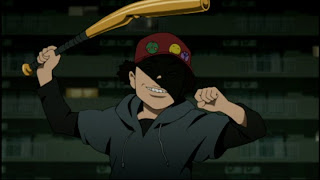
Lil' Slugger from Kon's Paranoia Agent

Ani-Gamers will be publishing a handful of messages from our bloggers expressing our personal reactions to the great loss that is the death of anime director Satoshi Kon. We begin with a brief post from anime/game reviewer Ink.

Ultimately, the inherent value of artists is what they manage to leave behind in terms of creative output once they shed their respective mortal coils. From directing and writing stories to taking part in the animation thereof, surely something of Satoshi Kon’s struck a chord with my soul. If not, I wouldn’t own a copy of almost everything with which he’s been involved.

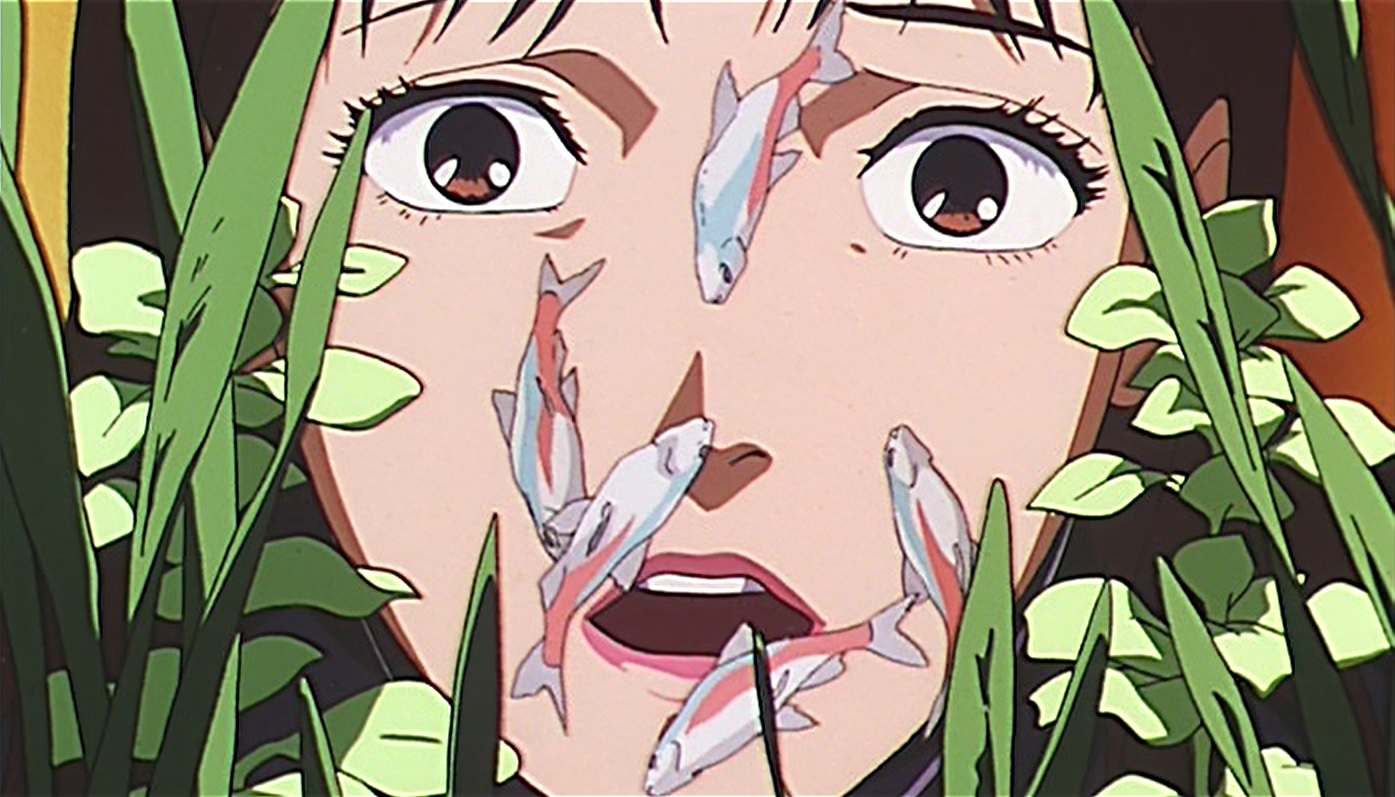
In honor of Kon’s passing, I watched the first four episodes of Paranoia Agent (2004), a series that consistently stands out as one of the examples of anime I offer to any friend seeking segue into the world of Japanese animation. Kon’s ability to bridge genres lies in the fact that his work stands apart as potent film rather than frivolous serial. Even though Paranoia Agent is a series, it is structured via vignettes that showcase Kon’s ability to imbue disparate yet complete stories with a similar sense of desperation and resolution while collectively using them to build a complete statement on societal pressures and coping mechanisms. His feature-length animations — Perfect Blue (1997), Millennium Actress (2001), Tokyo Godfathers (2003), Paprika (2006) — further justify the man’s proficiency as a writer/director by rivaling the complexities of plot and character found in most of today’s live action films.

His works are some of the most outstanding examples of what anime can be when not bowing to the lowest common denominator and serve as a bar over which future animators, writers, and directors should aspire to proudly vault.

Satoshi Kon dies of cancer at age 46 [EDIT 3]

Topics: , ,
Satoshi Kon, believed to have passed away today at age 47

EDIT 1: Former Otakon con chair Jim Vowles claims in a forum post that he has spoken to studio Madhouse's founder/producer Masao Maruyama (a frequent guest at Otakon), who confirmed Kon's death. According to the post, Kon died yesterday, though no mention of cancer is made. This certainly lends credence to the other stories we've been hearing, but I'll stay on top of any further updates.

EDIT 2: Anime News Network has reported on Vowles' confirmation, leading me to finally lay to rest my doubts about the death. Ani-Gamers will likely run coverage in the near future to pay tribute to the beloved, award-winning director.

EDIT 3: Anime News Network has published a letter from Kyōko Kon, Satoshi Kon's widow, that was originally posted on the Madhouse web site. It confirms that Kon died of pancreatic cancer on August 24 at 6:20 a.m (Japan Time). He was 46 years old, not 47, as many reports — including ours — have stated.

We are currently hearing widespread, unconfirmed reports of the death of anime director Satoshi Kon (Millennium Actress, Paprika, Paranoia Agent). It all began with a Japanese tweet from Gainax producer Yasuhiro Takeda alleging that Kon had died today at age 47. From there, the rumor snowballed across Twitter in multiple languages, but due to the time difference between North America and Japan, there has been no official Japanese confirmation as of yet. Nevertheless, Anime culture researcher Alex Leavitt translated a tweet from Takeda that confirms his confidence in his prior statement and provides a possible cause of death ("Seems real, heard it was cancer").

There is little that can be done now but wait for an official report out of Japan, but if this news turns out to be true, it represents a powerful blow to the anime industry. Rest assured, Ani-Gamers will keep on top of this emerging story and update this post as more information surfaces.

Review: Paranoia Agent (Hyb)

Topics: , ,
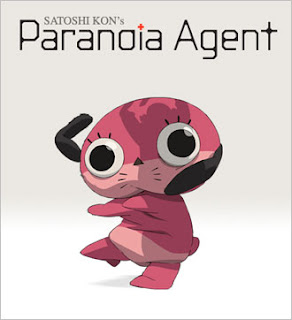
Maromi, the mascot character featured prominently in Paranoia Agent Medium: TV Anime
Number of Episodes: 13
Genres: Drama, Mystery, Psychological, Supernatural
Director: Satoshi Kon
Studios: Madhouse
Release Year: 2004
Licensed? Yes, but out of print (Geneon)

You should know the name Satoshi Kon. Well-known for his films Millennium Actress, Perfect Blue, Tokyo Godfathers, and Paprika, the "Hitchcock of anime" decided after his first three movies that he had more ideas to play with, so what did he do? He dumped all his unused stories into a 13-episode mini-series that does to society what a starfish does to a fiddler crab. Look it up on Wikipedia – it’s awesome! And Paranoia Agent isn’t that bad, either.

The surrealist psychological drama centers upon the mystery of Shonen Bat (‘Lil Slugger in the English version), a mysterious young boy terrorizing emotionally cornered citizens with a bent, golden baseball bat. Ah, little league tee-ball; those were the days. The detectives who act as the loose story's main characters have no leads and each victim leads only to more dead ends as the murky legend of Shonen Bat reaches mythic, nearly supernatural proportions. And the strangest part of these attacks? The victims lose their worldly troubles; their head traumas somehow make them happier. Not very hard for the average Japanese cram school student, let me tell you. So just when you start to fear Shonen Bat, you start to respect him...then go right back into being terrified, like a circus clown with a flamethrower.

Kon roped in Seishi Manakami for the script. His goal was to shift perspectives by changing the main character in each episode, giving viewers a macrocosm of Shonen Bat’s influence. Each character gives a very personal POV into their individual case, personal struggle, and eventual encounter with Shonen Bat. Some episodes can be watched on their own as their characters have little relevance to the larger story. Such episodes are magnificent fillers, but Kon’s fingerprints are all over each of them. His grasp of human emotion, psychology and story structure are frighteningly accurate, which makes the black humor in Paranoia Agent even funnier and more poignant. If you laughed at Heath Leger in The Dark Knight, you’ll get a few sick chuckles out of episode eight.

What draws me to Paranoia Agent, from the old-fashioned detective to the reserved animator to the schizophrenic tutor to the fallen golden child to the lecherous reporter, was the pathos developed with every character. Every character is a case study for the psychological pressures of modern Japan. The situations are very believable and the stress of Tokyo almost becomes its own character as students, teachers, and the elderly are all equally pressed from all sides by the struggle to match society’s expectations.

As a testament to Satoshi Kon’s micromanagement prowess as a director, every episode features a repetitive sound that sets the pace and structure for the story. Speaking of sound, the bizarre pseudo-techno, dreamlike music of Susumu Hirasawa (Paprika, Berserk, and Millennium Actress) adds another level to this visual mind-screw into a scrambled but beautiful mess, like a naked rugby game during a hurricane.

During his interview on the first DVD, Kon mentioned his fascination over a child’s ability to create a stomachache just to avoid going to school. Thematically, avoiding responsibility is the social and emotional paralysis that summons Shonen Bat. If you watch this series and keep “accountability” in mind, you will understand every symbolic shot in this series.

Now Paranoia Agent is obviously not for little kids, but this masterwork deserves at least a gander from any fan of Hitchcock, Memento, or Misery. For the ridiculously low price you can find it for, it deserves a spot on your shelf. (The English dub is unmatched in its execution to boot!) It is exciting, dangerous, and visually dazzling stories like this that keep me watching anime.


excellent.

Ani-Gamers Podcast #017 – Tokyo Godfathers

Topics: , ,
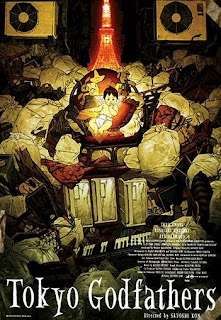
Tokyo Godfathers movie poster

Hosts: Evan "Vampt Vo" Minto, Mitchell Dyer
Topic: Tokyo Godfathers (2003)

This time we're talking about a movie from Evan's favorite anime director: Satoshi Kon (Paprika, Paranoia Agent). The review portion is sort of short compared to the What'cha Been Doing? segment, which is probably because Evan had to rush to go see Star Trek at the end of the episode.

Our plans for next episode are not yet solidified, but the goal is to record a whole slew of new episodes at Otakon later this month, and to record a Cowboy Bebop episode featuring Evan, Mitchy, and Karl once the former actually finishes watching the show. Till next time, so long, dear listeners!

Show notes and links can be found after the break.

DIRECT DOWNLOAD - RSS Feed - iTunes - Send us Feedback! - More episodes


(Runtime: 49 minutes)


[0:00:00] Intro: Voice actor Bill Rogers (recorded at Castle Point Anime Convention 2009)

[0:00:04] Opening Song: "R.O.D Theme" by Taku Iwasaki (R.O.D. OVA opener)

[0:00:19] Introductions happen. They are brief. Like this summary.

[0:01:11] What'cha Been Doing? Evan has been watching Cowboy Bebop, reading The First President of Japan, and playing Fallout 3. Also he has NOT been reading the yaoi doujinshi that his uncle accidentally bought him. Mitchy has been playing BlazBlue: Calamity Trigger, BloodBowl, and Battlefield: Heroes.

[0:22:45] Break: Title music for Tokyo Godfathers

[0:23:46] Discussion: Mitchy and Evan gush over Tokyo Godfathers for twenty minutes. Highlights of this segment include: a homeless Japanese drag queen, right turns, and Christmas MIRACLES! <3333333

[0:42:54] Promo: Anime3000 Panel

[0:44:02] Links of the Day: Mitchy can't stop laughing at this kid who goes crazy when his mom cancels his WoW account, and Evan is promoting a mini-protest against gender-stereotypes in comics fandom.

[0:47:16] That's a wrap!

[0:48:42] Ending Song: "WORLD END Instrumental" by FLOW (Code Geass R2 second opener)

[0:49:00] Outro: Mitchy is Japanese Retarded.

Review: Tokyo Godfathers (Sub)

Topics: , , ,
Tokyo Godfathers Medium: Anime Film
Genres: Adventure, Drama
Director: Satoshi Kon
Studio: Madhouse
Licensed?Yes (Sony Pictures)

Satoshi Kon is like a master mechanic. Give him the parts, and he will concoct a machine that breaks new ground in whatever genre he pursues. In Perfect Blue, he made a seemingly traditional psychological drama that in fact directly attacked the underbelly of otaku-dom. In Millennium Actress, a simple biographical story took us to realms rarely touched in such narratives. Paranoia Agent broke down the conventions of murder mysteries, resulting in a twisty show that never seemed to go where you expected. In Tokyo Godfathers, Satoshi Kon takes a trio of cold, hungry homeless people, and weaves around them a story of hope, redemption, and sacrifice: a story as emotionally touching as it is subtly funny.

Tokyo Godfathers takes place, naturally, in Tokyo, where Gin, a gambler and alcoholic, Hana, a former drag queen, and Miyuki, a runaway teenage girl, - all homeless - find an abandoned baby in the garbage. It is Christmas Eve, so they decide to try to find the baby's mother rather than simply hand it to the police. The three take the newly-named Kiyoko all around the city in search of her parents, meeting a wide array of side characters and learning about themselves and each other along the way.

Unlike Kon's usual fare, Tokyo Godfathers cuts back on the surrealism and takes a more realistic road to reach his classic reality-fantasy split. From the get-go we are hit over the head with striking dichotomies between idealism (a church choir) and realism (a crowd of hungry homeless). Throughout the movie these themes are continued as Gin searches piles of trash under the beaming lights of Tokyo Tower (an important visual motif in the film). The only time we feel the typical Kon come through is in a brief dream sequence where he brings back his traditional identity-confusion and complex symbolism.

The major difference between Kon's other stories, however, is the focus on characters over narrative. While the central plot remains strong, with Kon's trademark narrative crescendo/subtle ending combination, the focus of the audience's attentions in Tokyo Godfathers rest very heavily on the three main characters. We are made to laugh with them, smile with them, and sometimes cry with them, as they meet new friends and battle terrible circumstances to bring a baby back home.

This central tale, the concept of three pieces of "human trash" being blessed with a piece of unspoiled humanity, is something that we can all relate to in some way. Gin, Hana, and Miyuki are all given fair time to play out their own separate dramas, but Miyuki most surely steals the show. She represents a fascinating and complex parallel in which a young girl runs from her parents, only to embark on a journey to find the parents of an abandoned girl. These sorts of deep-rooted thoughts of home and family that run through the three characters are what hold together the sometimes disjointed little vignettes that make up the story.

Gin and Hana perhaps sum up the themes of the film perfectly in one exchange. Gin reminisces about his daughter, telling Hana, "a father never forgets his child." Miyuki, shaken by a message from her father, suddenly storms out of the room. After a moment, Hana adds, "a child never forgets its parents."

As we have come to expect from Kon and his go-to studio, Madhouse, Tokyo Godfathers looks beautiful. The backgrounds (especially the snow-covered buildings and streets) are as stunning as any classic Christmas painting, and all of the characters move with a lively and often comical fluidity. Even so, the film suffers occasionally from Kon's traditional character design problem: Most of the male side characters look a tad similar, meaning that audiences will have to pay close attention to understand who's who.

Arguably it doesn't have much competition, but that doesn't stop Tokyo Godfathers from being the best Christmas movie to ever come out of the anime medium. Satoshi Kon has pulled together three pieces of garbage, and given them a light to shine their way through the cold and dark. He has engineered a film that finds beauty not in shimmering lights of Tokyo Tower, but in the hopes and dreams of two rejects, the tears of a runaway, and the shining face of an abandoned child.


great.

Japanese Anime Creators Organize First Union

Topics: , , , , , , , , ,
As of October 13, over 500 anime directors, animators, artists, and other workers have officially established the first ever Japanese union for animators, the Japan Animator's Creation Association, also known as JAniCA. There were various prominent creators in attendance at the recent press conference held by the organization. Toyoo Ashida (director of Vampire Hunter D, the first movie and second TV series of Fist of the North Star) is the president of the union, and Satoshi Kon (director of Paranoia Agent and Millenium Actress), animation directors Moriyasu Taniguchi (Shaman King) and Akihiro Kanayama (Mobile Suit Zeta Gundam), Yasuki Hamano (a professor at Tokyo University), and editor Nobuyuki Takahashi (Ringu, Juon: The Grudge) all spoke to the press during the conference.

According to JAniCA, a storyboard works for an average of 3,360,000 yen (US$28,800) a year, without vacation, and a key animator works for 2,160,000 yen (US$18,400) a year, with no vacation. As most of you have figured out, this organization plans to work for the improvement of the working conditions for the men and women who create all that wonderful anime you all love to watch.
[via Anime News Network]

Review: Paprika (Sub)

Topics: ,
Paprika Media: Anime Film
Genre(s): Drama, Suspense, Thriller, Science Fiction
Director: Satoshi Kon
Studio: Madhouse
Licensed? Yes (Sony Pictures)

I'll admit it right now. I'm a Satoshi Kon fanboy. I saw Paprika as soon as it came out, just to see if the trailers were not deceiving me in the belief that Satoshi Kon may have just topped the amazing Millennium Actress. Welcome to Satoshi Kon's Paprika, a smorgasbord of themes and ideas mashed together into a single 2-hour dream sequence. The film takes much of its style from some of Kon's previous works, particularly Perfect Blue and Millennium Actress, but creates a very different feel than any film he has done before.

Dr. Atsuko Chiba is a researcher working on a new piece of technology called the "DC Mini." It is a machine that connects to someone's ear, allowing "psycho-therapists" to view and even enter the dreams of their patients, and therefore help solve their mental problems. The typically uptight doctor uses her lighthearted alter-ego Paprika when she enters the dreams of others. However, the powerful machine has now been stolen, and someone is using it to broadcast their dreams into the waking minds of their victims. Paprika, Atsuko her partners Tokita, Osanai, their Chief, and the detective Konakawa, who has his dream visited by Paprika earlier in the film, try to find and stop this "psycho-terrorist" before he or she can kill more people and discredit the DC Mini.

As most have come to expect from Kon and his mainstays at Madhouse, Paprika has beautiful animation. It provides fantastic contrasts between the gritty details of real life and the colorful and whimsical characters of a dream. In addition, the film provides some truly exhilarating scenes where reality and fantasy blend, and the smooth animation and screen warps achieve this effect spectacularly. The character designs are vivid and drastically different, making it quite easy to tell the differences between characters.

Susumu Hirasawa's score is yet again the most memorable element of the entire production. He provides breathtaking technopop-style vocals and background music that fully compliment Kon's fantastic dream vision.

Sadly, Paprika does not deliver as well as I would have liked when it comes to plot. It's not that the writing is bad, but simply overcomplex. The use of dreams as a theme makes for some very interesting situations, but also makes the film convoluted and hard to understand. The ending, while epic and truly exhilarating, was dissapointing as well. When I found out who the psycho-terrorist really was, I was very disappointed in their identity and motives. Even so, the characterization is very well-done, especially the dynamic relationship (and eventual conflict) between Atsuko and Paprika.

The Japanese voice acting is high-quality, with the famous Megumi Hayashibara voicing both Atsuko and Paprika. She does a great job pinning down the harsh, down-to-earth tones of Atsuko while subsequently sounding like a young girl for Paprika. The supporting characters are also fine, though their acting is nowhere near as important as Megumi's.

Many people have already said it, but I'll say it again: Paprika is an experience. It may have flaws in its plot, and it might not make you think as much as Perfect Blue, but this movie is a joy to watch. If I had to choose a single scene that pins down the emotions that Paprika bestows upon its viewers, it would simply be the opening credits. The scene shows Paprika moving around the city as she merges between reality and dreams. With Susumu Hirasawa's main theme playing behind, and Satoshi Kon's trademark directorial style determining the action, this scene is absolutely breathtaking.

As you watch Paprika, Satoshi Kon is able to take you into a world far away from reality. A world so strange and imaginative, so powerful and breathtaking, you might even call it...a dream.

Animation: 4.0 Average:

(3.625 stars)
Plot: 3.0
Voice Acting: NR
Sound: 4.0
Overall: 3.5